
Summary
C.V. Shanmugam, a senior leader from the AIADMK party, has publicly stated his support for the Tamil Nadu Chief Minister’s position on the issue of delimitation. Delimitation is the process of redrawing the boundaries of voting districts based on population changes. The Chief Minister, M.K. Stalin, has raised concerns that this process could unfairly reduce the political power of southern states. Shanmugam’s support marks a rare moment where the main opposition party agrees with the ruling government on a major national issue.
Main Impact
The main impact of this announcement is the creation of a unified political front in Tamil Nadu. Usually, the DMK and AIADMK are strong rivals that disagree on almost every policy. However, by joining forces on the delimitation issue, they are sending a powerful message to the central government in New Delhi. This unity shows that the state is ready to protect its share of seats in the Lok Sabha, regardless of party lines. It also highlights a growing worry among southern states that their success in controlling population growth might lead to a loss of influence in national decision-making.
Key Details
What Happened
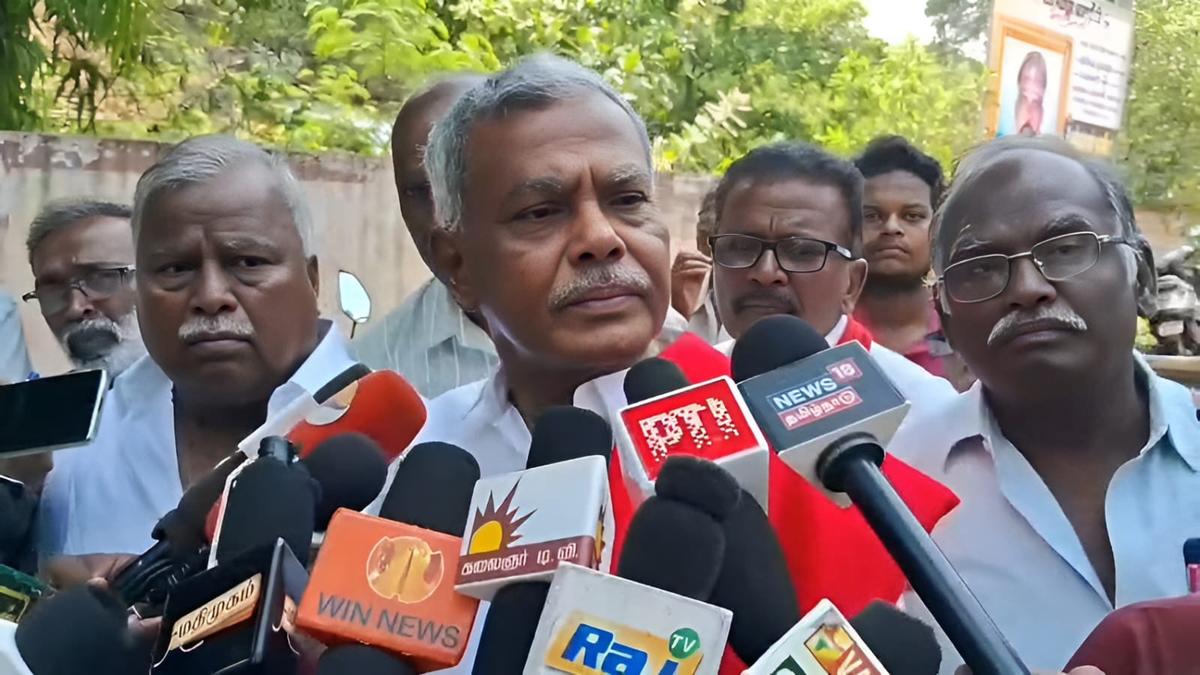
During a recent interaction with the media, C.V. Shanmugam clarified that his party stands with the Chief Minister regarding the upcoming redrawing of electoral boundaries. He explained that while the AIADMK continues to oppose the DMK on local governance and state issues, the threat of losing parliamentary representation is a matter of "state rights." The concern is that if seats are handed out strictly based on the number of people living in a state, those that have worked hard to lower their birth rates will be punished with fewer representatives.
Important Numbers and Facts
The current number of seats in the Lok Sabha is based on the census data from 1971. For decades, the number of seats was frozen to encourage states to implement family planning programs. This freeze is expected to end soon, with a new count likely happening after 2026. Experts suggest that if the new seats are distributed based on current population trends, northern states like Uttar Pradesh and Bihar could gain dozens of seats. Meanwhile, southern states like Tamil Nadu, which currently has 39 seats, could see their relative power drop significantly. Some projections suggest that the total number of seats in Parliament could rise from 543 to over 800, making the shift in power even more dramatic.
Background and Context
To understand why this matters, it is important to know what delimitation actually does. Every few decades, the government looks at how many people live in different parts of the country. They then redraw the lines for voting areas to make sure each Member of Parliament (MP) represents roughly the same number of people. This sounds fair in theory, but it creates a big problem in India.
For the last 50 years, southern states have invested heavily in education, healthcare, and women's rights. These efforts led to a slower population growth. In contrast, some northern states have seen their populations explode. If the government only looks at the total number of people, the states that failed to control their population will get more political power. The states that succeeded will get less. This is why leaders like Shanmugam and Stalin are calling the process a "threat to democracy" for the south.
Public or Industry Reaction
The reaction to Shanmugam’s statement has been largely positive within the state of Tamil Nadu. Political analysts note that this is one of the few issues that can bring the entire state together. Many citizens feel that their progress in social development should not lead to a weaker voice in the national government. Other southern states, including Kerala and Karnataka, have expressed similar fears. There is a growing movement among regional parties to demand a new way of calculating seats that rewards states for social progress rather than just counting the number of heads.
What This Means Going Forward
Going forward, this unified stance will likely lead to more formal protests or legal challenges. The Tamil Nadu government may seek to pass a resolution in the state assembly to officially record their opposition to the current delimitation plan. We can also expect to see more cooperation between different southern states. They may try to form a group to negotiate with the central government. The goal will be to find a middle ground where the total number of seats can increase without taking away the proportional influence of states that have managed their population growth well. If a solution is not found, it could lead to a long-term political conflict between the north and the south.
Final Take
The support from C.V. Shanmugam shows that the fear of losing political representation is stronger than local party rivalries. By standing together, Tamil Nadu's leaders are making it clear that they will not accept a system that punishes them for their own success. This issue will remain a major part of Indian politics for years to come as the 2026 deadline approaches. The challenge for the country will be to balance the needs of a growing population with the rights of states that have led the way in social development.
Frequently Asked Questions
What is delimitation in simple terms?
Delimitation is the process of changing the boundaries of voting areas. It is done to make sure that each representative in the government stands for a similar number of voters based on the latest census data.
Why is Tamil Nadu worried about this process?
Tamil Nadu has successfully controlled its population growth over the last few decades. If seats are given based only on population, states with more people will get more seats, and Tamil Nadu could lose its influence in the national government.
Why did the AIADMK support the DMK on this?
Even though they are political rivals, both parties agree that protecting the state's power in Parliament is more important than their local disagreements. They want to ensure that Tamil Nadu continues to have a strong voice in New Delhi.



