
Summary
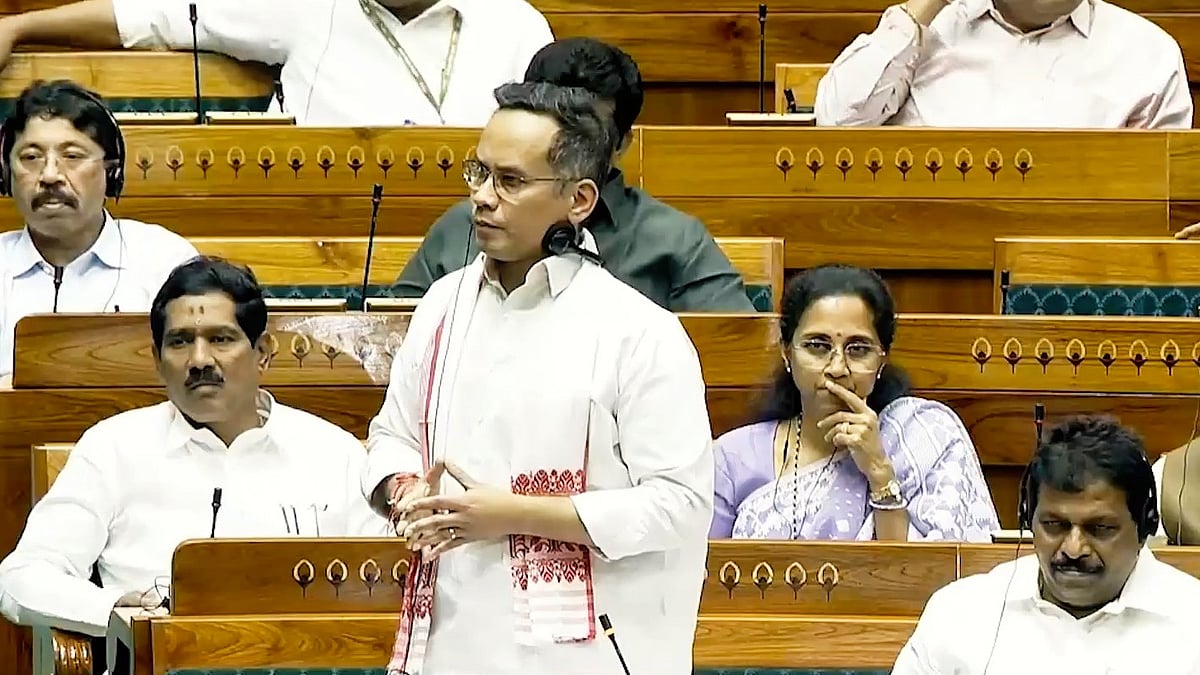
Gaurav Gogoi, a senior leader of the Congress party, has strongly criticized the central government’s new plan for women’s reservation in Parliament. During a debate in the Lok Sabha, he argued that the government is using the promise of women's seats to hide other political goals. He claimed the bills are unfair to women, ignore the need for a caste census, and weaken the power of individual states. The opposition is demanding that the 33 percent quota for women be started immediately using the current number of seats in Parliament.
Main Impact
The main issue is whether women should get reserved seats now or after a long process of redrawing election boundaries. The government wants to wait for a new national census and a process called delimitation, which involves changing the borders of voting areas. This could lead to a massive increase in the number of members in the Lok Sabha. Critics fear this delay will keep women out of power for many more years and could be used to change the political balance of the country in favor of the ruling party.
Key Details
What Happened
On Thursday, the government introduced three major bills: the Constitution (131st Amendment) Bill, the Delimitation Bill, and the Union Territories Laws (Amendment) Bill. Gaurav Gogoi opened the debate by calling these moves "anti-Constitution." He stated that if the government were truly serious about helping women, they would apply the reservation to the current 543 seats in the Lok Sabha immediately. Instead, the government has linked the reservation to future population counts and boundary changes.
Gogoi also raised concerns about "gerrymandering." This is a term used when election boundaries are changed in a way that gives an unfair advantage to one political party. He pointed to recent changes in Assam and Jammu and Kashmir as examples of how this can happen. He argued that doing this on a national level under the name of women's rights is wrong.
Important Numbers and Facts
The debate showed a clear split in Parliament. When it came time to vote on the introduction of the Constitution Amendment Bill, 251 members voted in favor, while 185 members voted against it. This highlights how divided the lawmakers are on this issue.
The government’s plan includes a significant change to the size of the Lok Sabha. Currently, there are 543 seats. The new proposal suggests increasing this number to 815 seats. Under this plan, 272 seats would be reserved for women, which meets the 33 percent requirement. The government claims this is the best way to add women to Parliament without taking away seats from current male representatives.
Background and Context
The idea of reserving seats for women in India’s Parliament has been discussed for decades. In 2023, a law was passed to give women 33 percent of the seats in the Lok Sabha and state assemblies. However, that law included a condition: it would only start after a new census is conducted and election boundaries are redrawn.
This has become a major point of conflict. The census was supposed to happen in 2021 but was delayed. The opposition argues that the government is using these administrative steps as an excuse to delay women's representation. They also believe that a caste census is necessary to make sure that women from all social backgrounds, especially those from backward classes, get a fair share of the reserved seats.
Public or Industry Reaction
The Congress party and other opposition groups have united to demand an "unconditional" implementation of the quota. They believe the government is trying to "rig" future elections by redrawing boundaries before the next big vote. They have asked for the census to be finished quickly and for the reservation to be simple and time-bound.
On the other side, Union Minister Arjun Ram Meghwal defended the government's strategy. He said the plan is designed to be inclusive. By increasing the total number of seats to 815, the government says it can protect the interests of all states while still giving women their fair share. The government insists that this method prevents any state from losing its current level of influence in Parliament.
What This Means Going Forward
The next steps will involve intense political and legal battles. The government must now move forward with the national census, which is a massive task. Once the census is done, the process of redrawing boundaries will begin. This process is often controversial because states with slower population growth, mostly in southern India, worry they will lose seats to states with faster population growth in the north.
The opposition will likely continue to protest, demanding that the reservation happen sooner. They will also keep pushing for a caste census to be part of the data collection. The outcome of this debate will decide not just how many women are in Parliament, but also how the entire map of Indian elections looks for the next several decades.
Final Take
While both the government and the opposition agree that women deserve more representation in politics, they are fighting over the "how" and "when." The current plan links women's rights to a total redesign of India's voting system. This makes the issue much more than just a matter of gender equality; it is now a fundamental debate about how power is shared across the country. The real test will be whether these changes lead to a more fair democracy or simply create new political advantages.
Frequently Asked Questions
What is the main disagreement over the women’s reservation bill?
The main disagreement is about timing. The opposition wants the 33 percent reservation to start immediately using current seats. The government wants to wait until after a new census and the redrawing of election boundaries.
Why does the government want to increase the number of seats to 815?
The government believes that by increasing the total number of seats, they can give 272 seats to women without reducing the number of seats currently held by men or changing the representation of different states.
What is delimitation and why is it controversial?
Delimitation is the process of redrawing the boundaries of voting areas based on population changes. It is controversial because it can change which party has an advantage in an area and can lead to some states having more power than others in Parliament.

