Summary
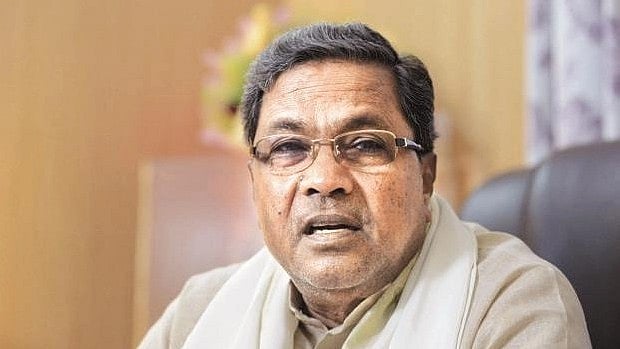
Karnataka Chief Minister Siddaramaiah has publicly criticized Prime Minister Narendra Modi regarding the Women’s Reservation Bill. The Chief Minister accused the central government of having a "double standard" by delaying the actual start of the law. He argued that if the government were truly serious about giving women more power in politics, they would have acted much sooner during their long time in office. This debate highlights the ongoing political tension over how and when women will receive a guaranteed 33 percent of seats in Indian legislatures.
Main Impact
The primary impact of this criticism is the focus on the delay in making the reservation a reality. While the idea of reserving seats for women has broad support, the current plan links its start to a process called delimitation. Delimitation is the redrawing of political boundaries based on population. Siddaramaiah warns that this link could unfairly hurt southern states like Karnataka. Because southern states have been more successful at controlling population growth, they fear they might lose political power to northern states if seat numbers are changed now.
Key Details
What Happened
On Monday, Chief Minister Siddaramaiah spoke to the media about the central government's approach to the Women’s Reservation Bill. He stated that the Congress party has always supported the idea of giving women a fair share of seats. However, he expressed doubt about the timing and the conditions set by the current administration. He suggested that the government is using the bill for political gain rather than a real desire for social change. He also pointed out that a recent attempt to pass a similar bill failed because it did not get enough votes in Parliament.
Important Numbers and Facts
The proposed law aims to provide 33 percent reservation for women in the Lok Sabha and state assemblies. To pass such a major change to the Constitution, the government needs a two-thirds majority in Parliament. In a recent session, the bill received many votes but still fell short of this high requirement. Additionally, the government wants to wait for a new census and the redrawing of voting districts before the reservation starts. This means it could be many years before women actually see these reserved seats in action.
Background and Context
The fight for women’s reservation in India is not new. For decades, different political parties have debated how to ensure women have a voice in making laws. In the past, the Congress party introduced the 73rd and 74th amendments to the Constitution. These laws successfully gave women reserved seats in local government bodies, like village councils and city corporations. Siddaramaiah mentioned these past actions to show that his party has a history of supporting women’s rights. The current debate is about moving this same idea to the national and state levels, which has proven to be much more difficult to achieve.
Public or Industry Reaction
Siddaramaiah’s comments have sparked a fresh debate among political leaders and the public. Many people in southern India agree with his concerns about the census and seat redrawing. They feel that states that followed government advice on family planning should not be punished by having less influence in Parliament. On the other hand, supporters of the central government argue that the current bill is a bold step that no other government managed to complete. They claim the conditions, such as the census, are necessary to make the process fair and legal under the Constitution.
What This Means Going Forward
The path forward for the Women’s Reservation Bill remains unclear. The government must find a way to get a two-thirds majority in Parliament for the bill to become law. Even if it passes, the wait for a fresh census and the redrawing of boundaries means the change will not happen immediately. There is also the risk of a political divide between the North and South. If the government does not address the fears of southern states, the implementation of the bill could face legal challenges or strong political opposition in the coming years.
Final Take
True progress for women in politics requires more than just passing a bill; it requires a clear and fair plan for action. While the goal of 33 percent reservation is widely accepted, the disagreement over "how" and "when" continues to stall progress. For the law to be effective and fair to all parts of the country, the government may need to reconsider linking it to the controversial process of redrawing political boundaries. Without a faster and more direct approach, the promise of equal representation will remain a distant goal for millions of Indian women.
Frequently Asked Questions
What is the Women’s Reservation Bill?
It is a proposed law that would reserve 33 percent of all seats in the Lok Sabha and state legislative assemblies for women to ensure they have better representation in government.
Why is the census important for this bill?
The central government wants to wait for a new census to count the population before deciding how many seats each area should have. Only after this count will the reservation for women be applied to the new districts.
Why are southern states worried about the bill?
Southern states have lower population growth than northern states. They fear that if seats are redistributed based on new population numbers, they will lose seats in Parliament, giving them less power in national decisions.