Summary
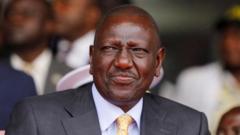
Kenyan President William Ruto has stirred up a major conversation across Africa after making public comments about the way Nigerians speak English. During a recent event, the President claimed that Kenyans speak some of the best English in the world. He went on to say that, by comparison, it is often difficult to understand people from Nigeria when they speak. These remarks have triggered a wave of reactions from citizens, celebrities, and social media users in both countries.
Main Impact
The primary impact of these comments is a renewed social media "war" between Kenyans and Nigerians. This rivalry, which often plays out on platforms like X (formerly Twitter), usually involves jokes about food, music, and sports. However, the President’s comments have moved the debate into the area of national identity and language. While some see the remarks as a lighthearted boast about Kenya’s education system, others view them as an insult to Nigeria’s cultural influence and its own version of the English language.
Key Details
What Happened
President William Ruto was speaking at a gathering where he was highlighting the strengths of the Kenyan workforce. He argued that one of the reasons Kenyans are hired globally is their clear communication skills. To make his point, he compared Kenyan English to Nigerian English. He suggested that while Nigerians are very active and successful, their accent or style of speaking makes it hard for others to follow what they are saying. This comparison was caught on video and quickly went viral across the continent.
Important Numbers and Facts
Nigeria and Kenya are two of the largest economies in Sub-Saharan Africa. Both countries use English as an official language for government, business, and schools. Nigeria has a population of over 200 million people, making it the largest English-speaking nation in Africa by numbers. Kenya, with about 55 million people, frequently ranks near the top of the English Proficiency Index for African nations. In many global rankings, Kenya is often listed as having the highest level of English fluency on the continent, which is a point of pride for the Kenyan government.
Background and Context
The use of English in Africa is a complex topic. Both Kenya and Nigeria were once ruled by Britain, which is why English became their official language. Over many years, each country developed its own unique way of speaking. In Nigeria, "Nigerian Pidgin" is very common. It is a mix of English and local languages that millions of people use every day. It is a major part of their music and movies, which are popular all over the world. In Kenya, the school system focuses heavily on a style of English that stays close to the British standard. This difference in style is what President Ruto was referring to when he spoke about clarity.
Public or Industry Reaction
The reaction from Nigeria was swift and full of pride. Many Nigerians pointed out that their country has produced world-famous writers like Wole Soyinka, who won the Nobel Prize in Literature. They argued that if their English were hard to understand, their books, movies, and Afrobeats music would not be global hits. On the Kenyan side, some people supported the President, saying that Kenyan workers are indeed easier to understand in international business settings. However, other Kenyans felt the comments were unnecessary and could hurt the relationship between the two friendly nations.
What This Means Going Forward
This event shows how important language is to national pride. For President Ruto, the goal was likely to market Kenyan workers to the rest of the world. By saying Kenyans speak "the best" English, he is trying to attract more international companies to hire from his country. However, this approach risks creating tension with Nigeria, which is a key partner in African trade. Moving forward, it is likely that leaders will be more careful about how they compare their citizens to those of neighboring countries to avoid similar public outcries.
Final Take
While the debate over who speaks better English might seem like a simple argument, it reveals a lot about how African nations see themselves. Both Kenya and Nigeria have used the English language to build strong identities and connect with the world. Instead of seeing one version as better than the other, it is more helpful to see them as different tools that serve different cultures. Clear communication is important, but the variety of voices in Africa is what makes the continent's culture so rich and interesting to the rest of the world.
Frequently Asked Questions
Why did the Kenyan President talk about Nigerian English?
He was trying to highlight the communication skills of Kenyan workers to show why they are valuable in the global job market.
Is English the main language in Nigeria and Kenya?
Yes, English is the official language in both countries and is used in schools, law, and government business.
What is the difference between the English spoken in these two countries?
Kenya generally follows a more traditional British style, while Nigeria has a unique version that often blends English with local languages and rhythms, known as Nigerian English or Pidgin.