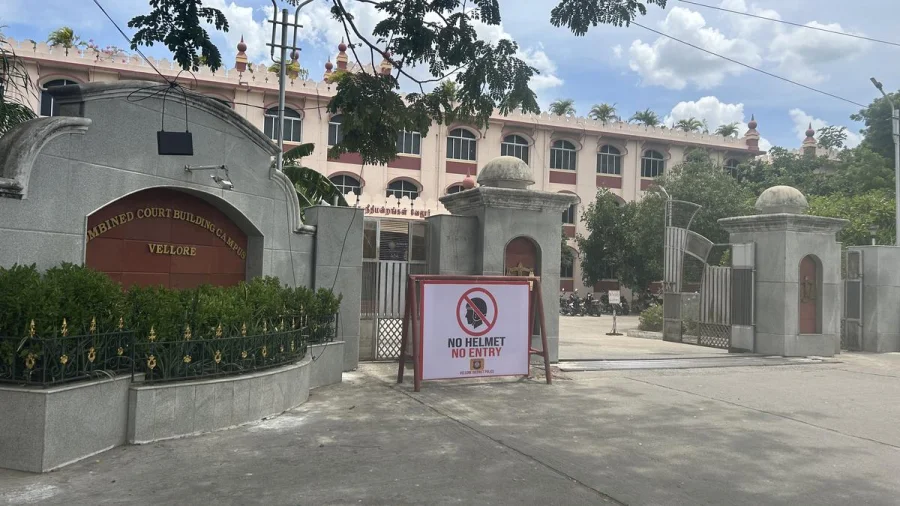
Every working morning, the court complex in Vellore absorbs one of Tamil Nadu's heaviest legal crowds — more than 3,000 litigants on an average, moving between hearings, case records and lawyer chambers. For people inside that crowd, even a quiet rule at the gate can change whether they reach their court hall on time. A recent order restricting their vehicles inside the complex did exactly that. Now, the District Judge has withdrawn it.
Vehicle ban withdrawn: what actually changed
According to the available report, the District Judge in Vellore has withdrawn the order that prohibited litigants' vehicles inside the court complex. The withdrawal reverses the earlier restriction, meaning litigants who were barred from bringing vehicles into the premises can now expect entry to be permitted again.
What remains unconfirmed is the precise timing of the original order, the full text of the withdrawal, and whether any conditions still apply at the gate. Those details are not part of the verified information available so far.
Why a gate rule matters when 3,000 people arrive daily
The single confirmed number in this story gives the reversal its weight: more than 3,000 litigants visit the Vellore court complex every day on an average. For many of them, the court visit is not optional — it is tied to a hearing, an adjournment, or a filing deadline.
A vehicle ban at the complex entrance would have forced such visitors to find parking outside, often at a distance, and then walk or arrange alternate transport inside the premises. For litigants carrying documents, senior citizens, or people with mobility issues, that extra friction could mean missed hearings and wasted days.
What the available report confirms
Verified information in this story is limited to two elements: the District Judge's withdrawal of the vehicle prohibition, and the daily average of more than 3,000 litigants visiting the complex. Both come from the report on which this article is based.
Statements attributed to court officials, advocates, or litigants are not included here because none were available in confirmed sources. This article does not speculate on their quotes or reactions.
Litigants who felt the restriction most
The human impact of such an order is rarely uniform. Daily visitors to the Vellore complex include people from surrounding towns who travel early, wait through the day, and depend on their own vehicles to reach the court and return home the same evening.
For them, the withdrawal is more than administrative relief — it restores a level of dignity and practicality to what is already a stressful process. The elderly, persons with disabilities, and women litigants accompanying children are typically the worst affected by walking distances imposed by vehicle restrictions.
No official explanation yet — and that is important
Why the original order was issued, and what prompted its withdrawal, remains officially unclarified in the available material. Court administrations sometimes restrict vehicles to manage congestion, improve security, or maintain decorum inside judicial premises.
Equally, such orders are often reconsidered after representations from advocates' associations, litigant grievances, or practical difficulties observed at the gate. Until the district judiciary issues a formal statement, any specific reason would be speculation, not reporting.
Why vehicle bans happen — and why they get reversed
There is a recurring tension inside busy Indian court complexes: security and order on one side, public access and convenience on the other. Vehicle restrictions are usually introduced to prevent overcrowding, unauthorised parking, or security risks near court halls.
But the same restrictions can burden the very people the judiciary exists to serve — litigants, witnesses, and visitors. When daily footfall crosses the thousands, as in Vellore, a complete prohibition often becomes impractical, making withdrawal a realistic administrative correction rather than an unusual one.
Confirmed versus still unclear
Confirmed: The District Judge has withdrawn the order prohibiting litigants' vehicles inside the Vellore court complex. The complex receives over 3,000 litigants daily on average.
Still unclear: The date of the original order, the date of withdrawal, the reasons cited by the judge, and whether any partial restrictions remain. These should not be treated as facts until an official version is available.
Both sides of the decision
The withdrawal will be welcomed by litigants who found the ban burdensome. It also raises legitimate questions about parking capacity, crowd management, and security inside a complex that already handles thousands of visitors daily.
Supporters of vehicle access argue courts must remain accessible to ordinary people. Those concerned about discipline point out that unrestricted vehicle movement can create chaos near court buildings. Both concerns are valid — and both now depend on how the withdrawal is implemented on the ground.
What litigants and visitors should do now
Litigants visiting the Vellore court complex should proceed on the basis that vehicle entry is permitted again, while remaining alert to any instructions displayed at the gate or issued by court staff.
It is also prudent to carry case-related documents, arrive early given the daily crowd of over 3,000 visitors, and follow any security checks. If vehicles are directed to specific zones, cooperation with court personnel will help avoid confusion on the first few days after the withdrawal.
A wider pattern in Indian court complexes
Vellore is not alone in facing this dilemma. Court complexes across India — from district headquarters to metropolitan city courts — struggle to balance rising litigation footfall with limited parking and security infrastructure.
The larger question this episode points to is not just about vehicles, but about how judicial infrastructure plans for ordinary people. As case numbers grow, district courts need clear policies on accessibility, parking, and public amenities — not reactive restrictions that get reversed under pressure.
What happens next
The immediate next step will be practical: litigants testing whether vehicle entry is smoothly allowed, and court staff adapting to the restored arrangement.
Beyond that, clarity is awaited on whether the district judiciary will frame a formal parking policy, designate vehicle zones, or issue an explanatory order. Till then, the withdrawal stands as the operative position, with the daily reality of 3,000-plus visitors shaping how it is received.
Our Take
This is a small order with a large message. When a court complex serves thousands of people daily, access is not a privilege — it is part of justice delivery itself. The District Judge's withdrawal shows administrative responsiveness to public inconvenience. What would strengthen the decision further is transparency about the reasoning and a long-term arrangement for parking and security that does not swing between blanket bans and complete free entry.
Frequently Asked Questions
Has the District Judge fully withdrawn the vehicle ban at the Vellore court complex?
Yes. According to the available report, the District Judge has withdrawn the order prohibiting litigants' vehicles inside the court complex. Specific conditions, if any, have not been officially detailed.
How many litigants visit the Vellore court complex daily?
More than 3,000 litigants visit the court complex in Vellore every day on an average, according to the original report behind this story.
Why was the vehicle ban on litigants introduced initially?
The exact reason has not been confirmed in available sources. Court administrations typically cite congestion, security, or decorum, but no official explanation for this particular order is verified yet.
What should litigants do now while entering the Vellore court complex?
They can expect vehicle entry to be permitted following the withdrawal, but should follow on-ground instructions, carry case documents, and arrive early given the daily footfall of over 3,000 visitors.