Summary
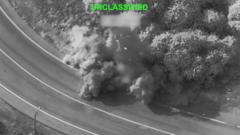
The United States has launched a new wave of military strikes against targets in Iran, according to reports from Tehran. Iranian officials say the attacks hit civilian infrastructure, including bridges. At the same time, US forces boarded a ship in the Strait of Hormuz, a key waterway for global oil shipments. This marks a major escalation in tensions between the two countries.
Main Impact
The strikes represent a significant step up in US military action against Iran. By hitting what Iran calls civilian infrastructure, the US risks widening the conflict beyond military targets. The boarding of a ship in the Strait of Hormuz also threatens to disrupt global oil supplies, as about one-fifth of the world's oil passes through this narrow waterway. These actions could lead to a broader regional crisis.
Key Details
What Happened
US forces carried out airstrikes on multiple locations inside Iran. Iranian state media reported that the attacks damaged several bridges, which are used for both civilian and military transport. The US military has not confirmed the specific targets but said the strikes were aimed at stopping Iran's ability to attack US forces and allies in the region.
Separately, US Navy personnel boarded a commercial vessel in the Strait of Hormuz. The US says the ship was suspected of carrying weapons or goods meant for Iranian-backed groups. Iran has condemned the boarding as an act of piracy.
Important Numbers and Facts
The strikes began on July 16, 2026, and continued into July 17. Iranian officials say at least 12 people were killed and 30 others wounded in the attacks. The US has not released casualty figures. The boarded ship was a cargo vessel registered in Panama, according to shipping data. The Strait of Hormuz handles about 20 million barrels of oil per day.
Background and Context
Tensions between the US and Iran have been high for years. The US has accused Iran of supporting militant groups in the Middle East, including in Yemen and Lebanon. Iran has denied these claims and says the US is trying to control the region's resources. The Strait of Hormuz is a flashpoint because Iran has threatened to block it in the past, which would disrupt global oil prices.
The latest strikes come after a series of attacks on US bases in Iraq and Syria, which Washington blames on Iran-backed militias. The US has also imposed new economic sanctions on Iran in recent months.
Public or Industry Reaction
Oil prices jumped by more than 5% on news of the strikes and the ship boarding. Traders worry about supply disruptions. Iran's government called the attacks a "war crime" and said it would respond. Other countries, including Russia and China, have called for calm. The United Nations said it is monitoring the situation closely.
In Iran, state TV showed images of damaged bridges and people gathering in protest. Some Iranian officials said the US is trying to start a wider war. The US State Department said the strikes were "defensive" and aimed at protecting American lives.
What This Means Going Forward
The risk of a direct US-Iran war is now higher than it has been in years. If Iran retaliates, it could target US troops in the region or try to block the Strait of Hormuz. That would likely cause oil prices to spike and hurt the global economy. Diplomatic efforts to de-escalate have so far failed. The US says it is ready for more strikes if needed. Iran says it will defend itself. The next few days will be critical.
Final Take
The US strikes and ship boarding mark a dangerous turn in US-Iran relations. Both sides are now in a direct confrontation that could spiral into a wider conflict. The world is watching closely, and the stakes for global stability and energy markets could not be higher.
Frequently Asked Questions
Why did the US strike Iran?
The US says the strikes were meant to stop Iran from attacking US forces and allies in the Middle East. Washington blames Iran for supporting militant groups that have targeted American bases.
What is the Strait of Hormuz and why does it matter?
The Strait of Hormuz is a narrow waterway between Iran and Oman. About 20% of the world's oil passes through it. If it is blocked, oil prices could rise sharply and hurt the global economy.
Could this lead to a war between the US and Iran?
Yes, the risk of a direct war is now higher. If Iran retaliates against US forces or tries to block the strait, the US could launch more strikes. Both sides have said they are ready for further action.