Summary
The United States and Iran have exchanged direct military strikes, marking a major escalation in their ongoing conflict. The U.S. military's Central Command (Centcom) announced it hit 90 Iranian targets in the latest round of attacks. Iran's health ministry reports that 14 people have been killed since Tuesday, including the burial of Iran's Supreme Leader, Ayatollah Ali Khamenei, after his reported death in earlier strikes.
Main Impact
The strikes represent the most direct military confrontation between the two nations in decades. The death of Supreme Leader Khamenei, confirmed by Iranian state media, has thrown Iran's leadership into crisis. The U.S. attacks targeted military infrastructure, including missile sites, drone bases, and command centers, aiming to degrade Iran's ability to launch further attacks. The human toll and political instability are already reshaping the region.
Key Details
What Happened
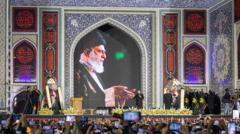
Centcom confirmed it launched a large-scale operation against Iranian military positions. The strikes were in response to an earlier Iranian attack on U.S. forces in the region. The U.S. says it targeted 90 separate sites, focusing on facilities used for missile and drone operations. Iran's health ministry reported that 14 people were killed, with dozens more wounded. Among the dead is Supreme Leader Khamenei, who was buried in a private ceremony in Tehran.
Important Numbers and Facts
The U.S. strikes hit 90 targets across Iran. Iran says 14 people have been killed since Tuesday. The attacks began after Iran launched a barrage of drones and missiles at U.S. bases in Iraq and Syria. The U.S. has not released its own casualty figures. The conflict started with a U.S. drone strike that killed a top Iranian general last week.
Background and Context
Tensions between the U.S. and Iran have been high for years, but this is the first time they have traded direct military strikes on each other's soil. The U.S. has long accused Iran of backing militant groups in the Middle East. Iran sees the U.S. as a hostile power trying to control the region. The death of Khamenei, who had been Iran's leader for over three decades, creates a power vacuum. His successor is not yet clear, and this could lead to internal instability.
Public or Industry Reaction
Reactions have been mixed. In Iran, state media is calling the U.S. attacks an act of war. Many Iranians are mourning Khamenei, while others fear more violence. In the U.S., some lawmakers are calling for restraint, while others support the strikes as necessary to protect American troops. International leaders, including the UN Secretary-General, have urged both sides to stop fighting. Oil prices have jumped sharply, as markets worry about supply disruptions from the region.
What This Means Going Forward
The situation remains very dangerous. The U.S. says it is not seeking a wider war, but it is ready to defend its forces. Iran's next moves are unclear, as the country deals with the loss of its leader. There is a real risk of more strikes from both sides. Other countries in the region, like Saudi Arabia and Israel, are watching closely. Diplomatic efforts are underway, but so far, neither side has shown signs of backing down. The conflict could spread if Iran's allies, like Hezbollah in Lebanon, get involved.
Final Take
The U.S.-Iran conflict has entered a new and dangerous phase. The death of Iran's Supreme Leader adds deep uncertainty. Both nations are now locked in a cycle of attack and response. Without a quick diplomatic solution, the region could face a much larger war. The world is watching to see if either side will step back from the brink.
Frequently Asked Questions
Why did the U.S. attack Iran?
The U.S. says it attacked in response to an Iranian drone and missile strike on American forces in Iraq and Syria. The U.S. wanted to stop Iran from being able to launch more attacks.
What happened to Iran's Supreme Leader?
Ayatollah Ali Khamenei was killed in the U.S. strikes. Iranian state media confirmed his death, and he was buried in a private ceremony in Tehran.
Is this the start of a full war?
It is a major escalation, but both sides have said they do not want a full war. However, the risk of more fighting is very high, and the situation could get worse quickly.