
Summary
The U.S. Navy recently took a bold step by sending two powerful warships through the Strait of Hormuz, a narrow and dangerous waterway controlled by Iran. This move was a direct challenge to Iran’s influence over the area, which is a vital route for the world’s oil and gas supply. By sailing through with their tracking systems turned on, the U.S. ships signaled that they no longer intend to stay away from the area. This event marks a major shift in the ongoing tension between the two nations as they also attempt to discuss a ceasefire.
Main Impact
The primary impact of this naval mission is the weakening of Iran’s control over global energy prices. For a long time, Iran has used its ability to block the Strait of Hormuz as a way to pressure the United States and its allies. Now that the U.S. Navy is actively clearing mines and protecting the passage, Iran’s main source of power in negotiations is fading. If the U.S. can keep this waterway open without Iran’s permission, it changes the balance of power in the Middle East and could help lower energy costs for the rest of the world.
Key Details
What Happened
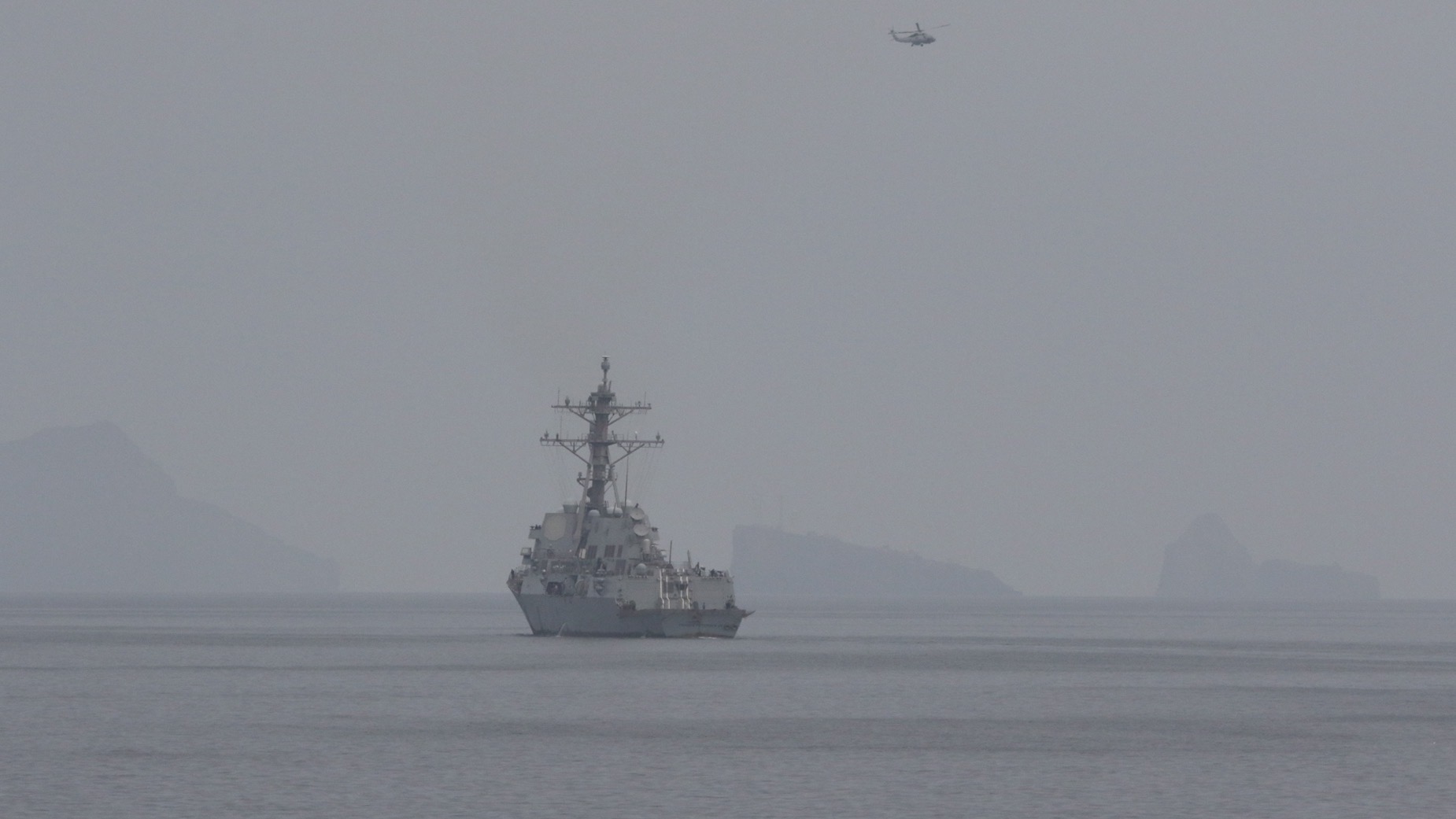
On Saturday, two U.S. Navy destroyers, the USS Michael Murphy and the USS Frank E. Peterson, sailed through the Strait of Hormuz. In a rare move, the ships turned on their Automatic Identification System (AIS). Usually, military ships keep this system off to stay hidden. By turning it on, the Navy wanted the world—and Iran—to see exactly where they were. The U.S. Central Command stated that these ships are starting to clear underwater mines that were placed by Iran’s military forces.
Important Numbers and Facts
The Strait of Hormuz is one of the most important places in the world for trade. Before the current conflict, about 20% of the world’s oil and liquid natural gas passed through this narrow gap every day. To strengthen its presence, the U.S. is sending even more military power to the region. This includes a third aircraft carrier, thousands of Marines, and specialized paratroopers. They are also using advanced underwater drones to find and remove explosives hidden beneath the waves.
Background and Context
The Strait of Hormuz is often called a "kill box" by military experts because it is so narrow. It is surrounded by Iranian land, making it easy for Iran to attack ships with missiles, fast boats, and mines. Because the space is so tight, ships have very little time to defend themselves if an attack happens. For months, U.S. warships avoided the strait to prevent a major battle. However, as the global energy crisis grew worse, the U.S. decided it was necessary to step in and ensure that trade ships could move safely again.
Public or Industry Reaction
The reaction from Iran was immediate and aggressive. During the transit, the Iranian Revolutionary Guard Corps (IRGC) sent a radio message to the U.S. ships, calling it a "last warning." Iranian media later claimed that the U.S. ships turned around after being confronted by drones, though the U.S. Navy denies this. On the other hand, shipping companies and energy experts are watching closely. Many believe that if the U.S. Navy can prove the path is safe, commercial oil tankers will finally feel comfortable moving through the area again, which would be a huge relief for the global economy.
What This Means Going Forward
Looking ahead, the situation remains very tense. While the U.S. and Iran are talking about a ceasefire in Pakistan, the military actions at sea suggest that both sides are still ready for a fight. Experts suggest that the U.S. is currently in a "whack-a-mole" phase, where they are slowly destroying Iran’s weapons and mines one by one. As Iran’s ability to threaten ships decreases, they will have less power to make demands during peace talks. More U.S. forces are expected to arrive later this month to finish the job of clearing the passage.
Final Take
The U.S. Navy has decided to stop avoiding the risks of the Strait of Hormuz and is now facing them directly. By clearing mines and defying Iranian warnings, the United States is trying to take back control of a global trade route that is too important to lose. While this move increases the risk of a short-term battle, it may be the only way to reach a long-term peace that keeps the world’s energy flowing. The coming weeks will show if Iran will back down or if this "last warning" will lead to a larger conflict.
Frequently Asked Questions
Why is the Strait of Hormuz so important?
It is a narrow waterway that connects oil-producing countries in the Middle East to the rest of the world. About one-fifth of the world's oil passes through it, making it essential for global energy supplies.
What is an AIS and why did the Navy turn it on?
AIS stands for Automatic Identification System, which shows a ship's location to others. The Navy turned it on to publicly demonstrate that they were successfully sailing through Iranian-controlled waters.
Is there going to be a war between the U.S. and Iran?
While tensions are very high and both sides have exchanged threats, they are also participating in ceasefire talks. The U.S. is currently focusing on clearing mines and protecting trade rather than starting a full-scale war.



