Summary
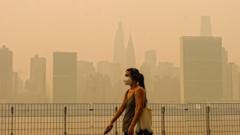
Former President Donald Trump has threatened to impose new tariffs on Canada, claiming that smoke from Canadian wildfires is sending "filthy" air into US cities. The threat comes as wildfires continue to burn across parts of Canada, sending smoke plumes southward. Canadian Prime Minister Mark Carney responded by saying both countries share equal responsibility for fighting climate change, which experts say is making wildfires worse.
Main Impact
The threat of new tariffs could strain trade relations between the US and Canada at a time when both countries are dealing with the effects of severe wildfires. If tariffs are put in place, they could raise costs for goods traded between the two nations. The dispute also highlights growing tensions over how to address climate change, which scientists say is a key factor behind more frequent and intense wildfires.
Key Details
What Happened
Trump made the tariff threat in a social media post, blaming Canada for allowing wildfires to burn out of control. He claimed the smoke was causing poor air quality in American cities. The post did not provide details on what specific tariffs he would impose or how they would be enforced.
Important Numbers and Facts
Wildfire season in Canada typically runs from April to October. In recent years, Canadian wildfires have sent smoke into the US, affecting air quality in states like New York, Minnesota, and Montana. The 2023 wildfire season was one of the worst on record, with over 45 million acres burned across Canada. So far in 2026, wildfires have already burned millions of acres, though exact numbers are still being tracked.
Background and Context
Wildfires are a natural part of many ecosystems, but climate change is making them more common and more severe. Warmer temperatures and drier conditions create ideal conditions for fires to start and spread. Both the US and Canada have seen an increase in large wildfires over the past decade. Scientists say that reducing greenhouse gas emissions is key to slowing this trend.
Tariffs are taxes on goods imported from other countries. They are often used as a tool in trade disputes. Trump has previously used tariffs on Canadian goods during his time in office, including on steel and aluminum. The new threat is unusual because it links trade policy to environmental issues.
Public or Industry Reaction
Canadian Prime Minister Mark Carney responded by saying that both countries need to work together on climate change. He pointed out that the US also faces wildfire risks and that smoke does not stop at borders. Environmental groups in both countries have criticized Trump's threat, saying it distracts from the real problem of climate change.
Some business leaders have expressed concern that new tariffs could hurt the economy. Canada is a major trading partner for the US, and many industries rely on goods moving freely across the border. Farmers, manufacturers, and energy companies could all be affected if tariffs are put in place.
What This Means Going Forward
The threat of tariffs adds a new layer of tension to US-Canada relations. It also raises questions about how countries will handle cross-border environmental issues in the future. If the US follows through on the threat, it could lead to a trade dispute that harms both economies.
At the same time, the wildfire problem is not going away. Both countries will need to invest in fire prevention, better forest management, and climate action. Experts say that blaming one country for smoke is not a solution. Instead, cooperation and shared responsibility are needed to address the root causes of worsening wildfires.
Final Take
The tariff threat over wildfire smoke is a sign of how climate change is becoming a political issue between countries. While the smoke from Canadian fires is real and affects air quality in the US, experts say that pointing fingers does not solve the problem. Both nations face the same challenge, and working together is the only way to reduce the risk of future fires and their harmful effects.
Frequently Asked Questions
Why is Trump threatening tariffs on Canada over wildfires?
Trump claims that Canadian wildfires are sending smoke into US cities, causing poor air quality. He says Canada is not doing enough to control the fires and wants to use tariffs as a way to pressure the country to take more action.
How do Canadian wildfires affect air quality in the US?
Smoke from large wildfires can travel hundreds of miles. When winds blow from the north, smoke from Canadian fires can reach US cities, causing hazy skies and unhealthy air. This has happened in recent years, especially in the Northeast and Midwest.
What does climate change have to do with wildfires?
Climate change creates warmer and drier conditions, which make it easier for wildfires to start and spread. This leads to longer fire seasons and more intense fires. Both the US and Canada are experiencing this trend, and scientists say reducing emissions is key to slowing it down.