
Summary
Tamil Nadu has a long history of surprising political results where even the most famous leaders have faced defeat. From powerful Chief Ministers to national political icons, no one is safe from the judgment of the voters. This pattern shows that the people of Tamil Nadu value accountability and are willing to remove even the strongest figures from power. These electoral upsets serve as a reminder that in a democracy, the voter remains the ultimate authority.
Main Impact
The main impact of these historical defeats is the constant pressure it puts on political parties. In Tamil Nadu, leaders cannot rely solely on their fame or past achievements to win elections. This environment forces political parties to stay alert and address local issues directly. When a major leader loses, it often leads to a complete shift in the state's political direction, sometimes ending decades of dominance by a single group or family.
Key Details
What Happened
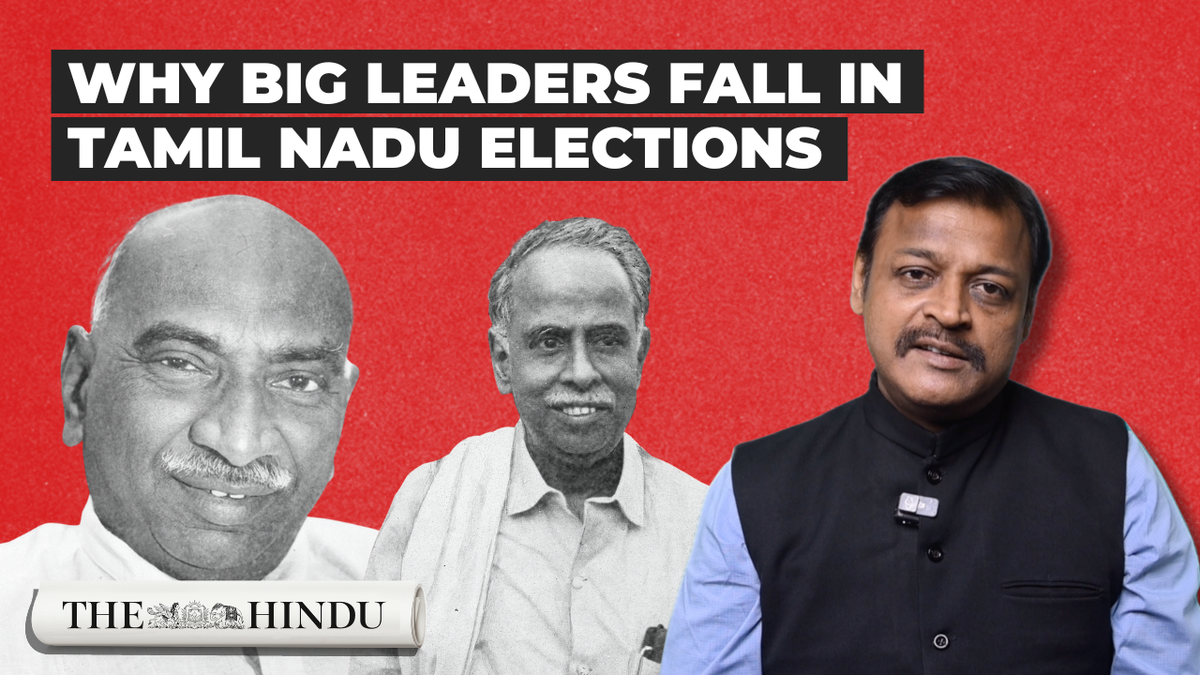
Over the decades, several "unbeatable" leaders have been voted out by the public. One of the most famous examples occurred in 1967 when K. Kamaraj, a man known as the "Kingmaker" of Indian politics, lost his own seat. He was defeated by a young student leader, which signaled the end of the Congress party's rule in the state. Similarly, in 1996, J. Jayalalithaa suffered a massive defeat, losing her seat in Bargur while her party was almost completely wiped out of the assembly.
Even M. Karunanidhi, a giant of the Dravidian movement, saw his party face heavy losses during periods of public anger. These moments show that the public mood can swing quickly if the people feel their needs are being ignored or if they perceive a leader as being too proud.
Important Numbers and Facts
In the 1967 elections, the DMK won 137 seats, ending the long-standing rule of the Congress party. This was a turning point that changed the state's politics forever. In the 1991 elections, following the death of Rajiv Gandhi, the DMK was reduced to just 2 seats in the entire assembly. Just five years later, in 1996, the tables turned again when the AIADMK won only 4 seats out of 234. These extreme swings in seat counts show how decisively the Tamil Nadu public votes when they want a change.
Background and Context
To understand why this happens, one must look at the nature of politics in the state. Tamil Nadu has a strong tradition of social justice and regional pride. The voters are highly politically active and follow the news closely. They often form strong emotional bonds with their leaders, treating them like family or even icons. However, this same passion turns into strong criticism if the leader fails to deliver on promises or becomes involved in major scandals.
The state has mostly seen a two-party system for the last fifty years, moving between the DMK and the AIADMK. This setup gives voters a clear choice to punish the party in power by voting for the main opposition. This "pendulum" effect has kept both parties on their toes for a long time.
Public or Industry Reaction
Political experts often describe Tamil Nadu as a state with a "wave" election style. When the public decides on a change, they do it with full force. The reaction from the public is usually one of quiet observation until election day, followed by a massive turnout. Within the political industry, these upsets are studied to understand how grassroots movements can defeat well-funded campaigns. National parties often find it hard to break into this system because the local voters prioritize state-specific issues over national trends.
What This Means Going Forward
As the state moves toward future elections, the lesson remains the same: no seat is a "sure win." New political players are entering the scene, including popular movie stars and younger leaders who hope to challenge the established parties. These new entrants must learn from history that fame does not guarantee a victory. They will need to build strong local networks and prove their worth to a very demanding public.
For the established parties, the risk of a sudden loss is always present. They must balance their traditional support bases with the needs of a younger generation that cares about jobs, technology, and clean government. The next few election cycles will test whether the old ways of campaigning still work or if the voters are ready for a completely different type of leadership.
Final Take
The history of elections in Tamil Nadu proves that the ballot box is a great equalizer. It does not matter how much money a candidate has or how famous they are across the country. If the people feel a leader has lost touch with reality, they will use their vote to bring about a change. This keeps the democracy in the state alive and ensures that power always stays in the hands of the citizens rather than the politicians.
Frequently Asked Questions
Who was the most famous leader to lose an election in Tamil Nadu?
K. Kamaraj is often cited as the most famous example. He was a national leader of the Congress party but lost his seat in 1967 to a student leader named P. Seenivasan.
Why do voters in Tamil Nadu often change their government?
Voters in the state are very sensitive to issues like corruption, price rises, and social justice. They often use their vote to punish the ruling party if they feel their expectations are not being met.
Can a new party win against the DMK or AIADMK?
History shows it is difficult but possible. The DMK itself started as a challenger to the Congress and eventually took over. Any new party must show a strong connection to the people to succeed.



