
Summary
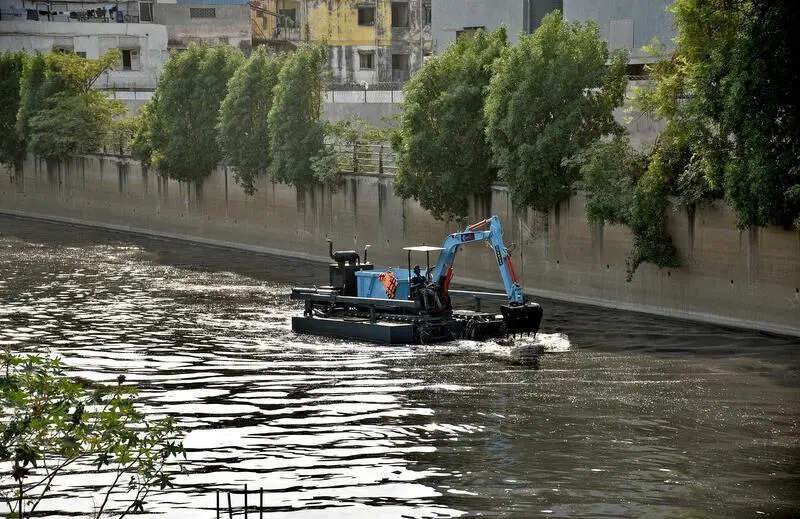
The Surat Municipal Corporation has introduced a floating hydraulic excavator to clean the city's extensive network of creeks. This specialized machinery is designed to remove silt, plastic waste, and thick vegetation from water bodies that are difficult to reach from the shore. By clearing these blockages, the city aims to improve water flow and significantly reduce the risk of flooding during the heavy monsoon rains. This move represents a shift toward using modern technology to solve long-standing urban drainage issues.
Main Impact
The introduction of the floating excavator has a direct impact on the safety and health of residents living near Surat’s waterways. For years, traditional cleaning methods were limited because standard excavators could only reach a few meters from the bank. This left the middle of wide creeks clogged with mud and trash. The new floating machine can move directly onto the water, ensuring the entire width of the creek is cleared. This leads to a much higher capacity for the creeks to carry rainwater, which prevents the water from overflowing into residential neighborhoods and causing property damage.
Key Details
What Happened
City officials in Surat identified that several major creeks, known locally as "khadis," were becoming dangerously shallow due to the buildup of silt and garbage. To address this, they deployed a floating hydraulic excavator. Unlike a regular digger that sits on tracks on solid ground, this machine is mounted on a buoyant platform or has specialized sealed pontoons that allow it to stay afloat. It can navigate through deep or shallow water to scoop out debris that has settled at the bottom of the creek bed.
Important Numbers and Facts
Surat manages a massive network of creeks that stretches over 100 kilometers across different zones of the city. In previous years, the city struggled to maintain these waterways using only land-based equipment. The floating excavator can work in areas where the water is several meters deep, which was previously impossible for standard machinery. The cleaning project is part of a larger pre-monsoon plan that involves removing thousands of tons of waste before the rainy season begins in June. By starting this work early, the municipal corporation hopes to ensure that the drainage system is at 100% capacity when the first heavy storms arrive.
Background and Context
Surat is a city that sits very close to the coast and is crisscrossed by various natural and man-made water channels. These channels are the primary way the city sheds excess water during the monsoon. However, as the city has grown, these creeks have often become dumping grounds for plastic and industrial waste. Additionally, natural silt flows in from the surrounding plains and settles at the bottom, making the creeks shallower every year. When a creek is shallow, it cannot hold much water. During a heavy downpour, the water has nowhere to go but up and out into the streets. Cleaning these creeks is not just about aesthetics; it is a vital part of disaster management and public safety.
Public or Industry Reaction
Local residents have generally welcomed the move, especially those living in low-lying areas that are prone to yearly flooding. Many have noted that the smell and the presence of mosquitoes often decrease once the stagnant waste is removed from the water. Engineering experts in the waste management industry have also praised the use of floating technology. They point out that while the initial cost of such machinery might be higher than traditional tools, the efficiency and the amount of waste removed make it a better long-term investment for large cities. The ability to clean the center of a waterway without needing to build temporary roads or platforms saves both time and money.
What This Means Going Forward
The success of this floating excavator could lead to the purchase of more units to cover the entire city more quickly. It also sets a standard for other coastal cities in India that face similar flooding challenges. Going forward, the city will likely focus on a schedule of regular maintenance rather than waiting for the creeks to become completely blocked. There is also a push to combine this mechanical cleaning with stricter rules against illegal dumping. If the city can keep the trash out of the water in the first place, the floating excavators will only need to deal with natural silt, making the entire drainage system much more sustainable and easier to manage.
Final Take
Using specialized floating equipment is a smart and necessary step for a growing city like Surat. By tackling the root cause of urban flooding—clogged and shallow waterways—the city is protecting its people and its infrastructure. This proactive approach shows that modern engineering can provide practical solutions to the environmental challenges faced by large populations living near water.
Frequently Asked Questions
How does a floating excavator stay above water?
A floating excavator is built on a set of hollow, airtight pontoons or a barge-like platform. These provide enough buoyancy to support the weight of the heavy hydraulic arm and the engine while it works in the water.
Why can't regular excavators clean the creeks?
Regular excavators must stay on solid ground. Many of Surat's creeks are too wide for a land-based machine to reach the middle. If the middle remains clogged, the water flow is still restricted, which leads to flooding.
Does this help with the mosquito problem?
Yes. By removing trash and silt, the water flows more freely. Stagnant, dirty water is a primary breeding ground for mosquitoes. Cleaning the creeks helps reduce the population of insects that carry diseases.



