
Summary
Union Minister Kiren Rijiju recently made a public claim regarding a private conversation he had with Congress leader Shashi Tharoor. Rijiju suggested that during a lighthearted exchange, Tharoor indirectly admitted that the Congress party has a history of being "anti-women." This statement has sparked new discussions about how political rivals interact behind the scenes and how those interactions are used to shape public opinion. The claim comes at a time when both major parties are trying to win over female voters through various policies and promises.
Main Impact
The primary impact of this claim is the pressure it puts on the Congress party's image regarding gender equality. By using a well-known and respected figure like Shashi Tharoor as the source of this "admission," Rijiju is attempting to weaken the opposition's credibility. This type of political storytelling is designed to make the public question whether the Congress party truly supports women's rights or if its leaders secretly hold different views. It also shows how personal friendships between politicians from different parties can sometimes be used as tools for political messaging.
Key Details
What Happened
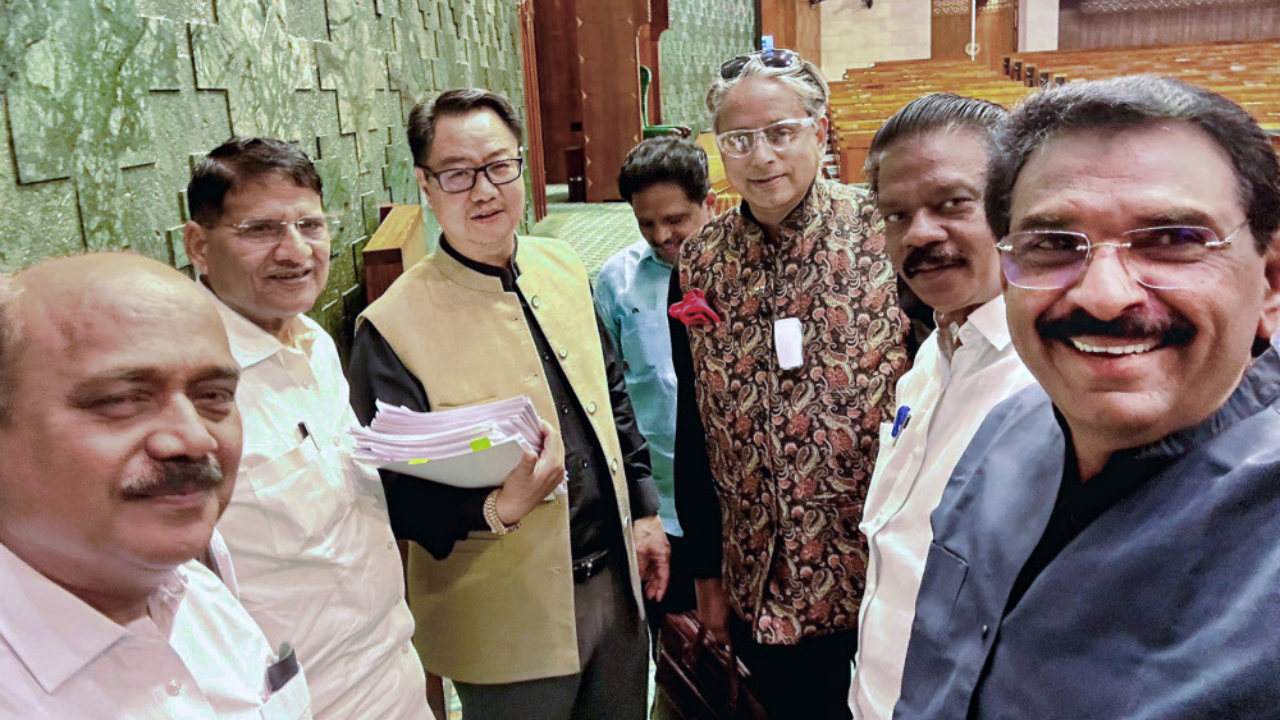
Kiren Rijiju shared an anecdote about a time he was talking with Shashi Tharoor. According to Rijiju, the two were engaging in friendly banter when the topic of the Congress party's treatment of women came up. Rijiju claimed he told Tharoor that the Congress party does not truly respect or empower women. Instead of a strong defense, Rijiju says Tharoor’s reaction suggested he "accepted" the point in his own way. Rijiju did not say Tharoor used those exact words, but he interpreted Tharoor's silence or body language as an agreement with the criticism.
Important Numbers and Facts
The discussion around women in politics is backed by significant data in India. Currently, women make up nearly half of the voting population. The government recently passed the Women's Reservation Bill, which aims to give 33% of seats in Parliament and state assemblies to women. Rijiju’s comments are part of a larger effort by the BJP to highlight their work for women while criticizing the Congress party's past record. During the last few election cycles, the "women's vote" has become a deciding factor in many states, making these types of claims very important for political strategy.
Background and Context
To understand why this matters, one must look at the roles of both men. Kiren Rijiju is a senior minister in the central government and a vocal critic of the Congress party. Shashi Tharoor is a high-profile Congress MP known for his excellent English and sophisticated way of speaking. Because Tharoor is seen as a modern and progressive leader, any suggestion that he agrees with criticisms of his own party is taken seriously by the media. This interaction is part of a long history of "parliamentary banter" where leaders tease each other, but Rijiju’s decision to make this specific conversation public shows a shift toward using personal moments for political gain.
Public or Industry Reaction
The reaction to Rijiju's claim has been mixed. Supporters of the BJP have shared the story widely on social media, using it as proof that even Congress leaders are unhappy with their party's direction. On the other hand, Congress supporters and some political analysts have dismissed the claim. They argue that friendly jokes between politicians should not be taken as serious political admissions. Shashi Tharoor is known for being polite and witty, and many believe his "acceptance" was likely just a way to keep the conversation light rather than a real statement on party policy. So far, the Congress party has maintained that their record on women's rights is strong and that the BJP is trying to distract from other issues.
What This Means Going Forward
Moving forward, we can expect to see more of these personal stories being used in political campaigns. As the next elections get closer, the fight for the female vote will get more intense. The BJP will likely continue to use Rijiju’s story to paint the Congress as an old-fashioned party that does not care about women. The Congress party will need to find ways to counter this narrative, perhaps by highlighting their own female leaders and their plans for women's safety and economic growth. This event also serves as a reminder to politicians that even "private" banter can become public news in the digital age.
Final Take
Politics in India is often as much about personal stories as it is about official policies. Kiren Rijiju’s claim about Shashi Tharoor shows how a simple moment of humor can be turned into a sharp political weapon. While it is hard to know exactly what was said in a private chat, the way this story is being told helps the BJP build a specific image of their rivals. For the average voter, it is a sign that the battle for their support is happening not just in speeches, but in every small interaction between the country's leaders.
Frequently Asked Questions
What did Kiren Rijiju say about Shashi Tharoor?
Rijiju claimed that during a friendly conversation, Tharoor indirectly agreed that the Congress party has an "anti-women" stance. He suggested Tharoor did not defend the party when the topic was raised.
How did the Congress party respond?
While there has not been an official formal statement on every detail, the party generally views such claims as a way to distract from real issues. They maintain that they have always supported women's empowerment.
Why is the "women's vote" so important in India?
Women make up a huge part of the voting population, and their participation in elections has been increasing. Both major parties believe that winning over female voters is the key to winning national elections.



