
Summary
The Strait of Hormuz is currently facing a major crisis that has many experts worried about global energy security. This narrow waterway is one of the most important paths for oil in the world. Because of rising tensions in West Asia, people are comparing the current situation to the 1956 Suez Crisis. If this path is blocked, it could change how the world gets its power and how much people pay for fuel.
Main Impact
The biggest impact of this crisis is on the price and supply of energy. The Strait of Hormuz is a "chokepoint," which means it is a narrow place that is very easy to block but very hard to bypass. About 20 percent of the world’s oil and a large amount of natural gas travel through this small area every day. If the flow of ships stops, oil prices could jump to over $100 per barrel very quickly. This would lead to higher costs for transportation, food, and electricity in almost every country.
Key Details
What Happened
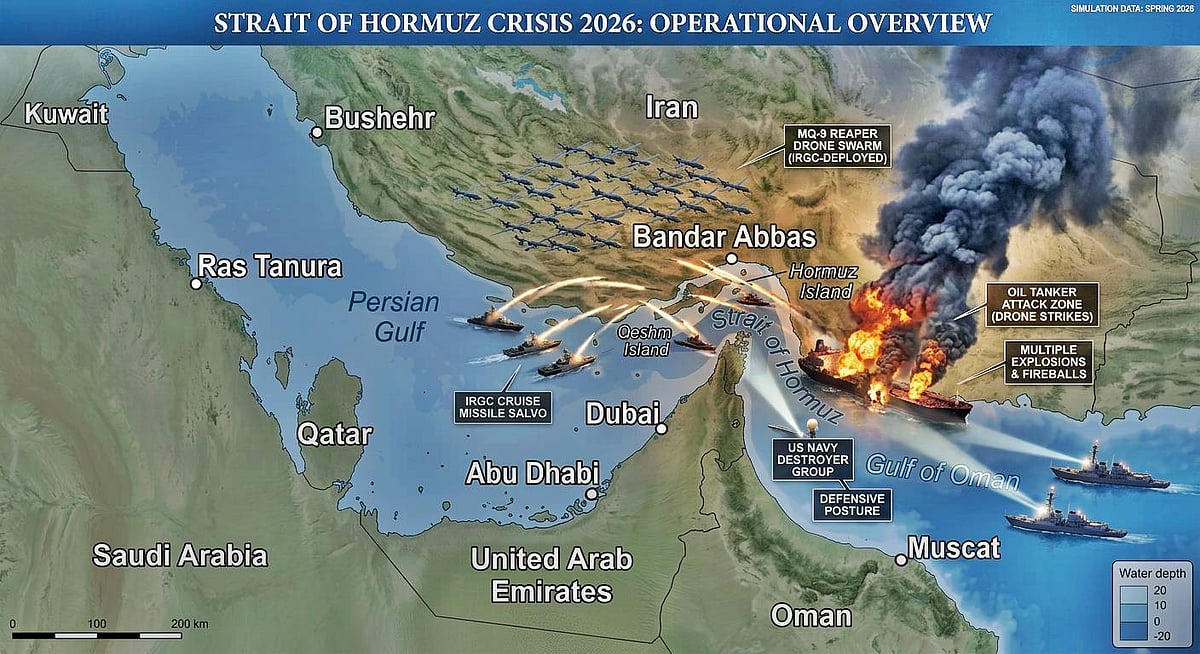
Tensions between Iran and other global powers have made the Strait of Hormuz a dangerous place for shipping. The waterway is only 39 kilometers wide at its narrowest point. It sits between Iran and Oman, connecting the Persian Gulf to the open ocean. Because the shipping lanes are so close to Iranian land, the Iranian military has a lot of control over who passes through. Recently, there have been threats to close the strait and reports of ships being seized, which has put the global shipping industry on high alert.
Important Numbers and Facts
The data shows why this small area matters so much to the world economy. Every day, around 21 million barrels of oil move through the strait. This represents about one-fifth of all the oil humans use daily. Additionally, 25 percent of the world’s liquefied natural gas (LNG) is moved through this route. For a country like India, the stakes are very high. India is the third-largest oil user in the world and gets nearly 88 percent of its oil from other countries. In the past, about half of those imports came through this single waterway.
Background and Context
The Strait of Hormuz has been important for thousands of years. Its name comes from Hormuz Island, which was named after an ancient Persian god. Long ago, Alexander the Great sent his ships here to explore trade routes. In the 1500s, the Portuguese took control of the area to rule the trade between India and Europe. They stayed for over a hundred years until Persian and British forces pushed them out in 1622.
The comparison to the 1956 Suez Crisis is important because it shows what happens when a major trade route is closed. In 1956, Egypt took control of the Suez Canal, leading to a war involving Britain, France, and Israel. Even though the military action was successful at first, the United States and other countries forced them to stop. The event caused huge economic problems and showed that narrow waterways are the most sensitive parts of global trade. The Strait of Hormuz is seen as even more critical today because the world depends so much more on oil and gas than it did in the 1950s.
Public or Industry Reaction
Global markets are nervous. Shipping companies are worried about the safety of their crews and vessels. In India, the government has been working hard to find oil from other places so they do not rely only on the Middle East. India now buys more oil from Russia, the United States, and Africa. However, industry experts say that even if India buys oil from elsewhere, a total closure of the strait would still cause prices to rise for everyone. Indian officials have stated they have enough oil stored in "strategic reserves" to last for a short time if a total emergency happens.
What This Means Going Forward
The situation remains very unstable. If military conflict breaks out, the strait could be closed for a long time. This would force ships to take much longer and more expensive routes around Africa, similar to what happened during the Suez Crisis. Countries are now looking for ways to build pipelines that go across land to avoid the strait entirely. However, these projects take years to build and cost billions of dollars. For now, the world remains dependent on the peace and stability of this 39-kilometer stretch of water.
Final Take
The Strait of Hormuz is a small geographic feature with a massive impact on the lives of people everywhere. Whether someone is driving a car in India or heating a home in Europe, they are connected to what happens in this narrow waterway. History shows that when these chokepoints are threatened, the entire world feels the pain. Protecting the flow of trade through the strait is not just a local issue; it is a global necessity for economic survival.
Frequently Asked Questions
Why is the Strait of Hormuz so important?
It is the main exit for oil coming out of the Middle East. About 20% of the world's oil and 25% of its natural gas must pass through this narrow point to reach global markets.
What happened during the "Tanker War"?
During the 1980s, Iran and Iraq fought a long war. During this time, they attacked more than 500 ships in the strait to try and stop each other from selling oil. This is one of the main reasons people fear a new conflict today.
How is India protecting itself from this crisis?
India is buying oil from different parts of the world, like Russia and America, to reduce its dependence on the strait. It also keeps a large supply of oil in underground storage to use if there is a sudden shortage.

