
Summary
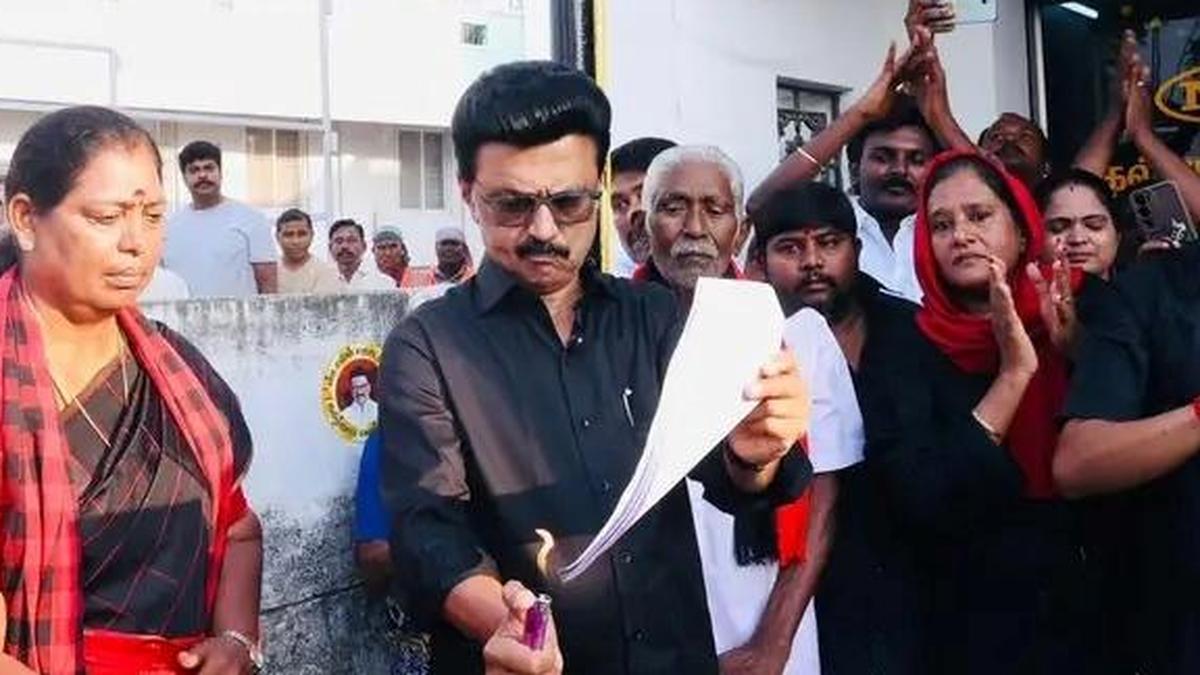
Tamil Nadu Chief Minister M.K. Stalin recently took a strong stand against the central government's proposed delimitation bill. During an election campaign in Namakkal, he publicly burnt a copy of the bill, calling it a "black law." This act of protest highlights a major concern for Southern Indian states regarding their political power and representation in the national parliament. Stalin argues that the law unfairly punishes states that have successfully managed their population growth.
Main Impact
The primary impact of this protest is the heightening of political tension between the state of Tamil Nadu and the central government. By burning the bill, Stalin has made the issue of seat redistribution a central theme of his election campaign. This move resonates with local voters who fear that their voice in New Delhi will become weaker. It also signals to other Southern states that a unified front may be necessary to protect their regional interests in the coming years.
Key Details
What Happened
While traveling through western Tamil Nadu for election work, M.K. Stalin stopped in the town of Namakkal. In front of a large crowd of supporters and media members, he set fire to a document representing the delimitation bill. He used the term "black law" to describe the legislation, a phrase often used in Indian politics to label laws that are seen as deeply unfair or harmful to the people. The protest was a symbolic way to show that his party, the DMK, will not accept the changes proposed by the central authorities.
Important Numbers and Facts
The delimitation process involves redrawing the boundaries of parliamentary seats based on the latest population data. The last time this was done on a large scale was decades ago. Since then, Northern states have seen a massive increase in population, while Southern states like Tamil Nadu have seen much slower growth due to better healthcare and education. If the new seats are assigned strictly by population, Tamil Nadu could lose a significant number of representatives in the Lok Sabha, while states like Uttar Pradesh could gain many more.
Background and Context
To understand why this matters, one must look at how democracy works in India. The number of members a state sends to Parliament is based on how many people live in that state. In the 1970s, the government decided to freeze the number of seats to encourage states to control their population. The fear now is that once this freeze ends, the states that followed the rules and lowered their birth rates will be rewarded with less political power. Stalin and other leaders in the South believe this is a violation of the principles of fairness. They feel that their success in social development should not lead to a loss of influence in national decision-making.
Public or Industry Reaction
The reaction to Stalin’s protest has been divided along political lines. Within Tamil Nadu, many regional parties and local citizens have praised the move, seeing it as a brave defense of the state's rights. They worry that a smaller number of seats will mean less federal funding and less attention from the central government. On the other hand, leaders from the ruling party at the center have criticized the act. They argue that delimitation is a constitutional requirement and is necessary to ensure that every citizen's vote has equal weight, regardless of where they live. They claim that the protest is a political tactic used to stir up regional emotions before the elections.
What This Means Going Forward
Looking ahead, the issue of delimitation is likely to become one of the most debated topics in Indian politics. As the country prepares for a new census, the pressure to redraw boundaries will grow. The central government will have to find a way to balance the needs of high-population states with the concerns of states that have achieved better social outcomes. If a compromise is not reached, it could lead to a long-term political crisis. We may see more protests, legal challenges in the courts, and demands for a new system of seat allocation that does not rely solely on population numbers.
Final Take
M.K. Stalin’s act of burning the bill is a clear message that the fight over political representation is just beginning. It is not just about numbers or maps; it is about how much power each part of the country holds. For Tamil Nadu, this is a battle to ensure that their progress in education and health does not result in being ignored at the national level. The outcome of this struggle will shape the future of Indian democracy for decades to come.
Frequently Asked Questions
What is the delimitation bill?
It is a plan to redraw the boundaries of electoral constituencies and change the number of seats each state has in Parliament based on current population data.
Why is M.K. Stalin calling it a "black law"?
He believes the law is unfair because it reduces the political power of states that have successfully controlled their population growth, effectively punishing them for their success.
Which states are most affected by this?
Southern states like Tamil Nadu, Kerala, and Andhra Pradesh are most concerned, as they have lower population growth compared to Northern states like Uttar Pradesh and Bihar.



