Summary
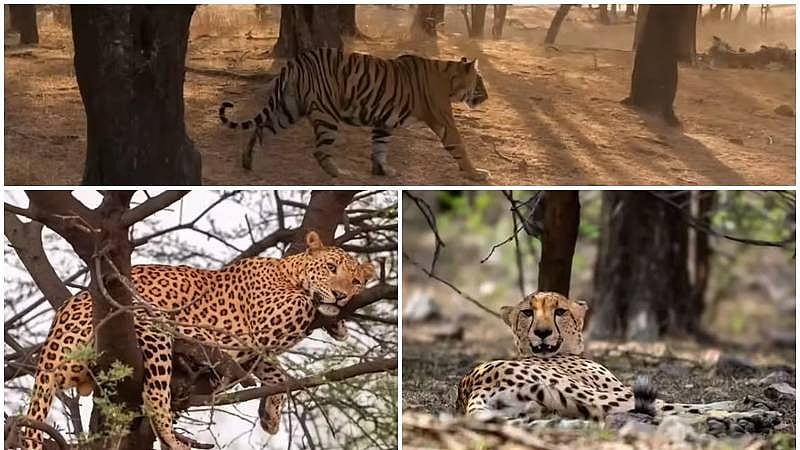
On April 20, 2026, wildlife officials and tourists at the Ranthambore Tiger Reserve in Rajasthan witnessed a historic event. A tiger, a leopard, and a cheetah were all seen in the same general area within a very short period. This is considered an extremely rare event because these three large predators usually live in different types of environments and try to avoid one another. The sighting has sparked great interest among wildlife experts who study how big cats share space and resources.
Main Impact
The primary impact of this sighting is the realization that different species of big cats can end up in the same territory due to natural movement. It highlights the success and challenges of wildlife corridors, which are paths of forest that allow animals to travel from one park to another. While it is exciting for tourists to see all three animals at once, it also raises questions about the safety of the cheetah. Since tigers are much larger and more powerful, the presence of a cheetah in a tiger-dominated area is a situation that forest officials must monitor very closely to prevent any conflict between the species.
Key Details
What Happened
The event took place in Zone 9 of the Ranthambore Tiger Reserve, specifically near the Chakal river. Forest officials reported that the tiger, leopard, and cheetah were all located within a small range of about one to two kilometers. This happened during a single time window, making it a once-in-a-lifetime view for those present. The cheetah involved has been identified as KP-2, an animal that has been under observation for some time.
Important Numbers and Facts
The cheetah, KP-2, originally came from Kuno National Park in the neighboring state of Madhya Pradesh. It traveled a long distance to enter Rajasthan last week. Ranthambore itself is a massive protected area, covering about 1,800 square kilometers. It is currently home to approximately 70 tigers. The fact that a single cheetah moved into an area with such a high density of tigers is what makes this story so unusual. A joint team of experts from both Ranthambore and Kuno has now set up a special camp to track the cheetah using high-tech radio equipment.
Background and Context
To understand why this is rare, one must look at how these animals live. Tigers are the strongest of the three and are very protective of their homes. They usually do not like other big cats nearby. Leopards are very smart and adaptable; they usually stay in trees or hide in rocky areas to stay out of the tiger's way. Cheetahs are very different from both. They are built for speed and prefer open fields where they can run fast to catch prey during the day. Because Ranthambore is mostly thick forest and hills, it is not the usual place you would expect to find a cheetah. The arrival of KP-2 shows that animals often wander far away from their homes to find new places to live or hunt.
Public or Industry Reaction
The forest department shared the news on social media, calling the moment "unscripted" and "impossible to plan." Manas Singh, a high-ranking official at the reserve, noted that the event drew a lot of attention because it shows the natural world is full of surprises. Wildlife expert Rajkumar Chauhan explained that while this is a significant event, it does not mean the three cats will live together forever. He believes this was a temporary meeting caused by the animals moving around to find food or new territory. Most experts agree that this event proves how important it is to keep forests connected so animals can move freely without getting trapped in small areas.
What This Means Going Forward
Moving forward, the main priority for forest guards is the safety of the cheetah. Because KP-2 is in a new environment filled with bigger predators, there is a risk of a fight. The monitoring team will continue to follow the cheetah's movements to see if it decides to stay in Ranthambore or move back toward Kuno. This event will also provide scientists with new data on how cheetahs behave when they encounter tigers and leopards in the wild. It may change how officials plan for the future of cheetah conservation in India, especially regarding where these animals are allowed to roam.
Final Take
This rare meeting of a tiger, leopard, and cheetah is a powerful reminder that nature does not always follow a strict set of rules. It shows that the wild is a dynamic place where animals are constantly moving and exploring. While the sighting was a thrill for those who saw it, the focus now shifts to the long-term survival of these animals as they navigate a crowded and complex environment. Protecting the paths between our forests remains the best way to ensure that all these species have the space they need to thrive.
Frequently Asked Questions
How did the cheetah get to Ranthambore?
The cheetah, known as KP-2, walked from Kuno National Park in Madhya Pradesh. It traveled across the state border and entered the Ranthambore area in Rajasthan on its own.
Are the three animals living together now?
No, they are not living together as a group. They were simply spotted in the same area at the same time. They still maintain their own space and usually try to avoid direct contact with each other.
Is the cheetah in danger from the tigers?
There is a risk because tigers are much larger and very territorial. This is why forest officials are using tracking equipment to monitor the cheetah's location and ensure it stays safe.