
Summary
Rahul Gandhi, the Leader of the Opposition in the Lok Sabha, has raised serious concerns about the lack of representation for Bahujan communities in top leadership roles. He stated that people from marginalized backgrounds are often blocked from reaching senior positions in major institutions. Gandhi called this a form of systemic discrimination that his party is determined to fight. These comments were made after he met with bank employees who shared their personal struggles with unfair treatment and stalled careers.
Main Impact
The main impact of this statement is a renewed focus on how social justice works in the Indian workplace. While there are laws to help people from Scheduled Castes (SC) and Scheduled Tribes (ST) get entry-level jobs, Gandhi argues that these laws are not enough to help them reach the top. This highlights a "glass ceiling" where marginalized workers are kept in lower-level roles while leadership remains dominated by a small group. By bringing this issue to the Parliament House complex, Gandhi is making workplace equality a central part of the national political conversation.
Key Details
What Happened
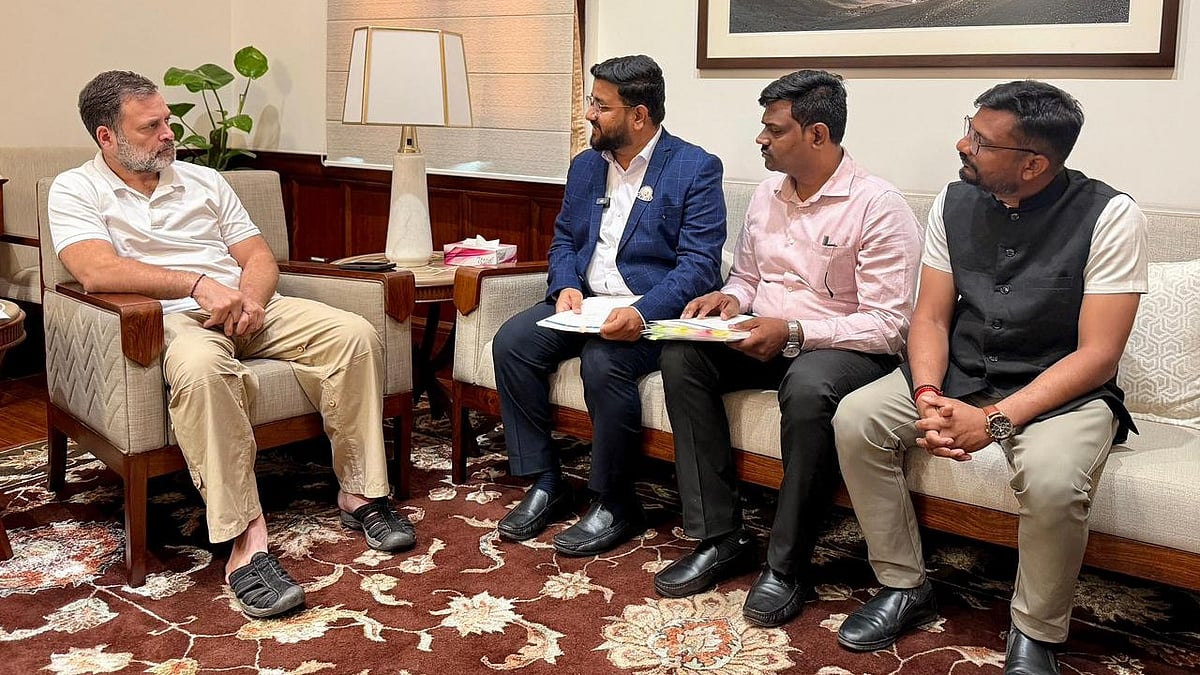
Rahul Gandhi held a meeting called a "Jan Sansad" at the Parliament House complex. During this event, he spoke with a delegation from the SC-ST Welfare Association of a Gramin Bank (rural bank). The workers shared their experiences of being passed over for promotions despite having the right qualifications. They explained that even though there are rules meant to ensure fair promotions, these rules are often ignored by those in charge. Gandhi shared a video of this interaction to show the public the reality of these challenges.
Important Numbers and Facts
The workers highlighted several specific problems during their talk with the Congress leader. They pointed out that the "roster system," which is a rule used to track and ensure fair promotion for different groups, is frequently bypassed. They also mentioned that when it comes time for a promotion, managers often claim a worker lacks "merit" or has "poor performance" as a way to deny them the role. Furthermore, the delegation claimed that employees who complain about this treatment are often punished. One common punishment is being transferred to a very remote or difficult location, making it hard for them to continue their work or stay with their families.
Background and Context
In India, the term "Bahujan" is often used to refer to a large group of people from Scheduled Castes, Scheduled Tribes, and Other Backward Classes. For many years, the government has used a system of reservations to make sure these groups have access to education and government jobs. However, the debate has now shifted from just getting a job to moving up the career ladder. Many activists argue that while the doors are open at the bottom, the path to the top is still blocked by old biases. The banking sector, in particular, has been a focus of these complaints, as it is a major employer where leadership roles carry significant influence.
Public or Industry Reaction
The reaction to Gandhi's comments has been strong. Members of the Congress party have supported his stance, saying that true equality cannot happen until every level of an organization reflects the diversity of the country. On the other hand, some critics argue that promotions should be based strictly on performance rather than background. However, the stories shared by the bank workers suggest that "performance" is often used as a subjective tool to keep certain groups out of power. Industry experts in the banking world are now facing more pressure to look at their promotion data and see if there is a pattern of exclusion.
What This Means Going Forward
Going forward, this issue is likely to lead to more demands for transparency in how promotions are handled in government-owned banks and other public institutions. There may be calls for a "caste census" or a detailed audit of senior management roles across the country. If the Congress party continues to push this agenda, it could force the government to tighten the rules around the roster system. For workers, this means there might be more protection for those who speak up against unfair treatment. The focus will likely remain on ensuring that "merit" is defined in a fair and clear way that does not hide hidden biases.
Final Take
The fight for fair representation is moving beyond just hiring and into the boardrooms of India’s biggest institutions. Rahul Gandhi’s meeting with bank workers shows that systemic barriers still exist for many people. Ensuring that leadership roles are open to everyone, regardless of their background, is essential for a fair society. This discussion is a reminder that laws on paper must be matched by real changes in how organizations are run every day.
Frequently Asked Questions
What is the roster system in promotions?
The roster system is a record-keeping tool used in India to ensure that reservation policies for marginalized groups are followed correctly during hiring and promotions. It helps track which positions should go to which communities to maintain fairness.
Why are "merit" and "performance" being criticized?
Rahul Gandhi and the bank workers argue that these terms are sometimes used unfairly. They claim that managers might label a worker as having "low merit" simply to prevent them from getting a promotion, even if the worker is actually qualified.
What happens to workers who complain about discrimination?
According to the delegation that met with Gandhi, workers who speak out are often penalized. A common tactic is to transfer these employees to remote or undesirable locations as a way to discourage them from complaining further.

