Summary
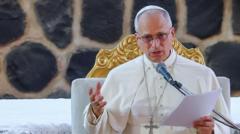
Pope Francis has issued a sharp rebuke against world leaders who spend massive amounts of money on weapons and military conflicts. He described those who prioritize war over the needs of the poor as "tyrants." These comments come at a time of high tension following a public disagreement with Donald Trump, who recently criticized the Pope for being too soft on crime and security issues.
Main Impact
The Pope’s statement marks a significant moment in the ongoing ideological struggle between the Vatican and nationalist political movements. By using the word "tyrants," the Pope is moving beyond general calls for peace and is directly challenging the morality of modern government budgets. This shift could influence how millions of people view the link between national defense spending and social welfare. It also highlights a deep divide in how global leaders define strength, with the Pope focusing on humanitarian aid while others focus on military power.
Key Details
What Happened
During a recent public address, Pope Francis spoke about the global state of affairs and the rising cost of living. He pointed out that while many families struggle to afford basic needs, governments continue to find billions of dollars for the production and purchase of weapons. He argued that this choice is not just a political mistake but a moral failure. He suggested that the resources used for war could instead be used to end world hunger, improve healthcare, and provide better education for children in developing nations.
Important Numbers and Facts
Global military spending has reached record levels in recent years, often exceeding two trillion dollars annually. The Pope specifically mentioned that even a small fraction of this money could change the lives of the world's most vulnerable people. His comments follow a series of exchanges with Donald Trump, who has frequently called for increased military budgets and tougher border security. Trump’s recent claim that the Pope is "weak on crime" served as the spark for this latest round of criticism from the Vatican.
Background and Context
The relationship between Pope Francis and Donald Trump has been complicated for a long time. They represent two very different ways of looking at the world. The Pope often speaks about the importance of building bridges, helping migrants, and protecting the environment. On the other hand, Trump’s policies have often focused on "America First" strategies, which include building walls and increasing the strength of the military. This latest spat is part of a larger debate about what makes a nation truly secure. While one side argues that security comes from having the strongest army, the other argues that true security comes from justice and taking care of the poor.
Public or Industry Reaction
The Pope’s comments have received a mixed reaction across the globe. Humanitarian organizations and peace activists have praised the Pope for his bravery in calling out the "military-industrial complex." They believe his voice is necessary to remind people of the human cost of war. However, some political analysts and supporters of the former president argue that the Pope does not understand the realities of national security. They claim that in a dangerous world, spending money on defense is a necessity rather than a choice. Some critics have also suggested that the Pope should stay out of politics and focus only on religious matters.
What This Means Going Forward
This public disagreement is likely to continue as global tensions rise. The Pope’s willingness to use strong language like "tyrants" suggests that the Vatican will not back down from criticizing wealthy nations. As elections approach in various parts of the world, these topics will remain at the center of public debate. Voters who are religious may find themselves caught between their political loyalties and the moral teachings of their faith. In the long term, this could lead to more pressure on governments to justify their military spending and to show how they are helping the less fortunate.
Final Take
The core of this issue is a disagreement over priorities. Pope Francis is making a clear argument that a leader's greatness should be measured by how they treat the weakest members of society, not by the size of their arsenal. By calling out the billions spent on war, he is forcing a conversation about where our true values lie. Whether or not world leaders change their ways, the Pope has made it clear that he will continue to speak for those who have no voice in the halls of power.
Frequently Asked Questions
Why did the Pope call world leaders "tyrants"?
The Pope used this term to describe leaders who spend billions on weapons and war while ignoring the basic needs of their citizens and the poor around the world.
What did Donald Trump say about the Pope?
Donald Trump criticized the Pope by calling him "weak on crime," suggesting that the Pope's focus on mercy and social justice does not do enough to ensure safety and law and order.
What is the main point of the Pope's message?
The main point is that global resources should be used to solve human problems like hunger and lack of education rather than being spent on military equipment and conflict.