Summary
A new wave of worker protests has broken out in Noida, leading to significant disruptions across the city. To prevent the situation from escalating, police officials stopped senior leaders from the Samajwadi Party (SP) and the Communist Party of India (Marxist) (CPIM) at the district borders. These security measures caused heavy traffic jams, affecting thousands of people traveling between Delhi and Noida. Authorities stated that these actions were necessary to maintain peace and prevent any outside influence from worsening the local unrest.
Main Impact
The immediate impact of the protest and the police response was felt most by daily commuters. Major entry points into Noida were heavily guarded, leading to long lines of vehicles and delays lasting several hours. Beyond the traffic, the event highlights a growing tension between industrial workers and the local administration. By blocking political leaders, the police aimed to keep the protest a local labor issue rather than letting it turn into a larger political movement. However, this move has sparked a debate about the right to move freely and the right to support worker causes.
Key Details
What Happened
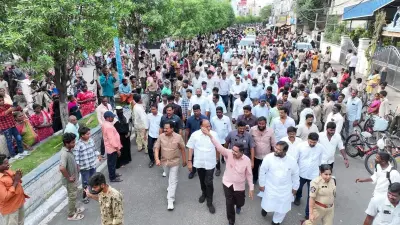
On April 17, 2026, groups of industrial workers gathered in Noida to voice their demands regarding labor rights and working conditions. As news of the gathering spread, leaders from major opposition parties attempted to reach the site to show their support. Police set up checkpoints at the borders, specifically targeting vehicles carrying political representatives. Officers on the ground reported that they had orders to stop anyone who might encourage the protesters to take more drastic actions. This led to heated arguments at the border, though no major violence was reported during these encounters.
Important Numbers and Facts
The police deployed hundreds of personnel across key border points, including the DND Flyway and the Chilla border. Traffic reports indicated that vehicle speeds dropped to a crawl, with some commuters reporting delays of over 90 minutes. While the exact number of protesters varied throughout the day, several worker unions were represented. The police action was based on Section 144, a law that restricts large gatherings to prevent public disorder. This is not the first time Noida has seen such activity, as it remains one of the largest industrial zones in Northern India.
Background and Context
Noida is a major hub for factories, electronics manufacturing, and IT services. Because so many people work in these sectors, labor issues are common. Workers often protest for better pay, safer working environments, and more job security. In recent months, rising living costs have made these demands more urgent. Political parties like the SP and CPIM often join these protests to advocate for the working class. The government and police, on the other hand, try to balance these rights with the need to keep the city running smoothly. When protests happen near the borders, it almost always leads to traffic problems because Noida is a vital link for people working in the national capital region.
Public or Industry Reaction
The reaction to the police action has been mixed. Many commuters expressed frustration on social media, complaining that they were stuck in traffic for hours due to political movements they were not part of. Business owners in the industrial sectors expressed concern that frequent protests could hurt production and discourage future investment in the area. Meanwhile, representatives from the Samajwadi Party criticized the police, calling the border blocks an "undemocratic" way to silence the voices of the poor. Labor union heads argued that the police are more interested in protecting traffic flow than addressing the genuine problems that workers face every day.
What This Means Going Forward
The situation in Noida remains tense as both sides stand their ground. If the workers' demands are not met, more protests are likely to occur in the coming weeks. The police will likely continue to use border checks as a tool to manage large crowds, which means commuters should prepare for more travel delays. There is also a possibility of formal talks between worker representatives and government officials to find a middle ground. If these talks fail, the involvement of political parties could grow, making it harder for the local administration to contain the movement within the district borders.
Final Take
The recent events in Noida show how quickly labor issues can turn into a city-wide logistical challenge. While the police succeeded in keeping political leaders away from the protest site, the underlying problems facing the workers remain unsolved. For the city to return to normal, there needs to be a clear path for dialogue that addresses worker grievances without bringing the entire transport network to a halt. Until then, the balance between public order and the right to protest will continue to be tested.
Frequently Asked Questions
Why were the political leaders stopped at the Noida border?
Police stopped the leaders to prevent them from joining the workers' protest. They claimed this was necessary to maintain law and order and to stop any potential instigation that could make the protest more intense.
How did the protest affect daily travel?
The protest and the resulting police barricades caused major traffic jams at the Delhi-Noida borders. Many people experienced long delays on their way to work, with some roads being almost completely blocked for several hours.
What are the workers protesting about?
The workers are demanding better labor rights, including fair wages and improved working conditions. These protests are common in Noida because it is a large industrial area with many manufacturing plants.