Summary
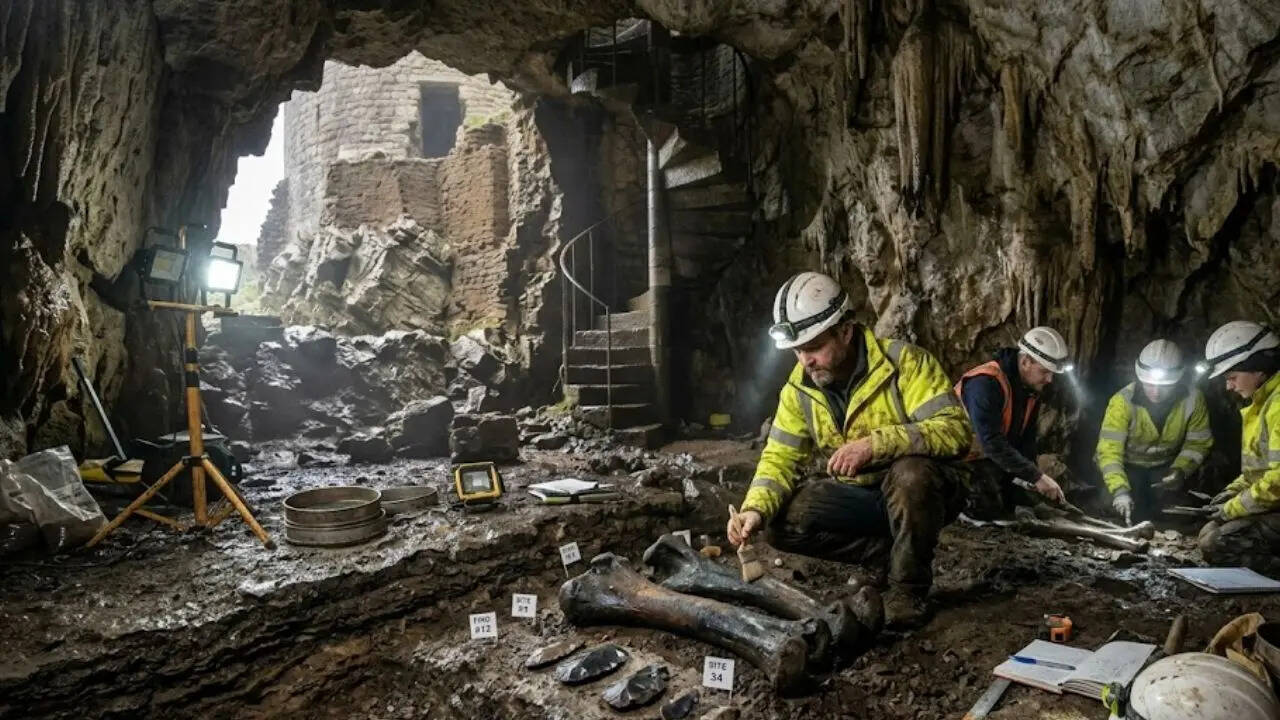
A hidden cave located directly beneath Pembroke Castle in Wales is providing a rare look at over 120,000 years of history. Known as Wogan Cavern, this natural limestone cave has revealed a wealth of items left behind by prehistoric humans and extinct animals. Recent excavations have uncovered stone tools and animal remains that prove the site was used during several different periods of the Stone Age. This discovery is important because it helps scientists understand how early humans moved across Europe and how they survived changing climates.
Main Impact
The findings at Wogan Cavern are changing what we know about early life in Britain. Most archaeological sites only show a small window of time, but this cave contains layers of history that go back to the time of the Neanderthals. By finding tools and animal bones in the same place, experts can see how the environment changed over thousands of years. This site is now considered one of the most important prehistoric locations in the United Kingdom because the ground inside has remained mostly undisturbed for centuries.
Key Details
What Happened
Archaeologists began a series of careful digs inside the cave to see what lay beneath the surface. While the castle above is famous for its medieval history, the cave below was used long before the castle was built. The team found evidence of human visitors from the Mesolithic period, which was about 10,000 years ago, and even older items from the Palaeolithic period. These early people used the cave as a shelter while they hunted for food in the surrounding river valley.
Important Numbers and Facts
The items found in the cave date back as far as 120,000 years. Among the discoveries were flint tools used for cutting and scraping hides. The team also found a large collection of animal bones. These include remains from reindeer, wild horses, and woolly rhinoceroses. Some of the bones show clear marks from stone tools, which means humans were butchering animals inside the cave. The depth of the soil layers suggests that the cave was used repeatedly over tens of thousands of years, even as the climate shifted between warm periods and ice ages.
Background and Context
Pembroke Castle is a famous landmark in West Wales, best known as the birthplace of King Henry VII. The cave, Wogan Cavern, is a massive natural opening in the rock that the castle sits on. In the past, people thought the cave was mainly used as a storehouse or a place to keep boats during the Middle Ages. However, modern science has allowed researchers to look much deeper into the dirt floors. Before this study, very little was known about the prehistoric people who lived in this part of Wales. The cave provided a perfect natural home because it stayed cool in the summer and offered protection from the wind and snow in the winter.
Public or Industry Reaction
The scientific community has reacted with great excitement to these findings. Dr. Rob Dinnis and Dr. Jennifer French, who led the project, noted that finding such a "clean" site is very rare. In many other caves, Victorian-era explorers or modern construction projects have mixed up the soil layers, making it hard to tell how old things are. Because Wogan Cavern was protected by the castle walls, the layers are still in their original order. Local historians are also pleased because this adds a new chapter to the history of Pembroke, showing that the area has been a center of human life for much longer than previously thought.
What This Means Going Forward
The work at Wogan Cavern is far from over. Researchers plan to use new technology to scan the cave and look for even deeper chambers that might be filled with more artifacts. One of the biggest goals is to find evidence of the very first modern humans who arrived in Britain. There is also hope that they might find DNA in the cave soil, which could tell us more about the types of plants and animals that lived in Wales during the Ice Age. These studies will help experts predict how living things react when the climate changes quickly.
Final Take
Wogan Cavern is a remarkable reminder that history is often hidden right beneath our feet. While the stone towers of Pembroke Castle represent the power of kings, the cave below tells the story of everyday survival for the very first people to call Britain home. This site connects us to a distant past and ensures that the secrets of the Stone Age are preserved for future generations to study and understand.
Frequently Asked Questions
How old are the oldest items found in the cave?
The oldest evidence found in Wogan Cavern dates back approximately 120,000 years, reaching into the Middle Palaeolithic period.
What kind of animals lived near the cave in the past?
Archaeologists found bones from reindeer, woolly rhinoceroses, and wild horses, all of which lived in the area during colder periods of history.
Can the public visit the cave?
The cave is part of the Pembroke Castle site and can be visited by the public, though certain areas where digging is happening may be closed off for safety and preservation.