
Summary
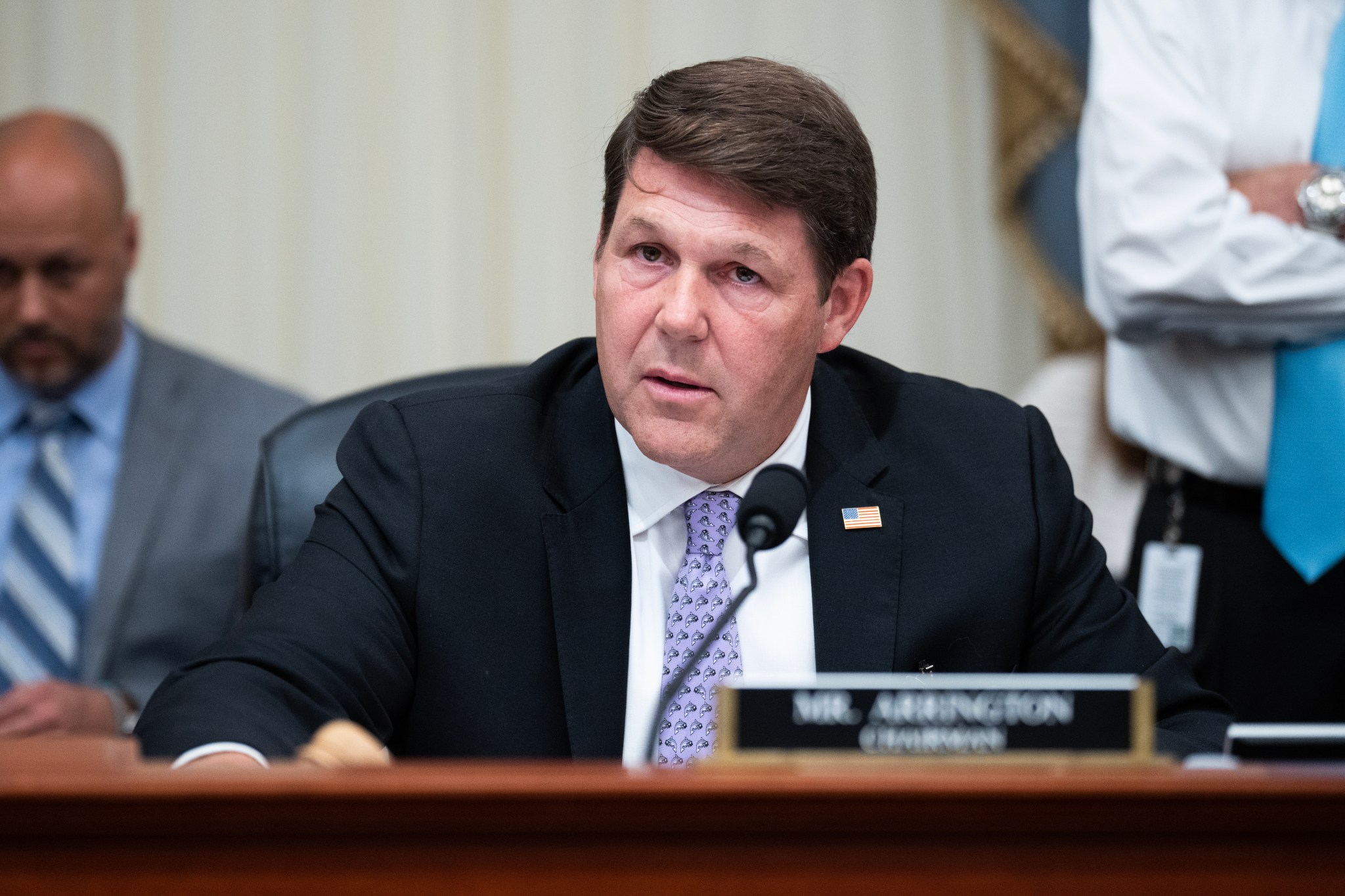
The United States government is currently struggling to balance its massive national debt with the need to fund national security. House Budget Committee Chair Jodey Arrington recently warned that the country must find a way to manage its money while still protecting its borders and citizens. Currently, parts of the Department of Homeland Security remain closed because of a political standoff in Congress. This situation highlights the growing tension between fiscal responsibility and the costs of modern warfare and domestic safety.
Main Impact
The most immediate impact of this budget fight is the partial shutdown of the Department of Homeland Security (DHS). Because Congress cannot agree on a spending plan, several critical offices are currently without funding. This affects the nation's ability to defend against cyberattacks and monitor its ports. Arrington argues that leaving these operations unfunded is a major risk to the public. The gridlock also shows how difficult it has become for the government to pass basic spending bills during the current administration.
Key Details
What Happened
In a recent interview, Jodey Arrington suggested using a special legislative tool called reconciliation to fix the funding gap. Reconciliation is a voting process that allows the Senate to pass a budget-related bill with a simple majority of 51 votes, rather than the 60 votes usually required. Arrington believes this is the fastest way to reopen the DHS. He wants to fund the entire department at once instead of letting lawmakers pick and choose which specific offices get money. This comes at a time when the U.S. is already dealing with long-term military involvement in the Middle East and recent interventions in South America.
Important Numbers and Facts
The financial pressure on the U.S. Treasury is reaching a breaking point. The national debt has officially hit a record $39 trillion. While some politicians are pushing for a plan to keep the yearly deficit at 3% of the Gross Domestic Product (GDP), Arrington is calling for much stricter measures. He is even advocating for an Article V constitutional convention. This would allow states to meet and propose an amendment to the U.S. Constitution that would require a balanced budget every year.
Background and Context
The fight over the DHS budget is not just about money; it is also about policy. Democrats in Congress have refused to approve new funding for the department until major changes are made to Immigration and Customs Enforcement (ICE) and the Border Patrol. These demands for reform became much louder after a tragic incident in Minneapolis earlier this year. Two people, an intensive care nurse named Alex Pretti and a woman named Renee Good, were fatally shot, leading to widespread protests against immigration enforcement agencies. Democrats argue that they cannot give more money to these departments until new safety rules and guardrails are put in place.
Public or Industry Reaction
The reaction to this crisis is split along party lines. Republican leaders like Arrington view the national debt as a threat that is just as dangerous as a foreign enemy. They believe the government must cut spending immediately to avoid a total financial collapse. On the other side, many Democrats and civil rights groups are focused on the social impact of government agencies. They believe that funding should be used as a tool to force better behavior and accountability within law enforcement. This disagreement has led to a state of paralysis where neither side is willing to move, leaving essential security services in limbo.
What This Means Going Forward
If Congress uses the reconciliation process, they might be able to reopen the DHS in the short term. However, the larger problem of the $39 trillion debt will remain. Arrington has suggested that the government could find "savings" by cracking down on fraud in large programs. He wants to use that saved money to pay for current security needs and to prepare for future wars. If the push for a constitutional amendment gains support from enough states, it could fundamentally change how the U.S. government spends money in the future. For now, the immediate goal is to find a way to keep the country safe without making the debt crisis worse.
Final Take
The phrase "walk and chew gum" perfectly describes the challenge facing Washington. The government cannot afford to ignore the debt, but it also cannot afford to ignore national security. As long as political disagreements over immigration and social policy keep the budget stalled, the country remains at risk. Finding a middle ground between fiscal discipline and public safety is now the most urgent task for lawmakers.
Frequently Asked Questions
What is budget reconciliation?
Reconciliation is a special rule in Congress that allows certain budget bills to pass with a simple majority of votes. It is often used to bypass the usual requirement for 60 votes in the Senate, making it easier to pass spending plans quickly.
Why is the Department of Homeland Security partially closed?
The department is partially closed because Congress has not approved a new funding bill. Democrats are withholding their support until reforms are made to immigration agencies like ICE, while Republicans want to fund the department to ensure national security.
What is an Article V constitutional convention?
Article V of the U.S. Constitution allows two-thirds of state legislatures to call for a convention to propose changes to the Constitution. In this case, some lawmakers want to add a rule that requires the federal government to balance its budget.



