Summary
Paramedics in the southern Lebanese city of Nabatieh are facing extreme dangers as they continue their work following intense Israeli airstrikes. Once a busy and lively hub, the city has been mostly abandoned by its residents who fled the escalating violence. Medical teams now operate in a ghost town, risking their lives to reach those who remain or are trapped under the ruins of destroyed buildings. This report highlights the daily reality for first responders who stay behind when everyone else has left.
Main Impact
The primary impact of the ongoing conflict in Nabatieh is the total disruption of civilian life and the immense pressure placed on emergency services. As the city empties, the role of the paramedic has shifted from routine medical care to high-stakes search and rescue under the constant threat of further attacks. The danger is not just from the initial strikes but also from the risk of being hit while trying to help survivors. This has created a situation where even the most basic humanitarian aid is difficult to provide, leaving the few remaining residents in a very vulnerable position.
Key Details
What Happened
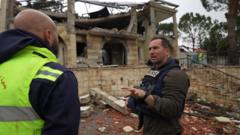
BBC Middle East correspondent Hugo Bachega recently joined a team of paramedics on their shift in Nabatieh. The experience revealed a city that has been transformed by war. Streets that were once filled with cars and shoppers are now covered in broken glass, twisted metal, and concrete dust. The paramedics spend their hours waiting for alerts, often knowing that the next call could lead them directly into a strike zone. During the ride-along, the team navigated through narrow streets blocked by rubble, showing how difficult it has become to move even short distances within the city limits.
Important Numbers and Facts
Nabatieh is one of the largest cities in southern Lebanon and serves as a major center for trade and administration. Before the recent escalation, it was home to tens of thousands of people. Today, officials estimate that a huge majority of the population has moved north toward Beirut or other safer areas. The paramedics remaining on duty work in shifts that can last for days, often with very little sleep and limited supplies. The constant presence of drones in the sky serves as a reminder of the surveillance and the potential for immediate strikes at any time of the day or night.
Background and Context
The situation in Nabatieh is part of a larger conflict that has seen a sharp increase in cross-border violence. Southern Lebanon has become a primary target for airstrikes, leading to a massive displacement of people. For the people of Nabatieh, the city is not just a collection of buildings but a historical and cultural heart of the region. Seeing it empty and damaged is a significant blow to the local community. Paramedics in Lebanon often belong to various civil defense groups or health organizations, and many are volunteers who feel a strong duty to protect their hometowns despite the lack of heavy equipment or advanced medical tools.
Public or Industry Reaction
The international community has expressed growing concern over the safety of medical workers in conflict zones. Human rights groups have pointed out that first responders should be protected under international law, yet they continue to face life-threatening risks in Lebanon. Locally, the paramedics are seen as heroes by the few who have stayed behind. Many residents who fled still check in on the news to see if their neighborhoods are still standing, often relying on the reports and videos shared by these emergency teams. There is a mix of fear and deep respect for those who choose to drive toward explosions while others are running away.
What This Means Going Forward
As the fighting continues, the ability of paramedics to keep working will depend on the availability of fuel, medical supplies, and safe passage. If the strikes intensify, there is a risk that even the emergency services will be forced to withdraw, leaving the city with no help at all. In the long term, the damage to the infrastructure of Nabatieh will take years to repair. The psychological impact on the first responders, who see the destruction of their own community daily, will also require significant support. For now, the focus remains on the immediate need to save lives and provide a small sense of hope in a city that has been silenced by war.
Final Take
The story of the paramedics in Nabatieh is a reminder of the human cost of conflict. While the world watches the political and military developments, these individuals are on the ground dealing with the physical reality of the strikes. Their bravery highlights the struggle to maintain a sense of humanity and service in a place where the normal rhythms of life have completely stopped. The empty streets of Nabatieh tell a story of loss, but the presence of the paramedics shows that the city has not been entirely forgotten.
Frequently Asked Questions
Why is Nabatieh currently empty?
Most residents have fled the city to escape frequent and intense airstrikes. The city has become too dangerous for normal daily life, leading to a massive displacement of the local population.
What are the biggest risks for paramedics in Lebanon?
Paramedics face the danger of being caught in secondary strikes, navigating through unstable buildings, and working under constant drone surveillance. They also struggle with blocked roads and limited medical resources.
How do paramedics know where to go after a strike?
They rely on emergency calls, local reports, and the sound or sight of explosions. In an abandoned city, they often have to search through damaged areas to find anyone who might still be there and in need of help.