Summary
The Middle East is facing a sharp increase in tension as Iran’s new Supreme Leader, Mojtaba Khamenei, takes a hardline stance against his enemies. In his first public message, he announced that Iran must keep the Strait of Hormuz closed to put pressure on the United States and Israel. This decision has already caused major disruptions to global shipping and sent oil prices climbing toward 100 dollars per barrel. As Iran targets ships and buildings across the region, Israel has responded with large-scale military strikes on Iranian and Lebanese targets.
Main Impact
The most immediate impact of this conflict is the threat to the global economy. By blocking the Strait of Hormuz, Iran is stopping the flow of a large portion of the world’s oil supply. This has caused immediate fear in financial markets, leading to a spike in energy costs that could affect everything from gas prices to the cost of shipping goods. Furthermore, the spread of attacks to countries like the United Arab Emirates, Bahrain, and Kuwait shows that the conflict is no longer limited to just a few nations, but is now affecting the entire Gulf region.
Key Details
What Happened
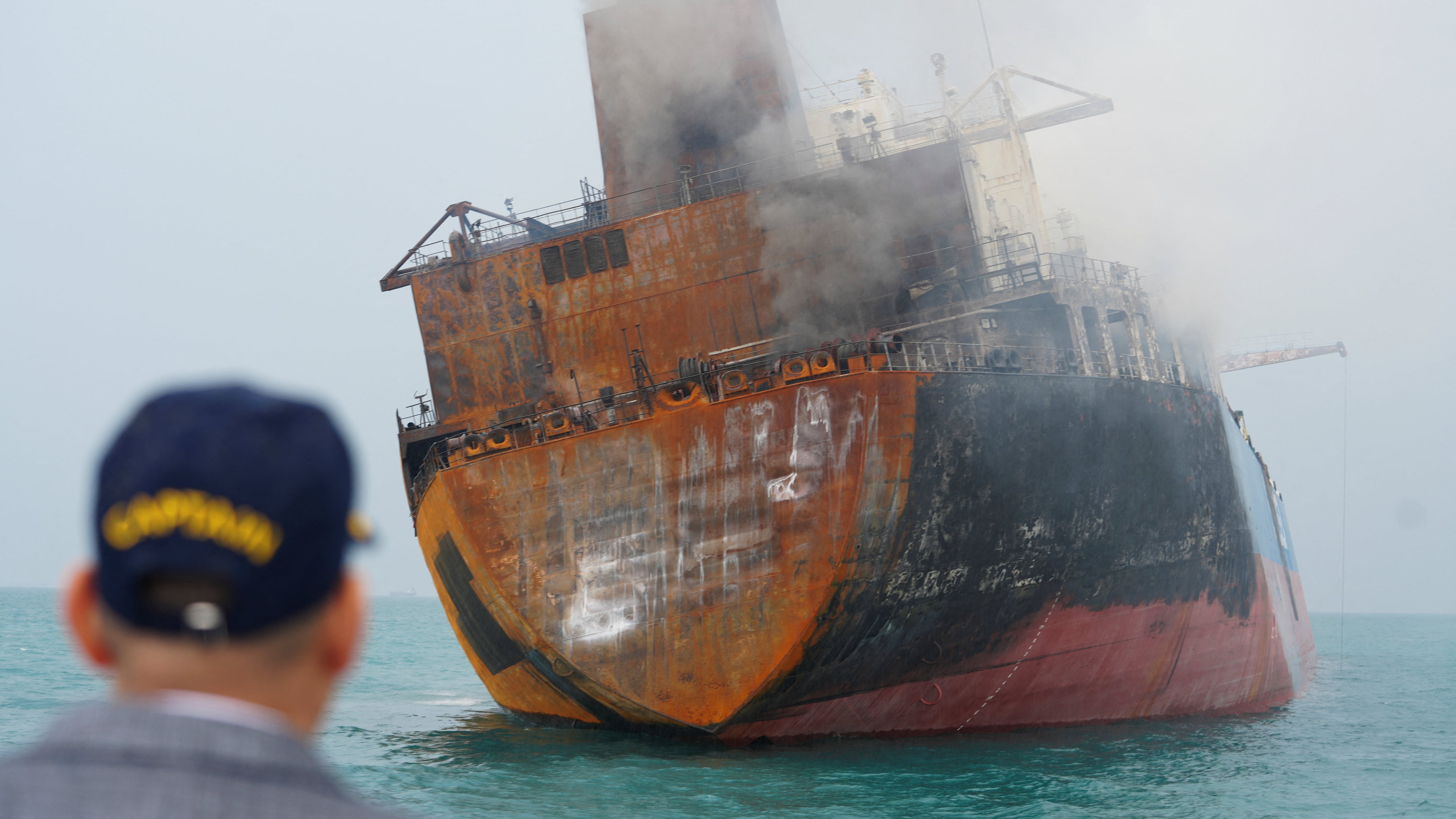
Mojtaba Khamenei appeared on Iranian television in a recorded message to set the tone for his leadership. He made it clear that Iran would use its control over vital sea routes as a primary tool of war. Shortly after his speech, reports confirmed that Iranian forces had struck several more vessels. Two ships were hit while docked in the Iraqi port of Basora, and another container ship was targeted near the United Arab Emirates. These attacks follow a series of similar strikes earlier in the week, making it clear that Iran intends to stop maritime traffic in the area.
In response to these moves, the Israeli military launched heavy air strikes. These attacks hit targets in the southern part of Beirut, Lebanon, as well as locations inside Iran itself. The situation has turned into a back-and-forth series of strikes that show no signs of slowing down.
Important Numbers and Facts
The economic data shows how quickly the world is reacting to these events. Oil prices jumped to over 100 dollars per barrel following the news of the ship attacks. While the price later settled slightly to around 98 dollars, experts believe it will remain high as long as the Strait of Hormuz is blocked. The military activity has also spread geographically, with confirmed strikes on a building in Dubai and fuel storage tanks near the capital of Bahrain. Other incidents were reported in Kuwait, Saudi Arabia, and Qatar, showing the wide reach of the current violence.
Background and Context
The Strait of Hormuz is a narrow stretch of water that connects the Persian Gulf with the rest of the world's oceans. It is the most important oil transit point on the planet. For years, Iran has used the threat of closing this waterway as a way to warn other countries not to interfere with its interests. Now, with a new leader in power, Iran is moving from threats to actual action. Mojtaba Khamenei is the son of the previous leader, and his first moves suggest he may be even more aggressive than his father. This transition comes at a time when Israel and Iran are already in a state of direct military conflict, making the situation even more volatile.
Public or Industry Reaction
Neighboring countries are expressing deep fear about the future. Iraq has officially stated its "deep concern" regarding the growing war. Iraqi officials have asked all sides to stop attacking energy infrastructure and shipping routes, arguing that these should be kept out of the fighting to protect the lives and jobs of people in the region. Shipping companies are also on high alert, with many choosing to divert their vessels or stop operations in the Gulf entirely until the situation becomes safer. This is causing delays in global trade and increasing the cost of insurance for ships traveling in the Middle East.
What This Means Going Forward
The next few days will be critical for global security. If Iran continues to keep the Strait of Hormuz closed, the United States and its allies may feel forced to use military power to reopen the waterway. This could lead to a much larger war involving many different countries. On the economic side, if oil prices stay near 100 dollars, it could lead to higher inflation in many parts of the world, making daily life more expensive for millions of people. The international community is now watching to see if any diplomatic efforts can convince the new Iranian leader to change his mind and allow ships to pass through the area again.
Final Take
The decision to block one of the world's most important trade routes is a bold and dangerous move by Iran's new leadership. It shows a willingness to disrupt the entire global economy to achieve political goals. As Israel and Iran continue to trade heavy blows, the risk of a total regional collapse grows. The world is now entering a period of high uncertainty where the price of energy and the safety of international waters are no longer guaranteed.
Frequently Asked Questions
Why is the Strait of Hormuz so important?
It is the main path for oil tankers leaving the Middle East. About 20% of the world's total oil supply passes through this narrow waterway, making it vital for global energy markets.
Who is Mojtaba Khamenei?
He is the new Supreme Leader of Iran. He recently took over the position and has quickly signaled a more aggressive military and economic policy against the West and Israel.
How are oil prices being affected?
Because of the attacks on ships and the closure of the shipping route, oil prices have spiked to nearly 100 dollars per barrel. This is caused by fears that there will not be enough oil available for the global market.