Summary
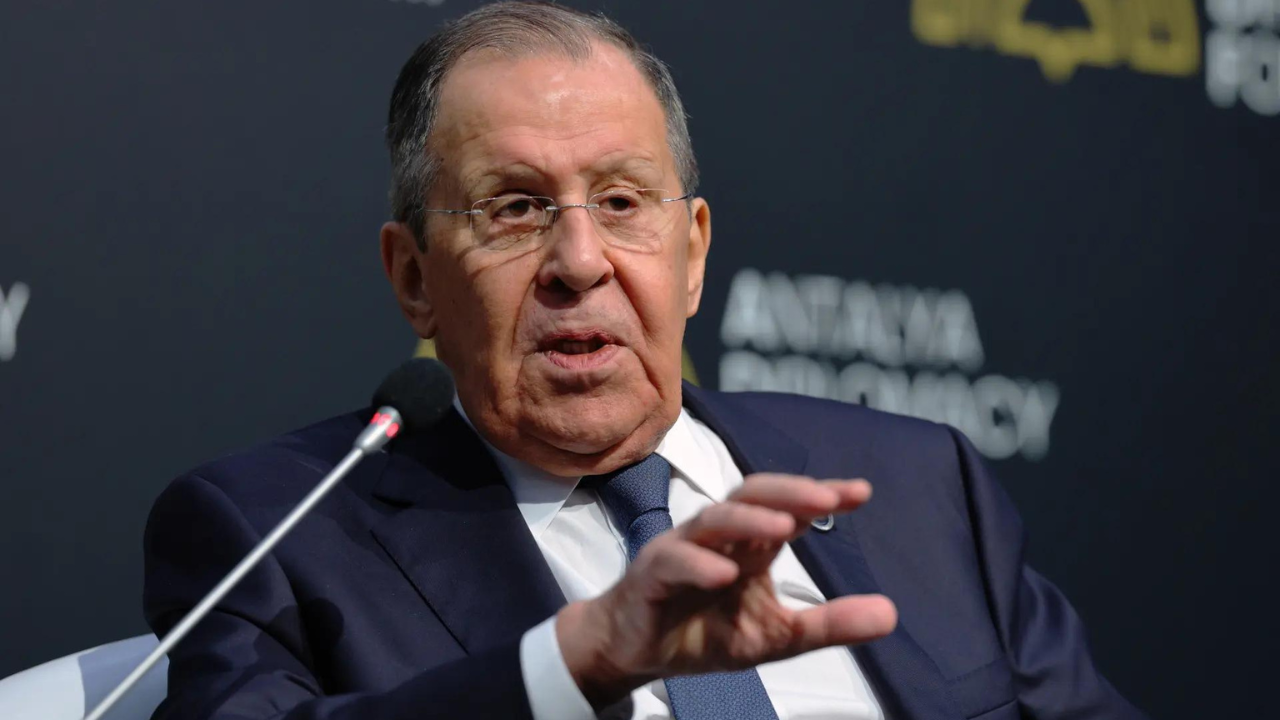
Russian Foreign Minister Sergei Lavrov has publicly accused the United States of using its military and political power to take control of global energy resources. He claims that American actions regarding Iran and Venezuela are not about democracy or security, but are actually focused on securing oil and gas. Lavrov argues that Washington is ignoring international rules to ensure it remains the dominant force in the energy market. This situation has created significant tension as Russia warns that the U.S. is treating the modern world like a collection of colonies.
Main Impact
The primary impact of these accusations is a further breakdown in diplomatic relations between major world powers. By claiming the U.S. is staging an "energy grab," Russia is trying to change how other nations view American foreign policy. This rhetoric suggests that global energy prices and supply chains are being used as weapons of war. For everyday people, this means that the cost of heating homes or fueling cars is often tied to these high-level political fights. Furthermore, this tension makes it harder for countries to work together on global issues like climate change or economic stability.
Key Details
What Happened
In a recent series of statements, Sergei Lavrov criticized the way the United States handles countries that have large oil reserves. He specifically pointed to Iran and Venezuela, two nations that have faced heavy sanctions from the U.S. government. Lavrov believes these sanctions are a tool used to push competitors out of the market. He also noted that the U.S. has successfully convinced many European countries to stop buying natural gas from Russia. Instead, these European nations are now buying more expensive energy from American suppliers. Lavrov described this shift as a calculated move by Washington to profit from Europe's energy needs.
Important Numbers and Facts
The global energy market is worth trillions of dollars, and control over it provides immense power. Venezuela holds some of the largest proven oil reserves in the world, while Iran also sits on massive amounts of crude oil and natural gas. In recent years, the U.S. has become one of the world's top exporters of Liquefied Natural Gas (LNG). Since 2022, the amount of American gas sent to Europe has increased significantly as European leaders look for ways to stop relying on Russian pipelines. Russia claims this transition was forced upon Europe through political pressure rather than fair market competition.
Background and Context
To understand why this matters, it is important to look at how energy moves around the world. For decades, Russia was the main provider of cheap natural gas to Europe. This relationship kept energy costs low for European factories and homes. However, political disagreements and the conflict in Ukraine changed everything. The U.S. has long warned Europe that depending on Russian energy was a security risk. When the relationship between the West and Russia broke down, the U.S. was ready to step in and sell its own energy products. Russia views this not as a security measure, but as a business strategy designed to make the U.S. richer at the expense of others.
Public or Industry Reaction
The reaction to Lavrov’s comments has been split. Within Russia and its allied nations, the message is seen as a defense of national interests against Western interference. They view the U.S. as an aggressive player that uses sanctions to bully other countries. On the other hand, U.S. officials and many Western leaders dismiss these claims as propaganda. They argue that sanctions on Iran and Venezuela are necessary to stop human rights abuses and prevent the spread of dangerous weapons. Industry experts note that while the U.S. is profiting from energy sales, the shift away from Russian gas was also a choice made by European leaders who no longer trusted Moscow as a reliable partner.
What This Means Going Forward
Looking ahead, the fight over energy dominance is likely to get more intense. The U.S. will probably continue to expand its energy exports to maintain its influence in Europe and Asia. Meanwhile, Russia is looking for new buyers in countries like China and India to make up for the business it lost in the West. This divide could lead to a world where there are two separate energy markets: one led by the U.S. and another led by Russia and its partners. This split could make energy prices more volatile and unpredictable for everyone. There is also the risk that more countries will be caught in the middle of this "energy cold war," forced to choose sides based on who can provide the most reliable fuel.
Final Take
The accusations from Russia highlight a deep lack of trust between the world's biggest energy players. While the U.S. frames its actions as a matter of global safety and democracy, Russia sees a clear pattern of economic greed. As long as oil and gas remain the lifeblood of the global economy, they will continue to be at the center of political conflicts. The move away from traditional diplomacy toward resource-based competition suggests that the struggle for energy control will define international relations for many years to come.
Frequently Asked Questions
Why is Russia accusing the U.S. of an energy grab?
Russia believes the U.S. uses sanctions and military threats to stop other countries from selling oil and gas. They claim this allows the U.S. to take over those markets and sell its own energy at higher prices.
What do Iran and Venezuela have to do with this?
Both Iran and Venezuela have huge oil reserves but are under U.S. sanctions. Russia argues these sanctions are a way for the U.S. to control who can buy and sell oil on the global stage.
How does this affect Europe?
Europe used to get most of its gas from Russia. Because of political tensions, many European countries now buy gas from the U.S. instead. Russia says this makes Europe dependent on American energy and hurts the European economy.