
Summary
North Korean leader Kim Jong Un is using the current war involving Iran to explain why his country needs a large nuclear arsenal. He claims that global conflicts show that the United States is an aggressive power that only respects military strength. By pointing to the situation in the Middle East, Kim is telling his people and the world that North Korea must continue to build its "defensive nuclear deterrence" to avoid a similar fate. This move marks a shift in how the country justifies its weapons program during a time of rising global tension.
Main Impact
The main impact of this statement is a total breakdown in the hope for peace talks between North Korea and the West. By labeling the United States as a country that engages in "terrorism and invasions," Kim Jong Un is making it clear that he has no intention of giving up his nuclear weapons. This rhetoric also changes the relationship between North and South Korea. Kim has now officially named South Korea as his country’s "most hostile nation," which ends years of talk about one day reuniting the two sides. This makes the region much more dangerous as both sides increase their military readiness.
Key Details
What Happened
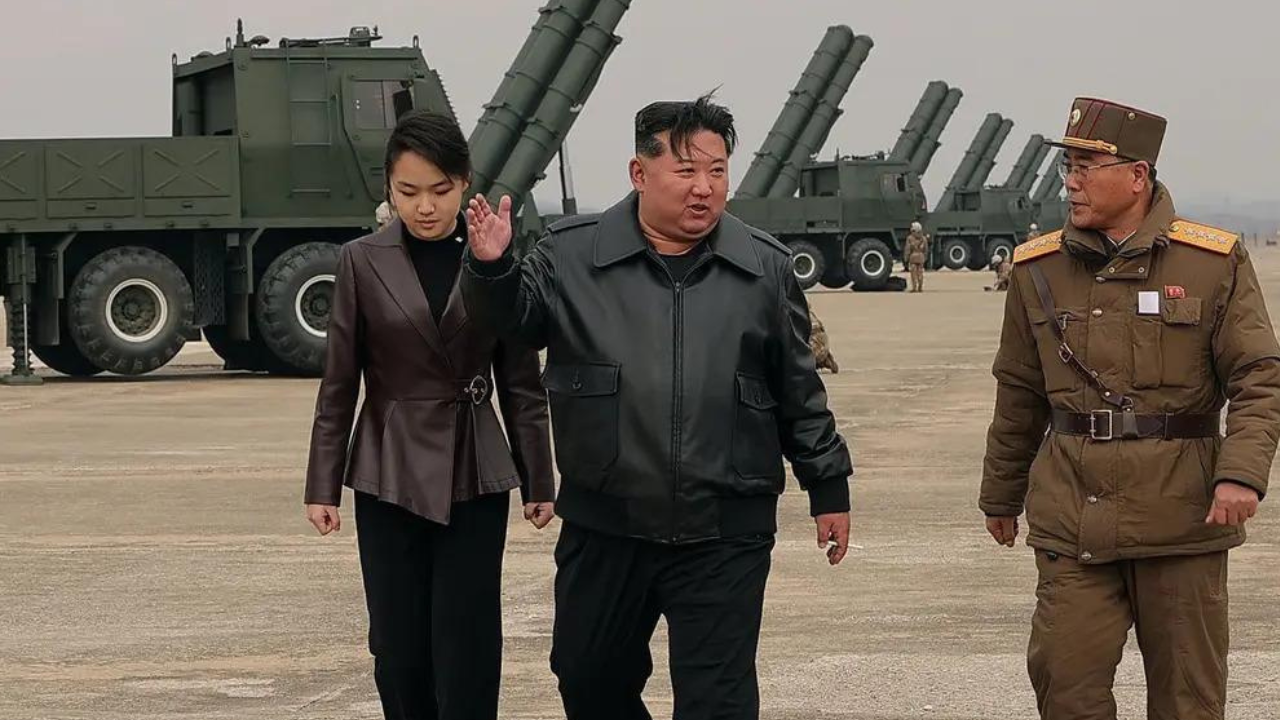
During a recent government meeting, Kim Jong Un spoke about the state of the world and North Korea’s place in it. He specifically mentioned the war involving Iran as a reason for North Korea to stay the course with its military plans. He argued that the United States uses its power to bully smaller nations and that only nuclear weapons can stop an invasion. Kim used this logic to promise that his military will continue to develop more advanced weapons, including missiles that can carry nuclear warheads over long distances.
Important Numbers and Facts
North Korea has significantly increased its military activity over the last year. The country has conducted dozens of missile tests, including long-range rockets designed to reach the United States mainland. Experts believe North Korea has enough material for dozens of nuclear bombs and is working to make them small enough to fit on top of missiles. Additionally, Kim Jong Un has called for a "limitless" expansion of his nuclear program, moving away from previous agreements that sought to limit his military growth. The government has also stopped all communication channels with South Korea, treating them as a foreign enemy rather than a neighbor.
Background and Context
To understand why this matters, it is important to look at how North Korea views the world. For many years, the leaders in Pyongyang have watched what happens to countries that do not have nuclear weapons. They often point to countries like Libya or Iraq, where the governments were overthrown after they gave up their weapons programs. Now, Kim Jong Un is using the Iran war as a fresh example. He believes that if a country is not strong enough to fight back, the United States will eventually try to change its government. By linking his nuclear program to the Iran conflict, he is trying to show that his weapons are not for starting a war, but for preventing one from happening on his own soil.
Public or Industry Reaction
Military experts and world leaders have expressed concern over Kim’s latest comments. Many see this as a sign that North Korea is trying to build a stronger alliance with countries like Russia and Iran. By supporting the narrative that the US is an aggressor, Kim is positioning North Korea as part of a group of nations that stand against Western influence. South Korean officials have responded by saying they will meet any provocation with an "overwhelming" response. The United States has also reaffirmed its commitment to protecting its allies in the region, which has led to more military drills and a larger presence of US ships and planes near the Korean peninsula.
What This Means Going Forward
Looking ahead, the situation is likely to become more tense. North Korea is expected to continue testing new types of technology, such as spy satellites and underwater drones that can carry nuclear weapons. Because Kim has labeled South Korea as a "hostile" enemy, the risk of a small military clash turning into a larger war has grown. There is also the risk that North Korea will share its missile technology with other countries involved in global conflicts. Diplomacy seems to be at a standstill, and the focus for the international community has shifted from talking about peace to simply trying to prevent a major conflict.
Final Take
Kim Jong Un is using the chaos of global wars to make his own nuclear ambitions seem like a logical choice for survival. By framing the United States as a constant threat, he ensures that his hold on power remains strong and that his military continues to receive the country's limited resources. As long as global conflicts continue, North Korea will likely use them as an excuse to keep building its arsenal, making the dream of a nuclear-free Korean peninsula seem further away than ever.
Frequently Asked Questions
Why is Kim Jong Un talking about the Iran war?
He is using the conflict to argue that the United States is an aggressor and that North Korea needs nuclear weapons to protect itself from a similar situation.
What does "nuclear deterrence" mean?
It is the idea that if a country has nuclear weapons, other countries will be too afraid to attack them because the risk of a nuclear response is too high.
Has North Korea changed its view of South Korea?
Yes, Kim Jong Un now officially calls South Korea the "most hostile nation" and has moved away from the goal of peaceful reunification.

