Summary
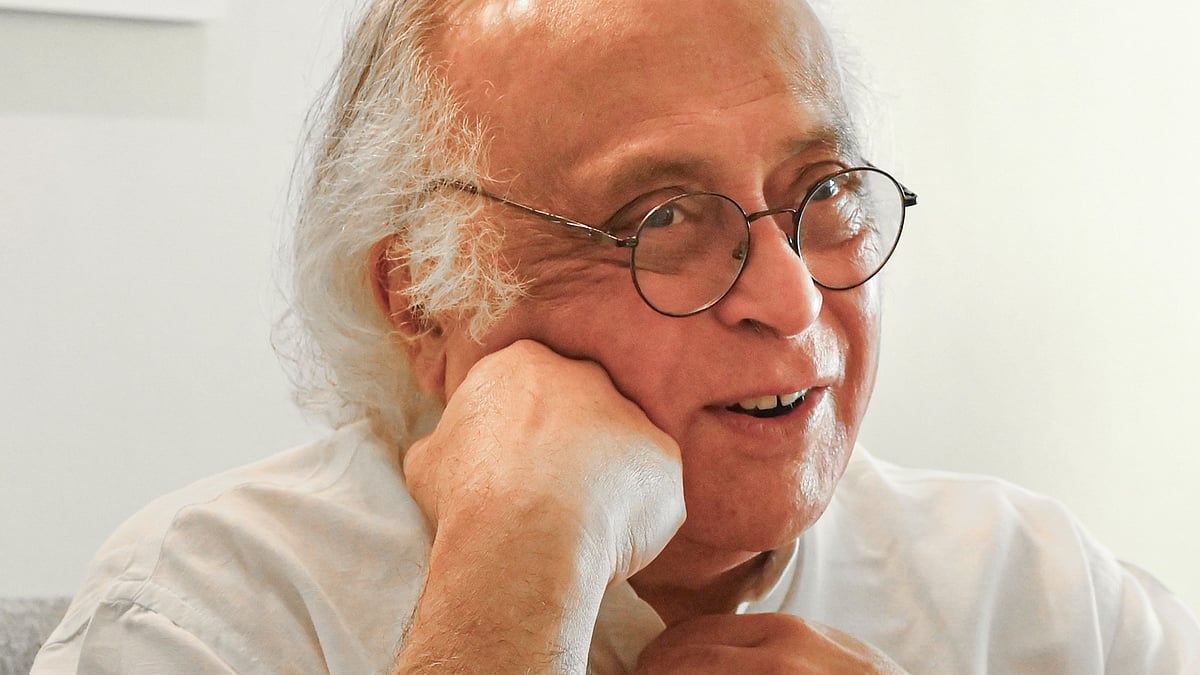
Jairam Ramesh, a senior leader from the Congress party and a member of the Rajya Sabha, has raised serious concerns about the current state of India's Parliament. In a recent interview, he compared the atmosphere in the legislative house to that of North Korea. He argued that the focus has shifted from debating important laws to giving constant praise to Prime Minister Narendra Modi. Ramesh believes this change is hurting India's democratic traditions and its independent voice on the global stage.
Main Impact
The primary impact of these statements is a growing debate over how Parliament functions today. Ramesh suggests that the legislative process is being replaced by a "one-man show" where the Prime Minister's personality takes center stage. This shift affects how bills are passed and how the government handles foreign relations. By comparing India to a totalitarian regime like North Korea, Ramesh is highlighting what he sees as a dangerous trend toward hero worship in politics.
Key Details
What Happened
During a detailed talk with the Press Trust of India (PTI), Jairam Ramesh expressed his deep discomfort with the behavior of BJP members in Parliament. He noted that whenever the Prime Minister enters the room, members of the ruling party begin chanting his name and thumping their tables. Ramesh described this as "orchestrated adulation," meaning it feels planned rather than natural. He claimed that even when important bills are being discussed, most of the speeches from the government side are spent praising the leader instead of talking about the law itself.
Important Numbers and Facts
Ramesh shared several specific observations to back up his claims. He estimated that about 90 percent of the speeches made by BJP members focus on the Prime Minister rather than the subject at hand. He also pointed to historical dates to show how things have changed. For example, he mentioned that India was one of the first countries to recognize the state of Palestine on November 18, 1988. He contrasted this with the current government's strong move toward Israel following the events of October 7, 2023. Additionally, he noted that news about Indian government decisions, such as those involving "Operation Sindoor," sometimes comes from Washington, D.C., before it is announced in New Delhi.
Background and Context
To understand why these comments matter, it is helpful to look at India's history. In the past, India had many strong leaders like Jawaharlal Nehru, Indira Gandhi, and Atal Bihari Vajpayee. Ramesh pointed out that even during moments of great national success, such as the 1971 war, these leaders were respected but not worshipped in the halls of Parliament. He recalled that when Nehru walked into the room, people did not chant his name repeatedly. Parliament was traditionally a place where the opposition and the government could have a real debate. Ramesh argues that this tradition is being lost as the government becomes more centralized around one person.
Public or Industry Reaction
Ramesh’s comments have sparked a strong reaction among political observers and the public. Supporters of the Congress party agree that the level of praise for the Prime Minister has reached an unusual level. They feel that the opposition's voice is being drowned out by slogans. On the other hand, supporters of the ruling BJP often see this praise as a sign of respect for a leader they believe has transformed the country. Critics of Ramesh’s statement argue that comparing India to North Korea is an exaggeration, as India still holds regular elections and has a functioning, though loud, democracy.
What This Means Going Forward
Looking ahead, these criticisms suggest a deepening divide in Indian politics. If Parliament continues to focus more on personality than on policy, the quality of law-making could suffer. Ramesh also warned about the future of India's foreign policy. He coined the term "huggomacy" to describe a style of diplomacy based on personal friendships between leaders rather than long-term national interests. He fears that India is losing its "strategic autonomy," which is the ability to make its own decisions without being pressured by big powers like the United States or Israel. This could lead to a situation where India's domestic politics dictate how it acts with other countries, potentially creating risks for its international reputation.
Final Take
The health of a democracy depends on the ability of its leaders to debate and disagree in a respectful way. When a legislative body starts to feel like a place for ritual praise rather than serious discussion, it signals a change in the political culture. Ramesh’s comparison to North Korea is a sharp warning that the balance of power in India may be shifting too much toward a single individual. For the system to work well, the focus must return to the bills, the people, and the long-term interests of the nation.
Frequently Asked Questions
Why did Jairam Ramesh compare Parliament to North Korea?
He made the comparison because he believes BJP members spend too much time chanting the Prime Minister's name and praising him, which he says looks like the behavior seen in totalitarian countries.
What is "huggomacy" in foreign policy?
This is a term Ramesh used to describe a foreign policy that relies on personal warmth and hugs between leaders instead of independent and principled decision-making.
What historical examples did Ramesh use?
He mentioned leaders like Nehru and Indira Gandhi to show that in the past, even very popular leaders were not treated with the kind of constant chanting and table-thumping seen in Parliament today.