
Summary
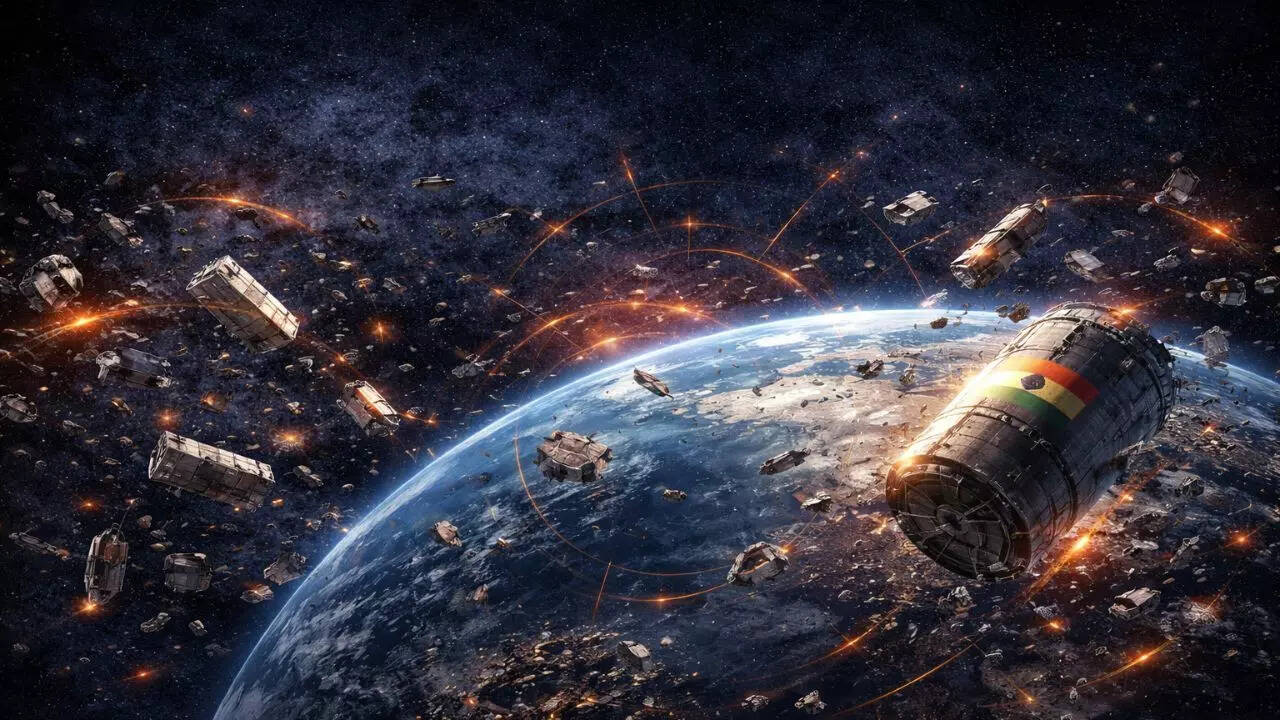
The Indian Space Research Organisation (ISRO) is facing a growing challenge as 129 pieces of Indian-origin space junk are currently orbiting the Earth. While India is a major player in global space exploration, this rising amount of debris has sparked concerns about the safety of future missions. These leftover pieces of rockets and old satellites pose a real threat to active spacecraft and international space stations. As space becomes more crowded, the pressure is on for ISRO to lead the way in cleaning up the orbital environment.
Main Impact
The primary impact of this space junk is the increased risk of high-speed collisions in orbit. Even a tiny piece of metal moving at thousands of miles per hour can destroy a functional satellite or harm astronauts. This situation has forced space agencies to spend more time and money on tracking debris and moving satellites out of harm's way. If the amount of junk continues to grow, it could lead to a chain reaction of collisions that might make certain parts of space unusable for future generations.
Key Details
What Happened
Recent data tracking objects in space has identified 129 distinct pieces of debris that can be traced back to Indian space missions. These objects are mostly spent rocket stages, fragments from broken satellites, and other hardware left behind after successful launches. While India has fewer pieces of junk in space compared to countries like the United States, Russia, or China, the number is still significant enough to draw international attention. The presence of these objects highlights the "hidden cost" of becoming a global space power.
Important Numbers and Facts
The 129 pieces of debris are part of a much larger problem involving tens of thousands of tracked objects orbiting Earth. Most of this junk is located in Low Earth Orbit (LEO), which is the most popular area for weather, communication, and spy satellites. ISRO has acknowledged this issue and has already started taking steps to limit new debris. For example, the agency is working toward a goal of "Debris Free Space Missions" by the year 2030. This means that every future mission will be designed to leave nothing behind in orbit once its work is finished.
Background and Context
Space debris is not a new problem, but it is getting worse as more countries and private companies launch rockets. When a rocket carries a satellite into space, parts of that rocket often stay in orbit. Over time, these parts can break into smaller pieces due to battery explosions or collisions. This creates a cloud of "space trash" that stays in the sky for decades. For India, which has ramped up its launch schedule significantly over the last ten years, managing this waste has become a top priority to maintain its reputation as a responsible space nation.
Public or Industry Reaction
International space experts and environmental groups have expressed concern over the rising numbers. The Inter-Agency Space Debris Coordination Committee (IADC) has been pushing for all nations to follow stricter rules. Within India, there is a mix of pride in ISRO’s achievements and a call for more transparency regarding space safety. Industry leaders have praised ISRO for its recent "POEM" missions, which use the last stage of a rocket as a platform for experiments instead of letting it become immediate junk. This shows that the agency is listening to the global community and trying to find creative solutions.
What This Means Going Forward
Moving forward, ISRO will likely focus on two main areas: tracking and removal. The agency has already set up "Project NETRA," a dedicated system to monitor space debris and protect Indian assets. In the coming years, we can expect to see more missions focused on "de-orbiting" old satellites. This involves using the last bit of fuel to push a satellite back into the Earth's atmosphere so it burns up safely. Additionally, ISRO is exploring technologies like robotic arms or "space harpoons" that could one day be used to grab and remove large pieces of junk from orbit.
Final Take
The 129 pieces of debris linked to India serve as a reminder that exploring the stars comes with earthly responsibilities. While the number is small compared to the world's biggest polluters in space, it represents a challenge that cannot be ignored. By committing to debris-free missions by 2030, India is showing that it wants to be part of the solution rather than the problem. Keeping space clean is not just about safety; it is about ensuring that the next generation of scientists and explorers can still look to the sky without fear of a collision.
Frequently Asked Questions
What exactly is space junk?
Space junk refers to man-made objects that are no longer useful but continue to orbit the Earth. This includes old satellites, spent rocket parts, and small fragments created by collisions or explosions.
Why is 129 pieces of debris considered a problem?
Even though 129 might seem like a small number, each piece travels at extremely high speeds. A collision with even a small fragment can cause total failure of a multi-million dollar satellite or endanger human life on the International Space Station.
How does ISRO plan to fix this?
ISRO has pledged to make its missions "debris-free" by 2030. They plan to do this by ensuring rocket parts fall back to Earth and burn up in the atmosphere, and by using new technology to track and avoid existing junk in space.

