Summary
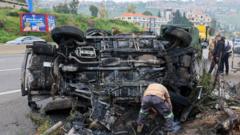
Fighting between Israel and the militant group Hezbollah has intensified despite recent diplomatic efforts in the United States. Just one day after high-level talks aimed at reducing tension, both sides launched new rounds of attacks across the border. Israel carried out airstrikes in southern Lebanon, while Hezbollah responded by firing rockets into northern Israel. This continuation of violence shows how difficult it is to reach a lasting peace agreement in the region.
Main Impact
The immediate impact of these ongoing attacks is the displacement of thousands of people on both sides of the border. Families are being forced to leave their homes as the risk of a full-scale war grows. Furthermore, the failure of the recent talks to stop the fighting immediately suggests that diplomatic words are not yet matching the actions on the ground. This creates a sense of uncertainty for international markets and neighboring countries that fear the conflict could spread further.
Key Details
What Happened
Following a series of meetings in Washington D.C., many hoped for a pause in the violence. However, the Israeli military confirmed it hit several targets in southern Lebanon that it claimed were linked to Hezbollah operations. In return, Hezbollah launched a barrage of rockets targeting military positions and towns in northern Israel. Both sides claim they are acting in self-defense, but the result is a steady increase in the number of weapons used and the areas affected by the fighting.
Important Numbers and Facts
The conflict has seen a sharp rise in activity over the last few months. Reports indicate that hundreds of rockets have been fired across the border in just the last week. On the Lebanese side, dozens of villages have seen significant damage from airstrikes. In Israel, sirens frequently warn residents to head to bomb shelters. While the exact number of casualties from the most recent strikes is still being confirmed, the total number of people forced to flee their homes in the border region has now surpassed 150,000 across both countries.
Background and Context
The tension between Israel and Hezbollah is not new, but it has reached a dangerous level recently. Hezbollah is a powerful group based in Lebanon that is backed by Iran. They have been trading fire with Israel since the start of the war in Gaza. The United States has been trying to act as a middleman to prevent a second major front from opening up in the Middle East. The "rare direct negotiations" mentioned recently were seen as a breakthrough because the two sides rarely communicate, even through mediators, in such a formal setting. The goal of these talks is to establish a new border agreement that would move Hezbollah forces further away from the Israeli border.
Public or Industry Reaction
The international community has expressed deep concern over the latest round of violence. Leaders from the United Nations have called for an immediate stop to the fighting, warning that a mistake by either side could lead to a much larger war. Within Lebanon, there is a mix of support for Hezbollah and fear that the country’s fragile economy cannot handle a major conflict. In Israel, there is strong public pressure on the government to ensure that citizens living in the north can safely return to their homes. Many people in the region feel that diplomacy is moving too slowly while the danger on the ground grows every day.
What This Means Going Forward
The next few weeks will be critical for the region. If the attacks continue to get worse, the chance of a diplomatic solution will shrink. The United States is expected to continue its role as a mediator, but it faces a tough task. For a ceasefire to work, both sides will need to make big compromises that they have so far refused to accept. We may see more pressure from the international community to create a "buffer zone" along the border. If these efforts fail, the risk of a regional war involving other countries becomes much more likely.
Final Take
The gap between diplomatic talks and the reality of war remains wide. While officials meet in comfortable rooms to discuss peace, the people living near the border continue to face the daily threat of rockets and airstrikes. True progress will only be made when the fighting stops long enough for both sides to trust that a deal can actually be kept. Until then, the cycle of attack and counter-attack is likely to continue, keeping the entire region on edge.
Frequently Asked Questions
Why are Israel and Hezbollah fighting?
They are fighting mainly because of long-standing border disputes and Hezbollah's support for Palestinian groups. The conflict has grown much worse since the war in Gaza began.
What was the goal of the talks in the US?
The talks aimed to find a way to move Hezbollah fighters away from the border and stop the daily rocket fire so that civilians on both sides could return home safely.
Is there a risk of a larger war?
Yes, many experts fear that if the current attacks do not stop, it could lead to a full-scale invasion or a larger conflict involving other countries in the Middle East.