
Summary
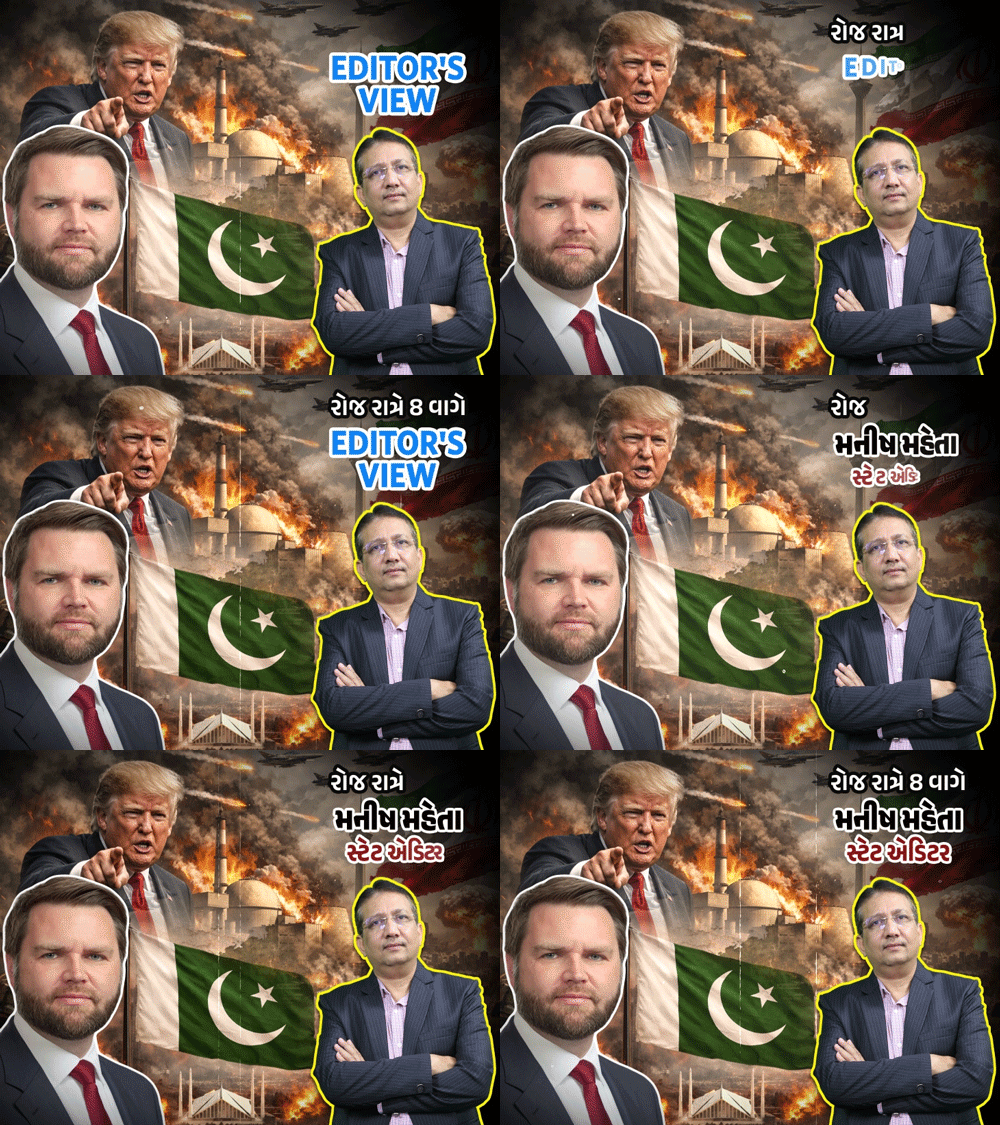
A critical meeting is set to take place in Islamabad, Pakistan, to decide the future of the conflict between Iran, Israel, and the United States. US Vice President J.D. Vance is leading the peace efforts as a 14-day ceasefire comes to an end on April 22. While Donald Trump continues to issue threats on social media, Iran has stated it will only negotiate with Vance. The outcome of these talks will determine if the region moves toward peace or falls back into a destructive war that could ruin the global economy.
Main Impact
The most immediate effect of this situation is the extreme uncertainty in global markets and international relations. Traditional diplomacy has been replaced by social media posts, which has caused many world leaders and investors to stop taking US warnings seriously. If the Islamabad talks fail, experts predict a massive spike in oil prices and a significant drop in global economic growth. Furthermore, the human cost is rising, with thousands dead and millions facing a future without basic needs like clean water.
Key Details
What Happened
For the past two weeks, a temporary ceasefire has kept direct attacks at a minimum. However, this peace is very fragile. Donald Trump has issued over 15 major threats via his Truth Social platform, ranging from total destruction to economic blockades. Iran has ignored most of these threats, viewing them as "political theater." Tensions rose further when the US stopped an Iranian ship carrying goods from China, leading Iran to once again threaten the closure of the Strait of Hormuz, a vital path for the world's oil supply.
Important Numbers and Facts
The scale of the conflict is reflected in these sobering figures:
- Over 3,000 people have lost their lives since the fighting began.
- An estimated $600 billion will be needed over the next 15 years to rebuild the Middle East.
- Iran still holds 60% of its missile launchers and 40% of its attack drones in underground "missile cities."
- Suspicious trades worth up to $950 million were recorded just minutes before major social media announcements, leading to claims of information leaks.
- The April 22 deadline is seen as the final chance to prevent a full-scale regional war.
Background and Context
This conflict is not just about military power; it is about control over energy and survival. Iran uses a "Mosaic Defense" strategy, hiding its weapons deep underground where they are hard to hit. They have also targeted water desalination plants in neighboring countries. In the Middle East, fresh water is often more valuable than oil. By threatening water supplies, Iran exerts pressure on the US and its allies. Meanwhile, China and Russia are reportedly helping Iran bypass economic sanctions by providing satellite images and missile fuel chemicals.
Public or Industry Reaction
The global reaction is a mix of fear and frustration. Many countries are tired of "diplomacy by notification," where major policy shifts are announced on social media instead of through official channels. In the US, there is a growing scandal regarding "insider trading." Investigations have started to see if government officials leaked information to traders who made millions of dollars by betting on market changes before Trump’s posts went live. Allies like the UK and France are also showing signs of moving away from US influence, seeking more stable diplomatic paths.
What This Means Going Forward
If J.D. Vance succeeds in Islamabad, it will be a massive victory for his political future and could signal a new era of US leadership. However, if Iran refuses to come to the table or if the US refuses to lift its naval blockade, the ceasefire will end. This would likely lead to a "frozen conflict" or a sudden, violent escalation. For the average person, this means higher costs for fuel and goods. While some countries have managed to keep prices stable for now, a long-term war will eventually force everyone to pay more.
Final Take
The world is standing at a dangerous crossroads where the words of a few leaders can change the lives of millions. The shift from formal meetings to social media threats has made the world less safe and more unpredictable. As the April 22 deadline arrives, the focus is no longer just on who has the bigger military, but on who has the wisdom to stop a total collapse of regional stability. Peace is currently as thin as a sheet of glass, and tomorrow will tell if it shatters or holds firm.
Frequently Asked Questions
Why is the April 22 deadline important?
This date marks the end of a two-week ceasefire. If no new agreement is reached in Islamabad, military actions are expected to resume immediately.
Why does Iran only want to talk to J.D. Vance?
Iran has lost trust in Donald Trump’s inconsistent social media threats. They view Vice President Vance as a more stable and serious negotiator for these specific peace talks.
How does this conflict affect oil prices?
The conflict happens near the Strait of Hormuz, where much of the world's oil passes. Any threat to close this path causes oil prices to jump, which makes petrol and shipping more expensive globally.



