
Summary
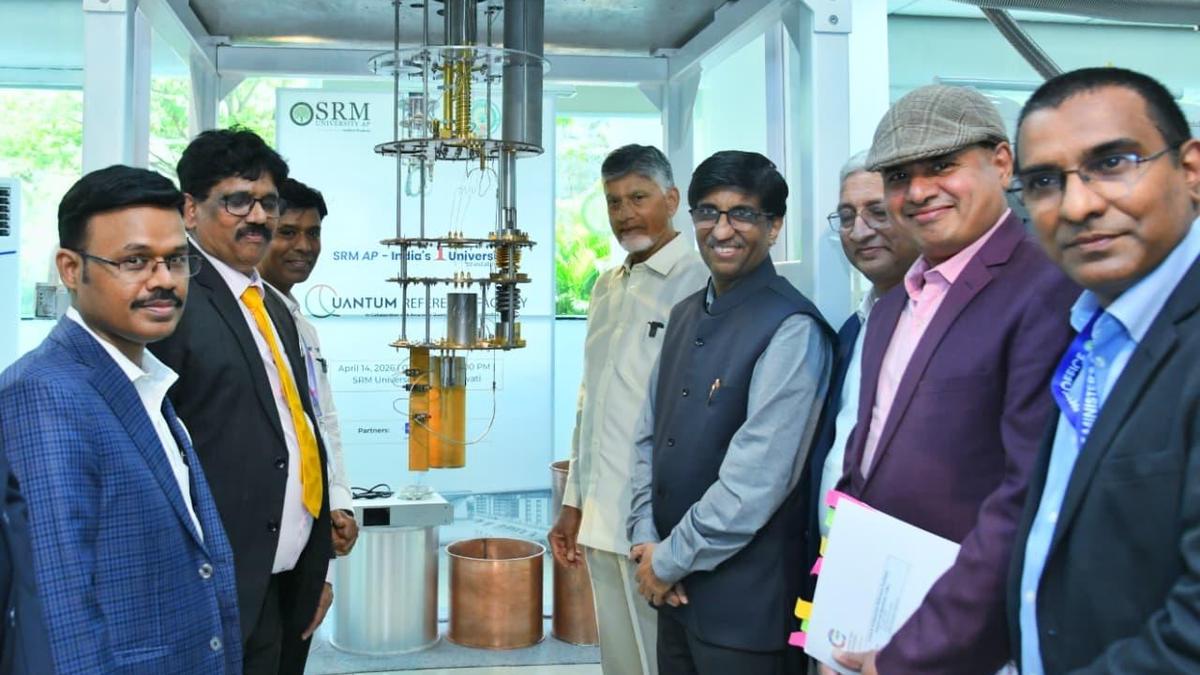
Andhra Pradesh Chief Minister N. Chandrababu Naidu has officially opened India’s first open-access quantum reference facilities in the city of Amaravati. These new centers, named Amaravati 1S and Amaravati 1Q, are designed to help scientists and private companies test new high-tech hardware. By providing these tools, the state government aims to make Amaravati a major hub for advanced science and technology. This move is a significant step in helping India compete with other global leaders in the field of quantum computing.
Main Impact
The opening of these facilities marks a major change in how India handles high-end technology research. Usually, expensive equipment for quantum science is kept inside private labs or closed government buildings. By making these facilities "open-access," the government is allowing smaller companies and independent researchers to use them. This will likely speed up the creation of new technologies and help startups grow without needing millions of dollars for their own equipment. It also places Andhra Pradesh at the center of the next big wave of computing power.
Key Details
What Happened
Chief Minister Naidu inaugurated two specific locations that will serve as the backbone for this project. The first facility, Amaravati 1S, is located at SRM University. The second, Amaravati 1Q, is based at Medha Towers. These centers are equipped with specialized tools that can measure and verify how quantum parts work. During the launch, the Chief Minister explained that these labs will serve as a place where hardware can be certified to meet international standards. This means that products developed in India can now be tested locally before being sold or used globally.
Important Numbers and Facts
The project involves two primary sites to ensure both students and professionals have access. SRM University provides an academic setting where students can learn, while Medha Towers offers a professional space for businesses. These are the first facilities in the country to offer this specific type of "reference" service to the public. The goal is to support the National Quantum Mission, a larger plan by the Indian government to invest heavily in this type of science over the next several years. By setting up these labs now, Andhra Pradesh is getting a head start on a market that is expected to be worth billions of dollars in the near future.
Background and Context
Quantum computing is a new way of building computers that are much faster than the ones we use today. While a normal computer uses "bits" to process information as either a zero or a one, a quantum computer uses "qubits." This allows them to solve very difficult math problems in seconds that would take a normal computer thousands of years to finish. Because this technology is so new, the parts used to build these computers are very sensitive. They need to be tested in special environments to make sure they work correctly. Before these labs opened in Amaravati, many Indian researchers had to send their work abroad for testing, which was expensive and took a long time.
Public or Industry Reaction
The tech community has welcomed this news with excitement. Many experts believe that having a local place to certify hardware will encourage more people to start tech businesses in India. Leaders at SRM University noted that this will give their students a chance to work with world-class tools that are rarely found on college campuses. Business leaders at Medha Towers also expressed that this move makes the region more attractive to international investors. People in the city are hopeful that this will lead to more high-paying jobs and turn Amaravati into a modern city known for innovation rather than just administration.
What This Means Going Forward
Looking ahead, these facilities are expected to attract a lot of talent to Andhra Pradesh. As more researchers move to the area to use the labs, a community of scientists and engineers will grow. This could lead to the creation of new software, better security systems for banks, and even new types of medicine developed through fast computer simulations. The state government plans to continue supporting these centers and may expand them if the demand grows. The next step will be to connect these labs with other research centers across India to create a national network for quantum study.
Final Take
The launch of Amaravati 1S and 1Q is more than just an opening of two buildings; it is a clear sign that Andhra Pradesh wants to lead the future of technology. By giving researchers the tools they need to test and certify their work, the state is removing a major hurdle for innovation. This project shows how government support can help bridge the gap between big ideas and real-world products. As these facilities begin their work, they will likely play a key role in making India a global power in the next generation of computing.
Frequently Asked Questions
What is an open-access quantum facility?
It is a laboratory where researchers, students, and private companies can pay a fee or get permission to use high-tech equipment that they do not own themselves. It makes expensive technology available to more people.
Where are the new labs located?
The two labs are located in Amaravati, Andhra Pradesh. One is at SRM University (Amaravati 1S) and the other is at Medha Towers (Amaravati 1Q).
Why is testing and certification important?
Quantum hardware is very delicate and must be extremely precise. Testing ensures the parts work as they should, and certification proves to buyers and partners that the hardware meets high quality and safety standards.

