
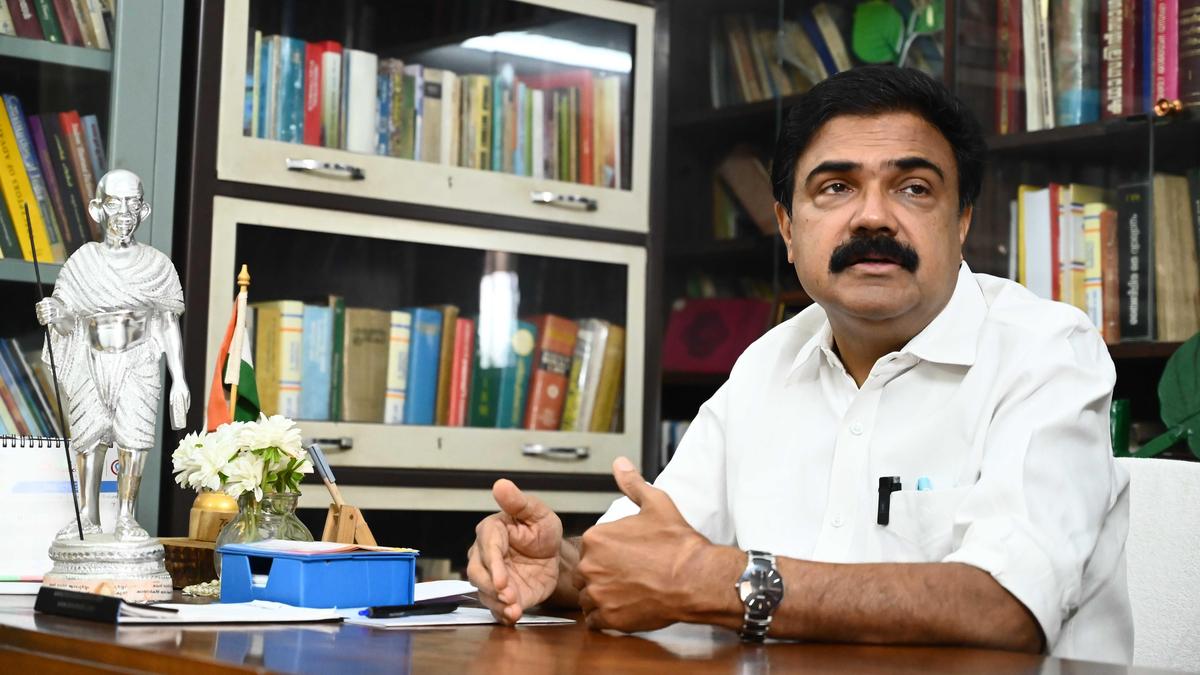
Summary
Jose K. Mani, the chairperson of the Kerala Congress (M), has proposed a new way to handle the upcoming redrawing of voting districts in India. This process, known as delimitation, usually changes the number of seats each state has in Parliament based on its population. Mani suggests using a "multi-factor matrix" to ensure the process is fair to all states. He believes that simply counting heads is not enough and could lead to unfair results for states that have successfully controlled their population growth.
Main Impact
The suggestion from Jose K. Mani addresses a major fear among states in Southern India. For years, these states have followed national goals to reduce birth rates and improve healthcare. If the government redraws electoral boundaries based only on the latest population numbers, these states might lose their political power. Mani’s proposal aims to create a balance where states are not punished for their success in social and health programs. This could change how the central government thinks about representation and fairness across the country.
Key Details
What Happened
Jose K. Mani has called on the central government to move away from a simple population-based formula for delimitation. He argues that the current method is too basic and does not account for the hard work some states have done to manage their growth. By introducing a more complex formula, he hopes to protect the number of seats that states like Kerala currently hold in the Lok Sabha. His proposal is a direct response to the concerns that the North-South divide in population growth will lead to a massive shift in political power toward Northern states.
Important Numbers and Facts
The proposed "multi-factor matrix" includes three main parts. First is the current population of each state. Second is the Total Fertility Rate (TFR), which shows how many children are being born on average. Third is the current share of seats each state already has in Parliament. By mixing these three factors, Mani believes the government can find a middle ground. Currently, the number of seats in Parliament is based on the 1971 census. A new redrawing of lines is expected to happen after the next census, which could significantly increase the total number of seats in the Lok Sabha.
Background and Context
Delimitation is the process of fixing the limits or boundaries of territorial constituencies in a country. In India, this is done to ensure that each seat in Parliament represents a similar number of people. However, this process was frozen decades ago. The government did this so that states would not feel pressured to increase their population just to get more political power. Since then, Southern states have seen their populations grow slowly because of better education and healthcare. Meanwhile, Northern states have seen much faster growth. If the freeze is lifted and only population is used, Northern states like Uttar Pradesh could gain many more seats, while Southern states could lose their voice in national decisions.
Public or Industry Reaction
Political leaders in Southern India have been vocal about their worries regarding delimitation. Many feel that losing seats would be a "penalty" for being efficient and responsible. While the central government has mentioned that it wants a fair process, it has not yet released a specific formula. Mani’s suggestion is one of the first detailed ideas on how to fix the problem using a mathematical approach. Other regional parties are likely to support similar ideas that protect their current standing in the central government. Experts in politics agree that finding a formula that pleases everyone will be one of the biggest challenges for the government in the coming years.
What This Means Going Forward
The next few years will be critical for Indian democracy as the government prepares for the next census and the following delimitation. If Mani’s matrix or a similar system is adopted, it could set a new standard for how representation is decided. It would mean that a state’s quality of life and social progress are just as important as its total number of people. However, if the government sticks to a pure population count, it could lead to protests and a sense of unfairness in many parts of the country. The next step will be for the central government to discuss these proposals with various state leaders and political parties.
Final Take
The debate over delimitation is about more than just numbers; it is about the future of how different regions work together. Jose K. Mani’s proposal offers a way to respect the efforts of states that have improved their social standards while still acknowledging population changes. A fair formula is necessary to keep the country united and ensure that every region feels its voice is heard in the halls of power. Without a balanced approach, the very foundation of equal representation could be at risk.
Frequently Asked Questions
What is delimitation?
Delimitation is the process of redrawing the boundaries of voting areas to make sure each representative in Parliament stands for a similar number of voters.
Why are Southern states worried about this process?
Southern states have successfully lowered their population growth. If seats are given based only on population, these states will have fewer seats compared to Northern states where the population is growing faster.
What is the "multi-factor matrix" suggested by Jose K. Mani?
It is a formula that considers the current population, the birth rate (fertility rate), and the current number of seats a state has to decide how many seats they should have in the future.



