Summary
Assam Chief Minister Himanta Biswa Sarma has made a strong statement against Trinamool Congress (TMC) leader Humayun Kabir during an election campaign in West Bengal. Sarma criticized Kabir for his previous controversial remarks regarding the Hindu community. The Assam leader stated that if he had the authority, he would "export" Kabir to Bangladesh. This exchange has added more tension to the ongoing political battle between the Bharatiya Janata Party (BJP) and the TMC in the state.
Main Impact
The primary impact of this statement is the heightening of communal and political rhetoric in West Bengal. By using such strong language, Sarma is positioning the BJP as a protector of the majority community while accusing the TMC of allowing its leaders to make threatening speeches. This development is likely to polarize voters further as the election dates approach. It also puts pressure on the TMC to address the conduct of its own members while defending them against outside criticism.
Key Details
What Happened
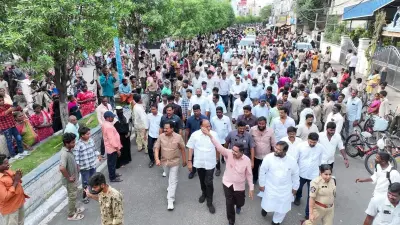
During a public rally, Himanta Biswa Sarma brought up a video of Humayun Kabir that went viral some time ago. In that video, Kabir, who is an MLA from Bharatpur, allegedly made a speech where he said that Muslims in his area could "drown" Hindus in the Bhagirathi river within two hours if they wanted to. Sarma used his platform to respond to this, saying that such threats against Indian citizens are unacceptable. He argued that anyone who speaks about harming a specific religious group in India should not be part of the country's political system.
Important Numbers and Facts
Humayun Kabir is a sitting member of the West Bengal Legislative Assembly representing the Bharatpur constituency in Murshidabad. The controversial comments he made were first reported during the 2024 Lok Sabha election cycle. At that time, the Election Commission of India took notice of his speech and issued a warning. Sarma, who is a prominent leader for the BJP and often travels to other states to campaign, has used this specific incident to highlight what he calls the "lawlessness" and "appeasement" policies of the current West Bengal government.
Background and Context
West Bengal politics has often been marked by heated debates over religion and identity. The BJP has been trying to gain more ground in the state by accusing the TMC of favoring the minority community for votes. Murshidabad, where Kabir is a leader, is a district with a high Muslim population, making any statement about religious demographics very sensitive. The Bhagirathi river mentioned in Kabir's speech is a major waterway in the region, and his use of it in a threatening context was seen as a serious provocation by many groups.
Himanta Biswa Sarma is known for his direct and often blunt style of speaking. As the Chief Minister of Assam, he has implemented several policies that he claims are meant to protect the indigenous culture of his state. He often brings this perspective to West Bengal, suggesting that the state needs a similar approach to handle illegal immigration and communal harmony.
Public or Industry Reaction
The Trinamool Congress has reacted sharply to Sarma’s comments. Party leaders have called his speech "provocative" and "hateful." They argue that a sitting Chief Minister should not talk about "exporting" an Indian citizen to another country, regardless of what that person said. TMC supporters believe that Sarma is trying to distract people from local issues like the economy and jobs by focusing on religious divisions.
On the other side, BJP supporters have welcomed Sarma’s stance. They feel that Kabir’s original comments were not punished severely enough and that a strong response was necessary. Social media has been divided, with many people debating whether Sarma’s words were a fair political response or an escalation of an already dangerous situation.
What This Means Going Forward
This incident will likely lead to more legal and administrative complaints. The TMC may approach the Election Commission to report Sarma for his "export" remark, claiming it violates the code of conduct. At the same time, the BJP will likely continue to use Kabir’s past speeches as a central part of their campaign message to show that the TMC is not protecting all citizens equally.
The focus on Bangladesh in political speeches is also expected to grow. Both parties use the topic of the neighboring country to talk about border security, immigration, and national identity. This trend suggests that the remainder of the election season will be focused on these high-stakes emotional issues rather than just local development projects.
Final Take
The clash between Himanta Biswa Sarma and Humayun Kabir is a clear example of the deep political divide in India today. While Kabir’s initial comments were seen by many as a threat to peace, Sarma’s response has turned the issue into a national debate about loyalty and citizenship. As the election moves forward, the challenge for voters will be to look past the loud rhetoric and focus on the actual policies that will affect their daily lives.
Frequently Asked Questions
Who is Humayun Kabir?
Humayun Kabir is a politician from the Trinamool Congress (TMC) and a member of the West Bengal Legislative Assembly representing the Bharatpur constituency.
Why did Himanta Biswa Sarma criticize him?
Sarma criticized Kabir for a speech in which Kabir allegedly threatened the Hindu community by saying they could be overpowered in a very short time in his district.
What did Sarma mean by "exporting" him?
Sarma used the word "export" to suggest that Kabir should be sent to Bangladesh because his comments were, in Sarma's view, against the interests and safety of people in India.