
Summary
The local elections in Gujarat have reached a major turning point as the deadline for withdrawing names has passed. The ruling BJP has already won hundreds of seats because no other candidates are running against them. However, the Congress party is now accusing the BJP of using unfair pressure and money to force rivals out of the race. These events have created a tense atmosphere as the official campaign period begins across the state.
Main Impact
The biggest impact of this development is the high number of seats won without a single vote being cast. While the BJP sees this as a sign of their strength, the opposition and some members of the public see it as a blow to the democratic process. In several areas, local citizens are starting to push back against candidates, leading to heated confrontations during early campaign stops. This situation is changing how people view local governance and the fairness of the election system.
Key Details
What Happened
As the time to withdraw nomination forms ended on April 15, a large number of candidates pulled out of the race. This left many seats with only one candidate, mostly from the BJP. Chief Minister Bhupendra Patel started his campaign in Mehsana with a strong message. He told supporters that the goal is to win so convincingly that the opposition will be afraid to even file forms in the future.
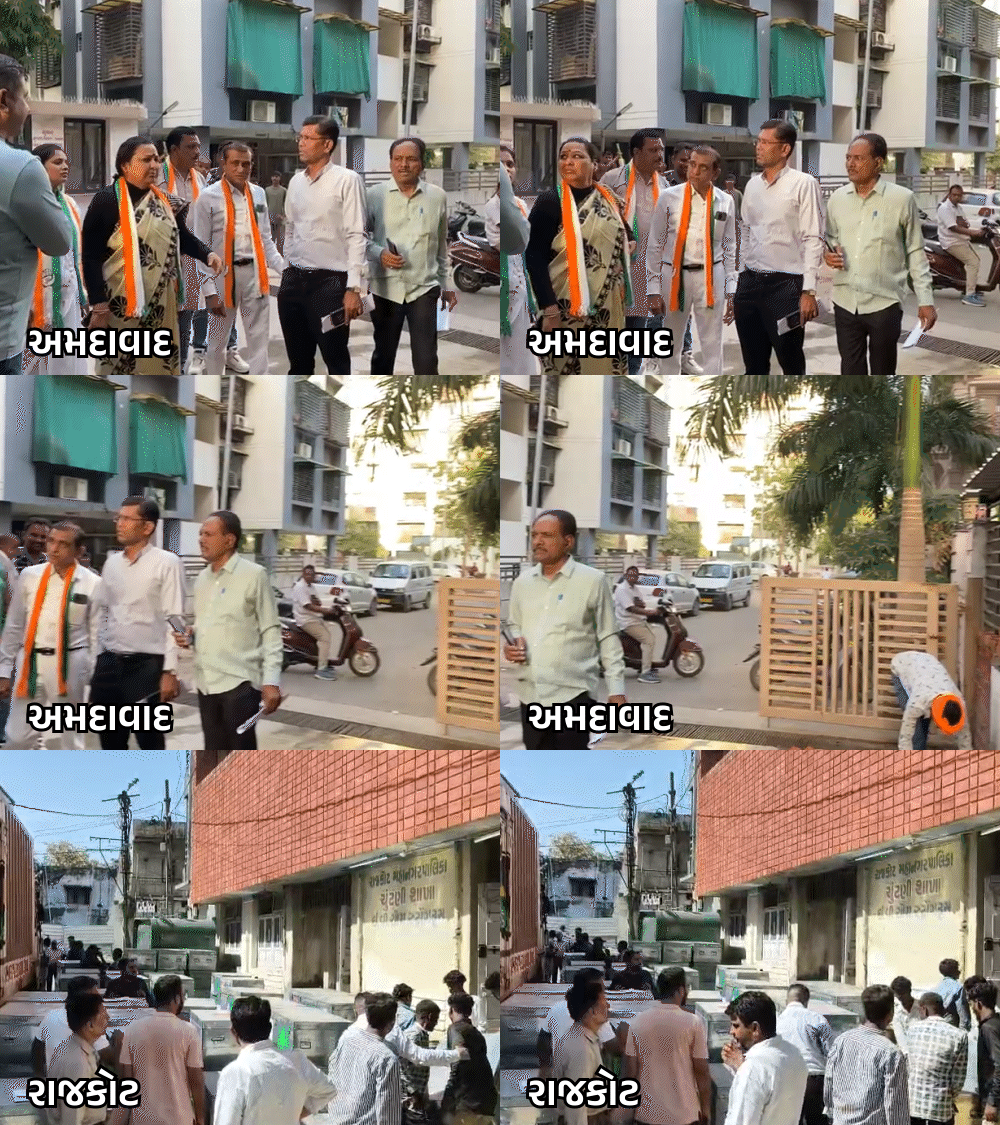
Meanwhile, the Congress party has started a counter-attack. In Ahmedabad, they shared evidence claiming that a BJP candidate is involved in illegal building activities. In the Vasna area, the situation became physical when local residents surrounded BJP candidates to demand answers about local issues. The opposition claims that many candidates did not leave the race by choice but were forced to do so through threats or offers of money.
Important Numbers and Facts
The scale of these withdrawals is quite large. According to the latest reports, a total of 1,559 nomination forms were withdrawn across the state. This has resulted in 378 seats being decided before the voting even starts. Out of these, 35 seats are in big city corporations, and 342 are in smaller municipalities and local councils. These numbers might go up as the final data comes in from rural areas. There are about 10,000 total seats up for grabs in this election cycle, making these early wins a significant portion of the total.
Background and Context
Local body elections are very important because they decide who will manage basic services like water, roads, and schools in cities and villages. In Gujarat, the BJP has been the dominant political force for many years. However, the practice of winning seats "unopposed" has become a major talking point recently. Critics argue that when candidates are forced or paid to sit out, the voters lose their right to choose. The Congress party is trying to use this sentiment to gain support, portraying themselves as the defenders of the people's right to vote.
Public or Industry Reaction
The reaction from the public has been mixed. In some neighborhoods, like Vasna, people are showing their anger by blocking candidates from entering their streets. They feel that their local problems are being ignored while parties focus on winning seats through political deals.
Congress leader Chaudhary spoke out strongly in Vadodara. He asked a simple question: if the BJP is already so powerful in the state and the central government, why do they need to "buy" or "scare" opposition candidates? He suggested that the ruling party is actually nervous about losing ground. On the other side, BJP supporters argue that the opposition is simply too weak to find good candidates, which is why so many are dropping out of the race.
What This Means Going Forward
Now that the final list of candidates is ready, the real campaigning will start with full force. The BJP will likely focus on their record of development and their recent "unopposed" victories as a sign of popularity. The Congress and other smaller parties will likely focus on local scandals, such as the illegal construction claims in Ahmedabad, to show that the ruling party candidates are not following the law. The high number of early wins for the BJP gives them a huge head start, but the growing public anger in some areas could make the remaining contests much tighter than expected.
Final Take
The current election scene in Gujarat shows a deep divide in how politics is being played. While one side is celebrating early victories, the other is warning about the loss of fair competition. The next few weeks will show whether the voters are happy with the current direction or if the allegations of unfair tactics will lead to a surprise at the ballot box. For the average citizen, the main hope remains that whoever wins will focus on solving the real problems in their streets and neighborhoods.
Frequently Asked Questions
What does it mean to win a seat "unopposed"?
Winning unopposed means that only one candidate is left in the race for a specific seat. This happens if other candidates withdraw their names or if their application forms are rejected. In this case, no voting is needed for that seat.
Why is the Congress party complaining about the withdrawals?
The Congress party claims that the BJP is using its power to threaten opposition candidates or offering them money to quit the race. They believe this takes away the choice from the voters and hurts the democratic system.
How many seats have already been decided?
So far, 378 seats have been decided because there was only one candidate left. This includes 35 seats in large city corporations and over 340 seats in smaller towns and local districts.



