Summary
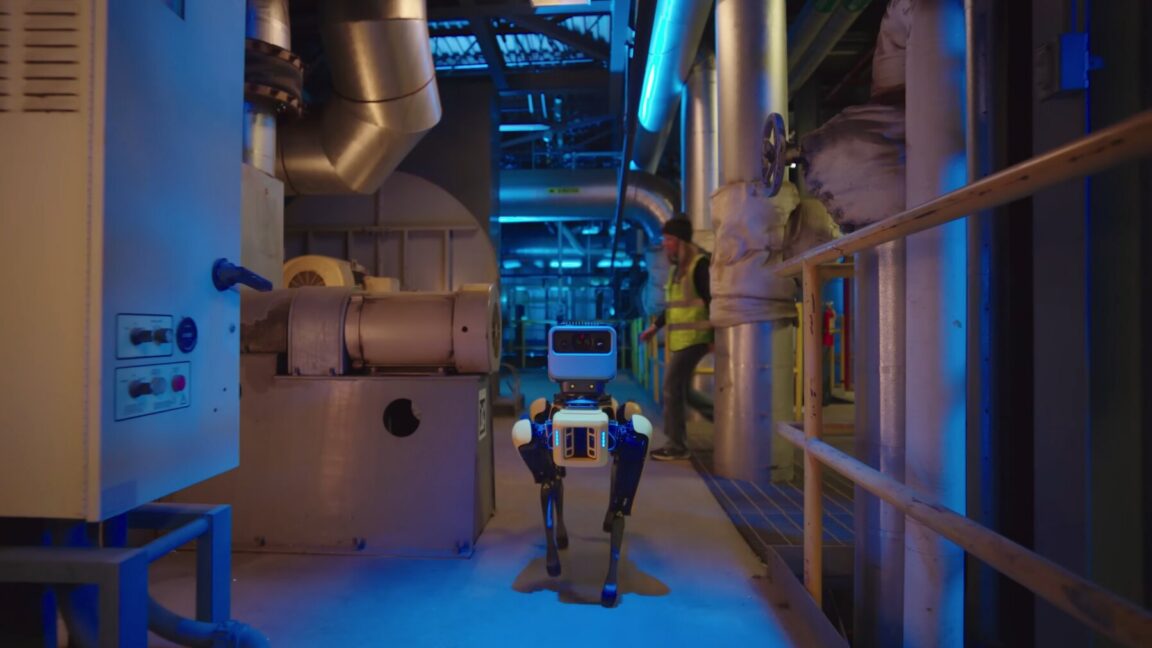
Boston Dynamics and Google DeepMind have reached a new milestone in robotics by teaching the famous Spot robot dog how to read analog instruments. Using a new artificial intelligence model called Gemini Robotics-ER 1.6, the robot can now interpret thermometers and pressure gauges in real-time. This update allows robots to perform complex inspections in factories and warehouses without human help. By combining advanced AI with mobile hardware, these machines are becoming much more useful in industrial settings.
Main Impact
The biggest impact of this development is the shift from simple movement to "embodied reasoning." In the past, robots were mostly used to carry items or follow a set path. Now, they can look at their surroundings, understand what they see, and make decisions based on that information. For industrial companies, this means they can use robots to monitor old equipment that does not have digital sensors. Instead of spending millions of dollars to upgrade every pipe and tank with smart sensors, they can simply have a robot dog walk around and read the existing dials and needles.
Key Details
What Happened
On April 14, 2026, Google DeepMind introduced the Gemini Robotics-ER 1.6 model. This AI is designed to act as a high-level brain for robots. It was tested on Boston Dynamics’ Spot robot to see if the machine could handle visual inspection tasks. The robot successfully identified liquid levels in sight glasses, read the positions of needles on pressure gauges, and understood the numbers on various thermometers. This was made possible through a deep partnership between Google’s AI experts and Boston Dynamics’ engineers.
Important Numbers and Facts
The new AI model focuses on "visual reasoning," which is the ability to look at an image and figure out what is happening. This is difficult for robots because gauges often have glare, shadows, or dirt on them. The Gemini model allows the robot to ignore these distractions and find the exact data needed. Boston Dynamics, which is owned by the Hyundai Motor Group, is already looking at how to use this technology in car manufacturing plants. The goal is to create a fleet of robotic inspectors that can work 24 hours a day without getting tired or making mistakes.
Background and Context
For a long time, robots were "blind" or could only recognize basic shapes. If a robot encountered a thermometer, it would see a piece of metal but wouldn't know what the temperature was. To solve this, companies usually had to install digital sensors that send data over the internet. However, many old factories still rely on analog tools—the kind with physical needles and glass tubes. Replacing all these tools is very expensive and takes a lot of time. By giving a robot the ability to "read" like a human, companies can keep their old equipment while still getting the benefits of modern automation. This bridge between old hardware and new software is a major step for the tech industry.
Public or Industry Reaction
The tech and manufacturing industries have reacted with excitement to this news. Experts believe this will make robots much more common in sectors like energy, chemicals, and car making. Hyundai, the parent company of Boston Dynamics, is particularly interested because their factories are massive and require constant safety checks. Industry analysts note that this partnership between Google and Boston Dynamics is a perfect match. Google provides the "brain" through its Gemini AI, while Boston Dynamics provides the "body" with its highly mobile robots. This combination is seen as a direct challenge to other companies trying to build useful industrial robots.
What This Means Going Forward
In the near future, we can expect to see robots taking over more dangerous inspection jobs. Instead of sending a person into a high-heat area or a room with chemical fumes to check a gauge, a robot dog will do it. The next step will likely involve humanoid robots using this same AI. While Spot is a four-legged robot, Boston Dynamics also has a humanoid robot called Atlas. If Atlas can use this AI to read tools and then use its hands to turn valves or flip switches based on those readings, the role of robots in the workforce will change forever. There are also plans to make these robots better at talking to humans, so they can report their findings in plain English.
Final Take
The ability for a robot to read a simple thermometer might seem small, but it represents a massive leap in how machines understand our world. By giving robots the power to reason and interpret visual data, we are moving closer to a world where machines can work alongside humans in complex environments. This partnership shows that the future of robotics is not just about how well a machine can move, but how well it can think and see.
Frequently Asked Questions
How does the robot dog read a thermometer?
The robot uses a camera to take a picture of the thermometer. Then, the Google Gemini AI analyzes the image to find the needle or the liquid level and translates that into a digital temperature reading.
Can this AI be used on other robots?
Yes, the Gemini Robotics-ER 1.6 model is designed to be a "brain" that can work with different types of robotic hardware, including four-legged robots and humanoid models.
Why is this better than using digital sensors?
It is often cheaper and faster to have a robot read existing analog gauges than it is to shut down a factory and install thousands of new digital sensors and wiring.