Summary
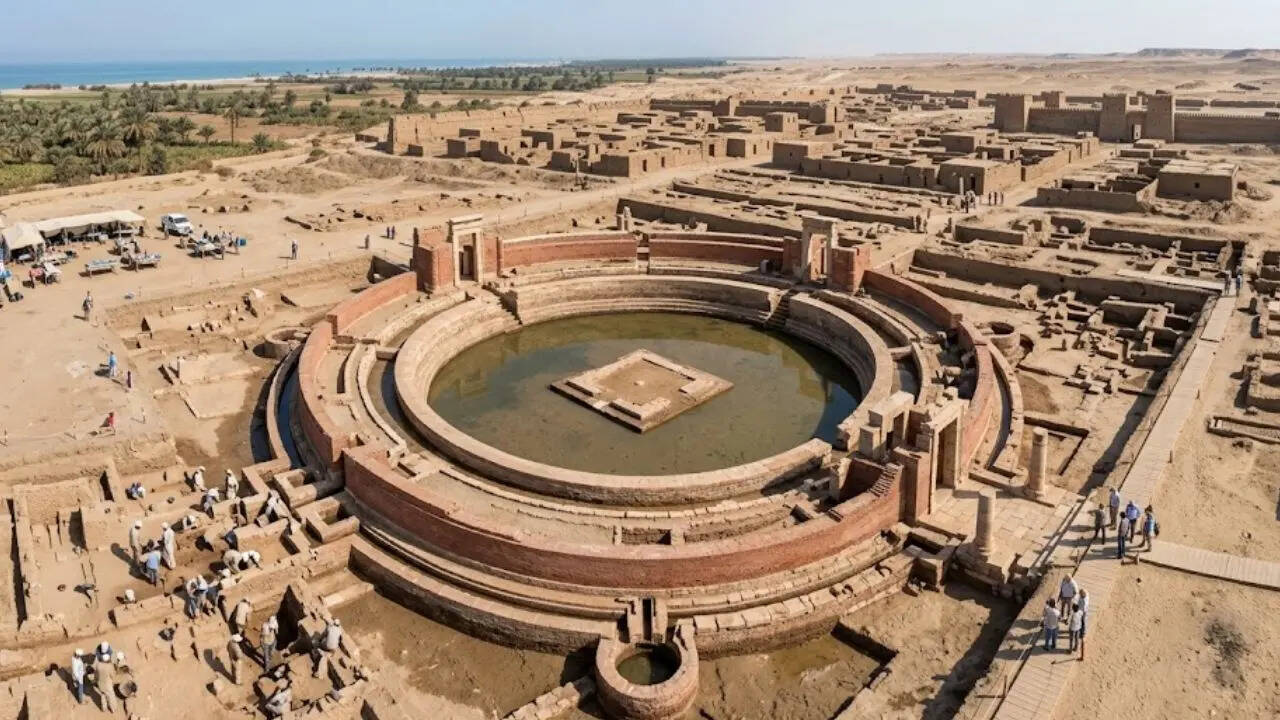
Archaeologists in Egypt have uncovered a rare, 2,000-year-old round temple in the ancient city of Pelusium. This discovery is significant because it provides new evidence of how ancient people worshipped the Nile River. The temple dates back to a time when Egypt was influenced by both Greek and Roman cultures. By studying this site, experts are learning more about the religious rituals that centered on water, which was the most important resource for survival in the region. This find helps piece together the history of Pelusium as a major cultural and religious hub.
Main Impact
The discovery of this circular temple changes what we know about ancient Egyptian architecture and religion. Most traditional Egyptian temples were built in a rectangular shape with heavy stone walls. Finding a round temple, often called a "tholos" in Greek architecture, shows a unique blend of styles. This suggests that the people living in Pelusium were mixing different cultural traditions. The impact of this find is huge because it highlights the specific spiritual connection people had with the Nile River. It proves that the river was not just a source of water for farming, but a holy entity that required its own dedicated places of worship even in the outer borders of the country.
Key Details
What Happened
An Egyptian archaeological mission working at the Tell el-Farama site, also known as Pelusium, found the remains of the circular temple. The team spent months excavating the area before reaching the foundation of the building. They found that the temple was built using red bricks and limestone. The circular design is very rare for this part of Egypt, making it a standout discovery for the year. The site is located in the northwestern part of the Sinai Peninsula, which was a vital area for trade and defense in ancient times.
Important Numbers and Facts
The temple is approximately 2,000 years old, placing its construction around the late Ptolemaic or early Roman period. Pelusium itself was a massive city, once considered the second most important port in Egypt after Alexandria. The temple's diameter and the thickness of its walls suggest it was a sturdy and important building. Archaeologists also found evidence of water channels nearby, which supports the theory that the temple was used for water-related ceremonies. The city of Pelusium was once located on the Pelusiac branch of the Nile, a part of the river that has since dried up.
Background and Context
To understand why this discovery matters, we have to look at the history of the Nile. In ancient Egypt, the Nile was the center of everything. It provided food through farming and served as the main highway for travel. Because the desert was so dry and harsh, the river was seen as a gift from the gods. People believed that a god named Hapi controlled the yearly flooding of the river. If the river did not flood, the crops would fail and people would go hungry. Therefore, building temples to honor the water was a way to ensure the survival of the community. Pelusium was the eastern gateway to Egypt, meaning it was the first place many travelers and soldiers saw when they entered the country. Having a grand temple there showed the wealth and religious devotion of the Egyptian state.
Public or Industry Reaction
Historians and researchers are very excited about this find. Many experts note that circular temples are more common in Greece and Rome than in Egypt. Seeing this style in Pelusium shows how much the different cultures of the Mediterranean were talking to each other and sharing ideas. Local officials in Egypt believe this discovery will help bring more tourists to the Sinai region. They want to show the world that Egypt has many different types of historical sites beyond just the famous pyramids. Scholars are now looking for similar structures in other parts of the Nile Delta to see if this was a common trend or a unique feature of this specific city.
What This Means Going Forward
The next steps for the archaeological team involve a deeper search for artifacts inside the temple ruins. They hope to find statues, coins, or written records that might tell them exactly which gods were worshipped there. There is also a plan to use modern technology, like ground-penetrating radar, to see if there are more buildings hidden under the sand around the temple. This could reveal an entire religious complex that has been buried for centuries. Protecting the site from the elements is also a priority, as the red bricks can be fragile when exposed to the air after being underground for so long. This discovery will likely lead to new chapters in history books about the late period of ancient Egypt.
Final Take
The discovery of the round temple in Pelusium is a powerful reminder of how ancient civilizations respected the natural world. It shows that even 2,000 years ago, people understood that their lives depended on the health of their environment. By building a beautiful and unique temple for the Nile, they turned their gratitude into art and architecture. This site stands as a bridge between different cultures and a symbol of the lasting importance of the Nile River in human history.
Frequently Asked Questions
Why is a round temple unusual in Egypt?
Most ancient Egyptian temples were rectangular. Round temples are a style more often found in ancient Greece and Rome. Finding one in Egypt shows a mix of different cultural influences during that time period.
Where is Pelusium located?
Pelusium, also known as Tell el-Farama, is located in the northwestern part of the Sinai Peninsula. It was once a major port city near a branch of the Nile River that has since dried up.
Who was the Nile god in ancient Egypt?
The most famous god associated with the Nile was Hapi. He was believed to be responsible for the annual flooding of the river, which brought rich soil and water to the farmers.