
Summary
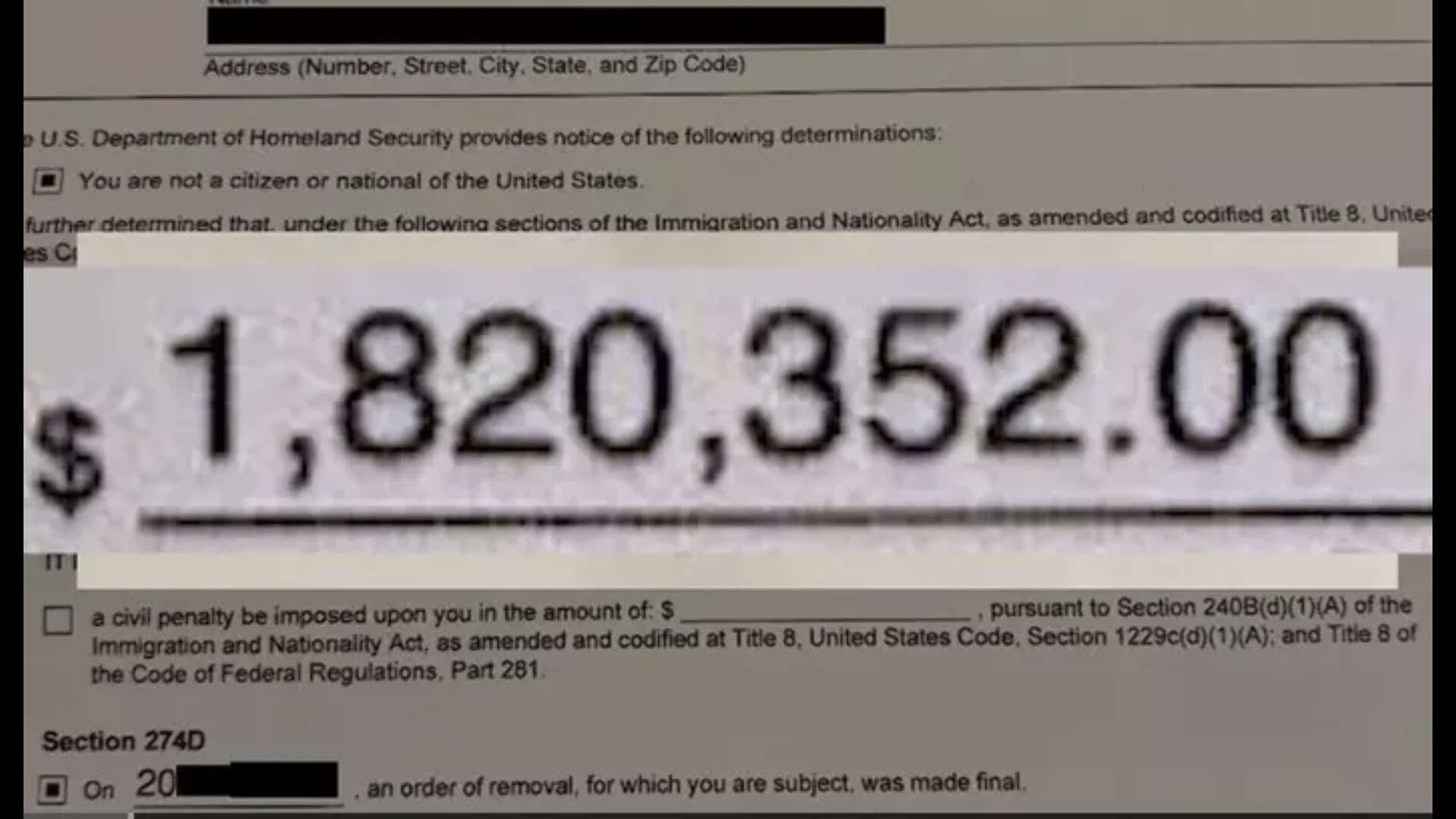
A man living in Washington state recently received a life-changing letter from the Department of Homeland Security (DHS). The letter informed him that he owes the government more than $1.8 million in civil penalties. The man, who originally came to the United States as a refugee from Vietnam, is now facing a financial demand that he cannot possibly pay. This massive bill is tied to an old legal order and highlights a strict government policy regarding people who have been told to leave the country but remain in the U.S.
Main Impact
The primary impact of this situation is the extreme financial pressure placed on an individual who has spent decades building a life in America. For many refugees and immigrants, a bill of this size is a death sentence for their financial future. It also signals a move by the government to collect old debts and enforce penalties that have been growing quietly for years. This case has raised concerns among legal experts and immigrant rights groups about the fairness of charging millions of dollars to people who often have no way to leave the country even if they wanted to.
Key Details
What Happened
The man at the center of this case is Hieu Trung Nguyen. He arrived in the United States as a young man seeking safety after the war in Vietnam. Years ago, due to legal issues, he was ordered to be deported. However, for a long time, Vietnam did not have an agreement with the U.S. to take back citizens who had left during that era. This meant that while the U.S. wanted him to leave, there was no country that would accept him. He remained in Washington under government supervision, checking in regularly with officials and working to support himself.
The shock came when the DHS sent a formal notice stating that he had failed to follow the order to leave the country. Because he stayed in the U.S. past his deadline, the government began charging him a daily fine. Over many years, those daily charges added up to the staggering total of $1.8 million.
Important Numbers and Facts
The numbers involved in this case show how quickly government fines can spiral out of control. The law allows the government to charge up to $500 per day for every day a person stays in the country after they have been ordered to leave. In this specific case, the fine has been growing for over a decade. The total bill sent to the Washington resident was exactly $1,837,500. This amount is far higher than the average American earns in a lifetime, making it an impossible debt to settle.
Background and Context
To understand why this is happening, it is important to look at the history of immigration laws. In the late 1990s and early 2000s, the U.S. government passed laws to speed up the removal of people who did not have legal status. One of the tools they created was the "civil penalty for failure to depart." The idea was to use money as a way to force people to leave the country on their own.
However, many people from countries like Vietnam, Cuba, or Laos found themselves in a difficult spot. The U.S. told them they had to go, but their home countries refused to let them back in. These individuals were often placed on "Orders of Supervision." This meant they could live and work in the U.S. as long as they followed certain rules and checked in with immigration officers. For years, the government rarely asked these people to pay the daily fines. Recently, there has been a shift in how these old rules are being used, leading to massive bills being sent to people who thought they were following the law by checking in with their officers.
Public or Industry Reaction
The reaction from the public and legal community has been one of disbelief. Lawyers who work on immigration cases say that these fines are not meant to be collected, but are instead used to scare people. They argue that it is cruel to charge someone millions of dollars when the government knows the person has nowhere else to go. Advocacy groups have called on the government to stop sending these bills, calling them "predatory." They believe that if a person is following the rules of their supervision, they should not be punished for a situation that is out of their control.
What This Means Going Forward
This case could lead to a major legal battle. Lawyers for the Washington man are likely to argue that the fine is "excessive punishment," which is against the U.S. Constitution. If the courts agree, it could stop the government from sending these huge bills to other refugees in similar situations. However, if the government wins, thousands of other people could receive similar letters in the mail. For now, the man in Washington must live with the fear of losing everything he owns to pay a debt that grew while he was simply trying to live his life.
Final Take
The story of a $1.8 million bill for a refugee is a clear example of how old laws can have modern, devastating consequences. It shows a gap between the rules on paper and the reality of people's lives. While the government has the right to enforce its borders, many wonder if charging millions of dollars to a single person is a fair way to handle complex immigration issues. The outcome of this case will be a major sign of how the U.S. plans to treat long-term residents who are stuck in legal limbo.
Frequently Asked Questions
Why is the fine so high?
The fine is high because the government charges a daily fee for every day a person stays in the U.S. after being ordered to leave. Over 10 or 20 years, these small daily amounts add up to millions of dollars.
Can the man be forced to pay the full amount?
It is very difficult for the government to collect $1.8 million from an average person. Legal experts are currently fighting the bill in court, arguing that it is an unfair and excessive penalty.
Why didn't he just leave the country?
In many cases involving refugees from Vietnam, the home country would not accept them back for many years. This left them with no place to go, even though the U.S. government had ordered them to depart.

