Summary
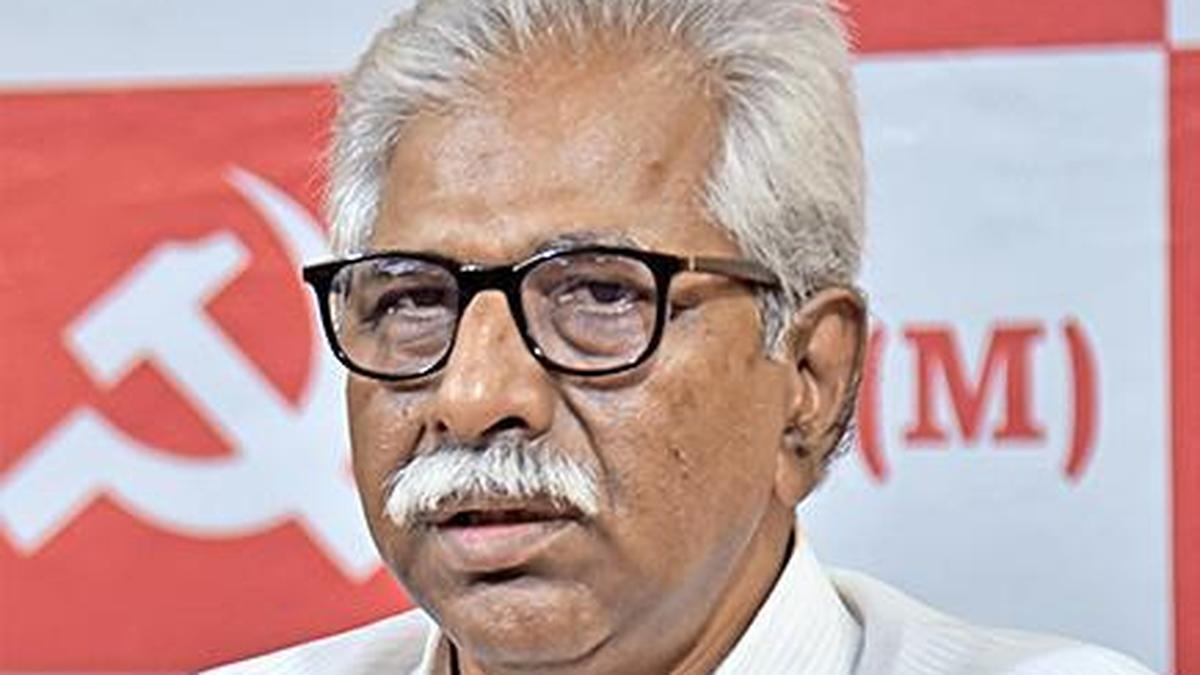
The Communist Party of India (Marxist), or CPI(M), has raised serious concerns about the upcoming delimitation process. Party leader Srinivasa Rao criticized the Telugu Desam Party (TDP) and the Yuvajana Sramika Rythu Congress Party (YSRCP) for staying silent on this issue. The party argues that linking the women’s reservation bill to the redrawing of voting boundaries will hurt Southern states and marginalized groups. This move could change how power is shared in the country, potentially leaving some regions with less influence in the central government.
Main Impact
The biggest impact of this situation is the potential loss of political power for states in Southern India. For decades, states like Andhra Pradesh, Telangana, Tamil Nadu, and Kerala have worked hard to control their population growth. However, the delimitation process uses population size to decide how many seats a state gets in Parliament. If the government uses new population data, states that successfully managed their growth might end up with fewer representatives. This creates a situation where states are essentially punished for following national goals regarding population control.
Key Details
What Happened
Srinivasa Rao, a prominent leader of the CPI(M), spoke out against the lack of action from the main regional parties in Andhra Pradesh. He pointed out that the TDP and YSRCP have not challenged the central government’s plan to link women’s reservation with the delimitation process. By staying quiet, Rao suggests these parties are failing to protect the interests of the people they represent. The CPI(M) believes that the current plan will lead to a decrease in the number of seats for Scheduled Castes (SC) and Scheduled Tribes (ST) in certain areas, further weakening their voice in the democratic process.
Important Numbers and Facts
The delimitation process is expected to take place after the next national census. Under current laws, the number of seats in the Lok Sabha has been frozen based on the 1971 census to ensure fairness to states that controlled their population. If this freeze is lifted, Northern states with much higher population growth could see a massive increase in their number of Members of Parliament (MPs). Some estimates suggest that the total number of seats in the Lok Sabha could rise significantly, but the share of those seats held by Southern states would drop. The Women’s Reservation Act, which promises 33% of seats for women, is also tied to this process, meaning the quota will not start until the new boundaries are drawn.
Background and Context
To understand this issue, it is important to know what delimitation means. It is the act of redrawing the boundaries of assembly and parliamentary seats to make sure each seat has roughly the same number of voters. Usually, this happens after every census. However, in the 1970s, the government decided to stop changing the number of seats for each state. They did this because they did not want states to avoid family planning just to keep their political power.
Now, the central government wants to start this process again. They have also tied the new women’s reservation law to it. This means that women will only get their reserved seats after the census and the redrawing of boundaries are finished. Critics say this is a way to delay giving women their fair share of power while also shifting political weight toward Northern India.
Public or Industry Reaction
The reaction from the CPI(M) is part of a larger wave of worry among Southern political leaders. While the TDP and YSRCP have been relatively quiet, other regional leaders in the South have called the plan "unfair." They argue that the Union government should find a way to increase representation without taking away the relative strength of states that have performed well in health and education. Social activists have also joined the conversation, expressing fear that the interests of the SC and ST communities will be ignored during the reshuffling of electoral maps.
What This Means Going Forward
Looking ahead, the delimitation process could lead to a major political shift in India. If the number of seats is based strictly on current population numbers, the North will have a much larger say in choosing the Prime Minister and passing national laws. This could lead to feelings of unfairness in the South, where people contribute a large share of the country’s taxes but might have less say in how the country is run. The next few years will likely see more protests and legal challenges as states try to protect their standing in the Union. The delay in women's reservation also remains a point of frustration for many who wanted to see more women in office sooner.
Final Take
The silence of major regional parties on such a vital issue is a cause for concern. If the redrawing of voting areas is not handled with care, it could damage the balance between the different regions of India. Protecting the rights of Southern states and marginalized communities is not just about politics; it is about ensuring that every part of the country feels heard and respected in the national government.
Frequently Asked Questions
What is delimitation in simple terms?
Delimitation is the process of changing the boundaries of voting areas. It is done to make sure that each representative in Parliament or the State Assembly stands for a similar number of people.
Why are Southern states worried about this process?
Southern states have controlled their population growth better than Northern states. If seats are assigned based on population, the South will have fewer representatives compared to the North, giving them less power in the central government.
How does this affect the women’s reservation bill?
The government has stated that the 33% reservation for women will only be put into practice after the delimitation process is complete. This means women may have to wait several more years before the quota actually begins.