
Summary
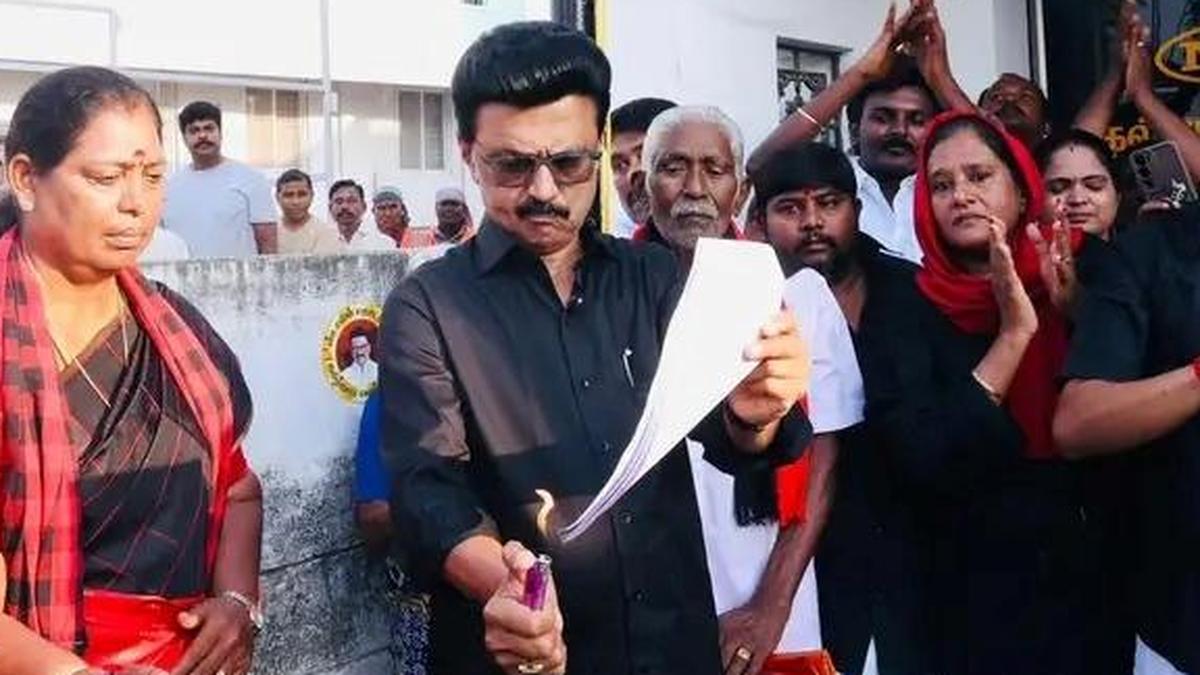
Tamil Nadu Chief Minister M.K. Stalin has taken a strong and visible stand against the central government's Delimitation Bill. During a public event in Namakkal, the Chief Minister burned a copy of the bill to show his deep disagreement with the proposed changes. He also called on the people of Tamil Nadu to join the protest by hoisting black flags at their homes and in public spaces. This move highlights a growing tension between the state government and the central government over how political power is shared in India.
Main Impact
The primary impact of this protest is the spotlight it shines on the potential loss of political influence for southern states. If the Delimitation Bill is implemented based strictly on population numbers, Tamil Nadu could see a decrease in its number of representatives in the Lok Sabha. This would mean that the state has less power to influence national laws, budgets, and policies. The Chief Minister’s actions suggest that this is not just a legal issue, but a major fight for the state's identity and its right to be heard in the national capital.
Key Details
What Happened
In a dramatic scene in Namakkal, Chief Minister Stalin held up a copy of the Delimitation Bill and set it on fire in front of a large crowd. This act was meant to send a clear message to the central government that Tamil Nadu rejects the current plan. Following the act, he delivered a speech where he urged every citizen who cares about the state's future to participate in a "black flag" protest. He wants the entire state to show its unhappiness by displaying black cloth as a sign of mourning for the loss of democratic rights.
Important Numbers and Facts
The delimitation process is based on the national census. Currently, the number of seats in Parliament is based on the 1971 census. The new plan intends to use the most recent population data to redraw these boundaries. Experts suggest that if this happens, northern states like Uttar Pradesh and Bihar could gain dozens of new seats, while southern states like Tamil Nadu and Kerala might stay the same or even lose seats. This is because the population in the North has grown much faster than in the South over the last fifty years.
Background and Context
To understand why this is happening, we have to look at how India manages its population. For decades, the central government asked all states to control their population growth to help the country develop. Tamil Nadu and other southern states were very successful in this. They invested in education, healthcare, and women's rights, which led to smaller families. Now, these states feel they are being punished for their success. Because they have fewer people, the new bill would give them fewer representatives in Parliament. It creates a situation where doing a good job for the country results in losing political power.
Public or Industry Reaction
The reaction in Tamil Nadu has been very strong. Many local political parties and social groups have supported the Chief Minister’s call for protest. They argue that the bill goes against the spirit of federalism, which is the idea that power should be shared fairly between the center and the states. On the other hand, some supporters of the central government argue that delimitation is a constitutional requirement. They say that every person’s vote should have equal weight, and if one area has more people, it should naturally have more representatives. This has created a deep divide in how people view the fairness of the Indian electoral system.
What This Means Going Forward
The burning of the bill is likely just the beginning of a long political and legal battle. We can expect to see more protests across the state and possibly in other southern states as well. There may also be legal challenges in the Supreme Court to stop the bill from being implemented in its current form. If the central government moves forward without addressing these concerns, it could lead to a serious breakdown in the relationship between the North and the South. The next few months will be critical as political leaders try to find a balance between population-based representation and the rights of states that have followed national development goals.
Final Take
The protest in Namakkal serves as a loud warning that the southern states will not quietly accept a reduction in their political status. By burning the bill and calling for black flags, M.K. Stalin has made it clear that Tamil Nadu views this as a fight for survival. The central government now faces the difficult task of redrawing boundaries without making millions of people feel like their voices no longer matter in the halls of power. This issue will likely remain at the center of Indian politics for a long time.
Frequently Asked Questions
What is delimitation?
Delimitation is the process of redrawing the boundaries of voting areas (constituencies) to make sure each area has a similar number of voters. It is usually done after a new census is taken.
Why is Tamil Nadu protesting the bill?
Tamil Nadu is protesting because the state successfully controlled its population growth. If seats are given based on population, the state will have fewer representatives compared to states where the population grew much faster.
What does the black flag protest represent?
The black flag is a traditional symbol of protest and disagreement. By asking people to hoist black flags, the Chief Minister wants to show the central government that the people of the state are united against the Delimitation Bill.



