
Summary
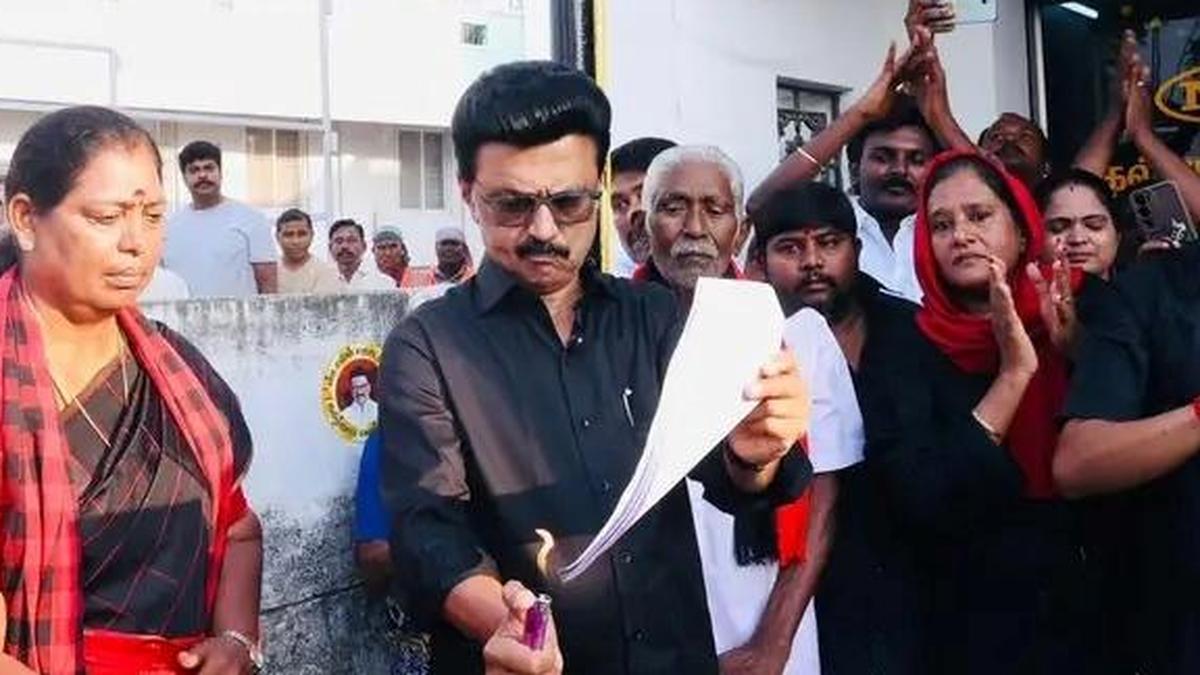
Tamil Nadu Chief Minister M.K. Stalin has taken a bold step in protesting the central government's proposed Delimitation Bill. During a public event in Namakkal, the Chief Minister burned a copy of the bill to show his strong opposition. He also called on the people of Tamil Nadu to hoist black flags at their homes and in public areas as a sign of protest. This move highlights a growing tension between the state and the central government over how political power is shared in India.
Main Impact
The main impact of this protest is the clear message it sends to the national government. By burning the bill, Stalin is signaling that Tamil Nadu will not accept changes that reduce its political influence. If the Delimitation Bill goes through as planned, states that have successfully managed their population growth, like Tamil Nadu, could lose seats in the Lok Sabha. This would mean fewer voices from the south in the national parliament, giving more power to states with much larger populations.
Key Details
What Happened
The protest took place in Namakkal, where Chief Minister Stalin addressed a large gathering. In a symbolic act of defiance, he set fire to a document representing the Delimitation Bill. He argued that the bill is a threat to the rights of the state and its people. Stalin urged every citizen who cares about the future of Tamil Nadu to participate in the "black flag" protest. This type of protest is a long-standing tradition in the state to show deep dissatisfaction with government policies.
Important Numbers and Facts
The Delimitation Bill aims to redraw the boundaries of electoral constituencies based on the latest population data. Currently, the number of seats each state has in Parliament is based on the 1971 census. This was done to ensure that states were not punished for controlling their population growth. If a new census is used now, Tamil Nadu, which has 39 seats in the Lok Sabha, could see its representation stay the same or even decrease. Meanwhile, states in Northern India with high population growth could see their seat counts rise significantly.
Background and Context
To understand why this matters, we have to look at how democracy works in India. The number of members a state sends to Parliament depends on its population. In the 1970s, the Indian government encouraged states to control their population growth to help the country develop. Tamil Nadu and other southern states were very successful in these efforts. To make sure these states did not lose their political power because they had fewer people, the government decided to "freeze" the number of seats based on the 1971 population count.
Now, the central government wants to lift this freeze and redraw the lines based on current population numbers. Leaders in Tamil Nadu believe this is unfair. They feel that they are being punished for following national goals on family planning and education. They argue that a state's political power should not be taken away just because it managed its growth better than others.
Public or Industry Reaction
The reaction in Tamil Nadu has been very strong. Members of the ruling DMK party and their allies have supported the Chief Minister’s call for action. Many local leaders have already started organizing the black flag protests in various districts. On the other hand, some critics argue that the census and delimitation are necessary for fair representation, as every person's vote should carry equal weight across the country. However, the fear of losing a voice in national decision-making remains the primary concern for the people of the state.
What This Means Going Forward
This protest is likely just the beginning of a long political and legal battle. If the central government moves forward with the bill, we can expect more protests and possibly legal challenges in the Supreme Court. The issue touches on the core of "federalism," which is the balance of power between the central government and the states. If the southern states feel they are being ignored or weakened, it could lead to a larger divide between different regions of India. The next few months will be critical as the government decides how to handle these concerns while preparing for the next national census.
Final Take
The act of burning the Delimitation Bill is a serious warning from the Tamil Nadu government. It shows that the state is ready to fight to keep its political strength. For the people of Tamil Nadu, this is not just about numbers or seats; it is about making sure their progress in health and education does not lead to a loss of their democratic rights. The call for black flags ensures that this message reaches every corner of the state and the halls of power in New Delhi.
Frequently Asked Questions
What is the Delimitation Bill?
The Delimitation Bill is a plan to redraw the boundaries of voting districts based on the most recent population data. This determines how many representatives each state sends to the national parliament.
Why is Tamil Nadu protesting against it?
Tamil Nadu is protesting because the state has successfully controlled its population growth. If seats are assigned based on new population numbers, the state might lose political power compared to states that did not control their growth.
What does the black flag represent?
In this context, the black flag is a symbol of protest and silent anger. It is used to show that the people disagree with a government decision and want their voices to be heard.



