Summary
Two Americans, who are believed to have worked for the Central Intelligence Agency (CIA), died recently in a car accident in Mexico. The crash took place shortly after a mission to destroy a secret drug laboratory. Following the incident, the Mexican government announced that these agents did not have the required legal permission to carry out operations within the country. This event has raised serious questions about how foreign intelligence officers work inside Mexico and the rules they must follow.
Main Impact
The deaths of these two individuals have created a difficult diplomatic situation between the United States and Mexico. While the two nations often work together to stop the flow of illegal drugs, Mexico has strict laws regarding foreign agents. The main impact of this event is a renewed focus on Mexican sovereignty and the limits of U.S. involvement in local security matters. It highlights a gap between official agreements and what actually happens on the ground during dangerous missions against drug cartels.
Key Details
What Happened
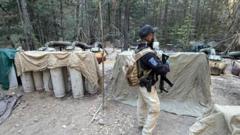
The incident occurred after a Mexican-led team moved to shut down a facility used for making illegal drugs. Although the operation was officially run by Mexican authorities, the two Americans were present. As they were leaving the area, their vehicle was involved in a fatal crash. Initial reports suggest the deaths were accidental, resulting from the car wreck rather than direct violence from the cartels. However, the presence of the Americans at the site of a raid has caused a political stir.
Important Numbers and Facts
The Mexican government confirmed that two people died in the accident. While the U.S. government has not officially confirmed their roles, multiple reports link the men to the CIA. Under Mexican law, all foreign agents must be registered and are strictly forbidden from carrying out arrests or participating in armed raids. The government stated clearly that no such authorization was given for these individuals to be involved in the drug lab operation. This lack of paperwork makes their presence a violation of local legal standards.
Background and Context
To understand why this is a major issue, it is important to look at the history of U.S. and Mexican relations. For many years, Mexico has been wary of U.S. agents working on its soil. In 2020, Mexico passed a law that made it much harder for foreign agencies like the DEA or CIA to operate. This law requires foreign officers to share all the information they collect with the Mexican government. It also removed their immunity in many cases, meaning they could be prosecuted under Mexican law if they break the rules.
The Mexican government wants to show its citizens that it is in full control of its own security. Many people in Mexico feel that U.S. agents have too much power and sometimes act without telling local leaders. This latest crash brings those fears back to the front of public discussion. It suggests that despite the strict laws passed a few years ago, foreign agents may still be taking part in high-risk field operations.
Public or Industry Reaction
The reaction from Mexican officials has been firm. They have used this moment to remind the world that Mexico is a sovereign nation and that foreign agents must respect its laws. Some political leaders in Mexico are calling for a full investigation into how the Americans were allowed to join the mission in the first place. They want to know if local commanders allowed them to participate without telling the central government.
In the United States, the response has been much more quiet. Intelligence agencies rarely talk about their officers or their missions in public. However, some security experts suggest that this incident could make it harder for the U.S. to help Mexico in the future. If agents are not allowed to be near the action, it becomes much more difficult for them to provide real-time help or gather accurate information about drug trafficking groups.
What This Means Going Forward
Moving forward, we can expect more tension regarding security cooperation. The Mexican government may increase its checks on U.S. personnel living in the country. There might also be new rules for how Mexican military and police units interact with their U.S. partners. Both countries need each other to fight the drug trade, but they have very different ideas about how that fight should be managed.
There is also a risk that this event will slow down the sharing of intelligence. If U.S. agents feel they are at risk of legal trouble or if they are not allowed to be in the field, they may be less likely to share sensitive data with Mexican authorities. This could give drug cartels an advantage, as they often benefit when the two governments are not working well together.
Final Take
The death of these two agents is a tragedy that reveals the hidden dangers of international security work. It serves as a reminder that the war on drugs is not just a battle against criminals, but also a complicated game of politics and law. While the U.S. and Mexico share a common goal, the way they reach that goal is often a source of conflict. This incident proves that even in a partnership, trust and legal boundaries remain major hurdles that have yet to be fully cleared.
Frequently Asked Questions
Why were the Americans in Mexico?
They were reportedly there to assist in an operation against a drug laboratory. While they were likely providing intelligence or support, the Mexican government says they did not have the legal permission to be part of the mission.
Is it illegal for U.S. agents to work in Mexico?
It is not illegal, but it is very strictly controlled. Agents must be registered with the government, they cannot carry weapons in most cases, and they are not allowed to take part in police actions like raids or arrests.
What happens next for U.S.-Mexico relations?
Both countries will likely hold private talks to resolve the issue. Mexico will likely demand more transparency, while the U.S. will try to find ways to keep supporting drug-fighting efforts without breaking Mexican laws.