Summary
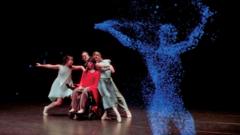
Breanna Olson, a professional dancer living with Motor Neurone Disease (MND), has made a remarkable return to the stage using a digital avatar. After ALS began to take away her physical ability to move and express herself, she turned to advanced technology to reclaim her art. This digital version of herself allows her to perform complex movements that her physical body can no longer achieve. The project highlights how modern tools can help people with severe disabilities stay connected to their passions and their audiences.
Main Impact
The primary impact of this development is the restoration of human connection through technology. For many people living with ALS, the disease acts as a wall that separates them from the world as their muscles stop working. Breanna Olson explained that the digital avatar did more than just mimic her movements; it helped her find the emotional expression that the disease had started to take away. This breakthrough shows that technology can be used to preserve a person's identity and professional life even when they face significant physical challenges.
Key Details
What Happened
Breanna Olson was a dedicated dancer whose life changed when she was diagnosed with Amyotrophic Lateral Sclerosis (ALS), a form of Motor Neurone Disease. As the condition progressed, she lost the strength and coordination required for traditional dance. To fight back against these limitations, she collaborated with a team of technology experts to create a "digital twin." This avatar was built using data from her past performances and motion-capture technology. During the performance, the avatar appears on a large screen or through a projection, moving with the grace and style that Breanna is known for, while she remains the creative force behind the work.
Important Numbers and Facts
ALS is a progressive disease that affects the nerve cells in the brain and spinal cord. Most people diagnosed with the condition see a rapid decline in muscle control within two to five years. By using digital tools, artists like Breanna can bypass these physical limits. The technology used involves high-definition 3D modeling and motion tracking. This specific project required months of work to ensure the avatar’s movements looked natural and matched Breanna’s unique dancing style. It is part of a growing movement to use "digital humans" in the arts and medical recovery sectors.
Background and Context
Motor Neurone Disease is a group of diseases that cause the nerves in the body to stop working. Over time, this leads to muscle wasting, loss of speech, and difficulty breathing. For a dancer, whose entire career and sense of self are built on movement, the diagnosis is particularly hard to handle. In the past, a diagnosis like this would mean the immediate end of a performing career. However, the rise of artificial intelligence and digital rendering has opened new doors. These technologies are now being used to create "voice banks" for people losing their speech and "digital twins" for those losing their mobility, ensuring their presence is still felt in the world.
Public or Industry Reaction
The arts and tech communities have reacted with great interest to Breanna’s performance. Many experts believe this is a turning point for accessibility in the theater. Critics have praised the performance for its emotional depth, noting that the technology does not feel cold or robotic. Instead, it serves as a bridge between the artist and the audience. Disability advocates have also pointed to this as a major win, showing that people with MND should not be counted out of creative industries. The success of this project is expected to encourage more funding for similar tech-based art programs.
What This Means Going Forward
Looking ahead, this technology could become a standard tool for performers with various physical limitations. It suggests a future where "hybrid" performances—mixing live human actors with digital avatars—become more common. For the medical community, it provides a new way to help patients maintain their mental health and sense of purpose. There are still challenges, such as the high cost of creating these avatars and the need for specialized equipment. However, as the technology becomes cheaper and easier to use, more people like Breanna will be able to use digital tools to keep their dreams alive.
Final Take
Breanna Olson’s return to the stage is a powerful reminder that creativity is not limited by the physical body. While ALS may have changed how she moves, it has not changed who she is as an artist. By using a digital avatar, she has proven that technology can be a deeply human tool when used to restore what a disease has taken away. Her performance is a message of hope for anyone facing a life-altering diagnosis, showing that there are always new ways to share your voice with the world.
Frequently Asked Questions
How does a digital avatar help a dancer with MND?
The avatar uses computer-generated imagery to perform dance moves that the person can no longer do physically. It allows the artist to continue expressing themselves and performing for an audience through a digital medium.
What is ALS or Motor Neurone Disease?
It is a condition that affects the brain and nerves, causing muscles to weaken over time. It eventually makes it difficult to walk, talk, eat, and breathe, though the person's mind often remains fully aware.
Will this technology be available for other artists?
Yes, as the technology improves and becomes more affordable, it is expected to be used by more people in the arts and other fields to overcome physical disabilities and stay active in their careers.