
Summary
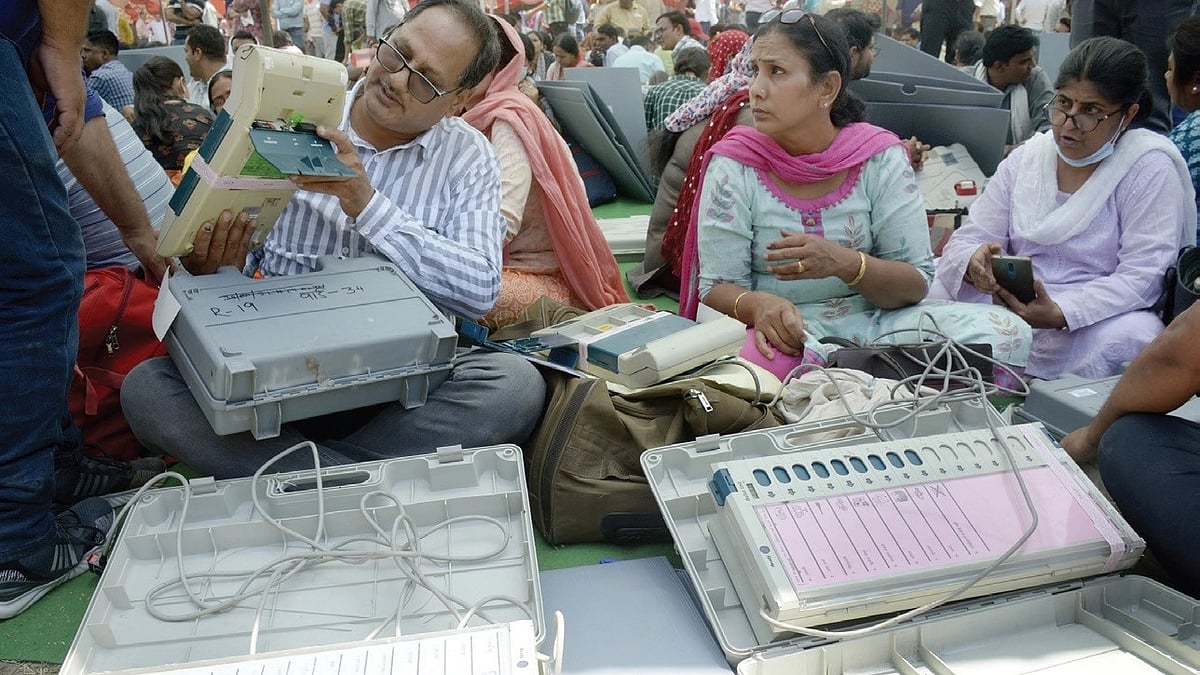
The Bombay High Court has issued a significant order to inspect the voting machines used in the Chandivali area of Mumbai. This decision follows a legal challenge regarding the results of the 2024 assembly elections. The Election Commission of India will now oversee a technical check of the machines to ensure they worked correctly. This move is seen as a major step toward making the election process more open and clear for everyone involved.
Main Impact
This court order marks a rare moment in the history of Indian elections. Usually, once a vote is counted and a winner is named, the machines are locked away. By allowing a technical check, the court is giving a losing candidate the chance to see if the machines were tampered with or if they failed in some way. This could set a new standard for how election complaints are handled in the future. It places a high value on the technical honesty of the voting system and aims to build more trust among the public.
Key Details
What Happened
The legal battle began after the 2024 assembly elections in the 168-Chandivali constituency. In that race, Dilip Lande from the Shiv Sena party won the seat. The candidate who came in second, Naseem Khan from the Congress party, was not satisfied with the outcome. He believed there might have been problems with the Electronic Voting Machines (EVMs) and the paper trail machines (VVPATs). He took his concerns to the Bombay High Court, asking for a professional look at the equipment.
In February, Justice Somasekhar Sundaresan ruled that an inspection should take place. After some time, the Election Commission has now set the dates for this check. The inspection will happen on April 16 and April 17. It will take place at a large storage building owned by the Food Corporation of India in Borivali East, Mumbai. All candidates who ran for the seat have been invited to watch the process to make sure it is fair.
Important Numbers and Facts
The inspection will not cover every single machine used in the election. Instead, it will focus on a specific sample. Naseem Khan asked for 5 percent of the machines to be checked. This means about 20 sets of machines will be looked at out of the 400 used in that area. To make this happen, Khan had to pay a fee of 9.44 lakh rupees to the Election Commission. This money covers the cost of bringing in experts and setting up the secure inspection site.
Engineers from Bharat Electronics Limited (BEL) will perform the checks. BEL is the company in Bengaluru that actually builds these voting machines. The engineers will start their work at 9:30 am on the scheduled days. They will focus on two main parts of the machines: the burnt memory and the microcontroller. These are the "brains" of the machine that store the votes and run the software.
Background and Context
For many years, there has been a debate in India about whether electronic voting is safe. The Election Commission always says the machines are strong and cannot be hacked. However, many political parties and voters still have doubts. They worry that the software could be changed to favor one candidate over another. The VVPAT machine was added to help solve this. It prints a small slip of paper so the voter can see that their vote went to the right person.
Even with the paper slips, some people feel that the electronic part of the system needs more checking. In the Chandivali case, the gap between the winner and the loser was a point of concern for the petitioner. By taking this to court, the goal is to prove whether the machines recorded the will of the people accurately. This is why the court's decision to allow a technical exam is being called "historic" by those who want more oversight.
Public or Industry Reaction
Naseem Khan has spoken out about the court's decision, calling it a victory for democracy. He mentioned that in the past, the Election Commission has often ignored complaints about these machines. He believes that if a candidate has a real doubt, the government has a duty to clear that doubt with facts. By allowing his own technical experts to be in the room during the check, he feels the process will finally be transparent.
On the other side, the winning candidate, Dilip Lande, and election officials have maintained that the original results are correct. The Election Commission has sent out official letters to all parties involved to ensure they are present. This is meant to prevent any further claims that the inspection itself was hidden or unfair. The general public is watching closely, as the results of this check could influence how people feel about voting in the next big election.
What This Means Going Forward
The results of the inspection on April 16 and 17 will be very important. If the engineers find that the memory and chips in the machines match the official records perfectly, it will support the Election Commission’s claims that the system is safe. This could help quiet some of the critics who worry about machine hacking. It would show that the legal system provides a way to verify results when people are unsure.
However, if any errors or strange data are found, it could lead to a much larger investigation. It might even lead to calls for a recount or a new election in that area. Beyond just one seat in Mumbai, this case might encourage other candidates across the country to ask for similar checks if they lose by small margins. The cost of nearly 10 lakh rupees is high, but for many, the price is worth it to ensure the voting system is honest.
Final Take
The upcoming check in Borivali is more than just a technical review; it is a test of the voting system's reputation. By following the court's order, the Election Commission has a chance to show that it has nothing to hide. Whether the machines are found to be perfect or flawed, the fact that the check is happening at all is a win for transparency in the democratic process.
Frequently Asked Questions
What exactly will the engineers check?
The engineers will perform a diagnostic check on the machines. They will look at the "burnt memory," which is the permanent storage of the machine, and the "microcontroller," which is the chip that controls the machine's functions. They want to see if the internal data matches what was reported.
Why did the candidate have to pay over 9 lakh rupees?
The Election Commission requires a fee to cover the costs of the inspection. This includes the travel and time of the engineers from Bharat Electronics Limited, the security for the warehouse, and the administrative work needed to set up the technical exam.
Can this inspection change the election result?
The inspection itself is a fact-finding mission. If the engineers find serious problems or proof of mistakes, the candidate can take that evidence back to the court. The court would then decide if the election result should be changed or if further action is needed.

