
Summary
The Supreme Court of India has directed the Madhya Pradesh High Court to carefully listen to the objections raised by the Muslim side regarding a recent scientific survey. This survey was conducted at the Bhojshala Temple-Kamal Maula Mosque complex, a site that both Hindus and Muslims claim as their own. The court emphasized that the legal process must be fair to everyone involved, ensuring that all parties can present their arguments before a final decision is made.
Main Impact
This decision by the Supreme Court ensures that the ongoing legal battle over the historical site in Dhar remains balanced. By telling the High Court to follow the "principles of natural justice," the Supreme Court is making sure that the Muslim side has a proper chance to challenge the findings of the Archaeological Survey of India (ASI). This move prevents any quick or one-sided conclusions based on the survey report alone, which could have significant social and religious effects in the region.
Key Details
What Happened
On April 1, 2026, a bench of judges led by Justice Surya Kant reviewed a request from the Maulana Kamaluddin Welfare Society. The group expressed concerns about how the survey was being handled and how the results were being used in court. The Supreme Court decided not to stop the High Court's work but told the lower court that it must address these concerns during its hearings. The judges noted that the High Court would allow the videography of the survey to be played so that all parties could see and question the evidence.
Important Numbers and Facts
The legal dispute involves a massive scientific report created by the ASI that is over 2,000 pages long. This report was the result of a detailed inspection of the complex to determine its historical roots. The site has been managed under a specific rule since April 7, 2003. Under that order, Hindus are allowed to pray at the site on Tuesdays, while Muslims are permitted to offer namaz on Fridays. The High Court has scheduled further discussions on this matter for April 2, following the Supreme Court's guidance.
Background and Context
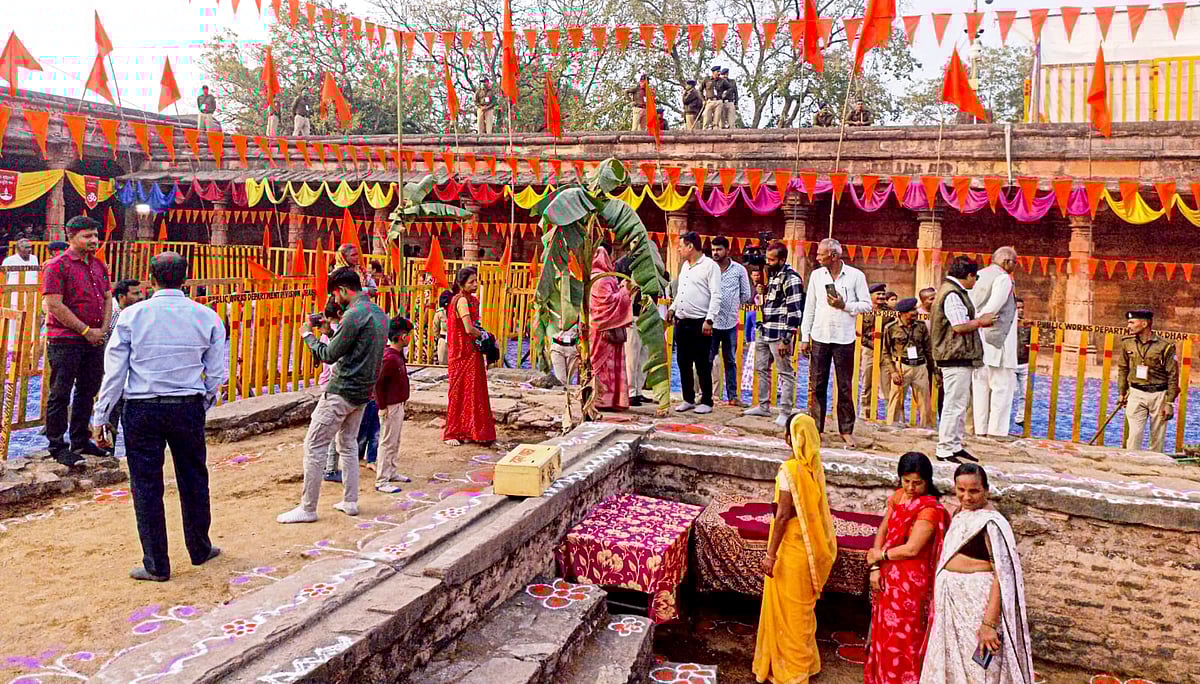
The Bhojshala complex is located in the Dhar district of Madhya Pradesh. For a long time, it has been a point of disagreement between two communities. Hindus believe the site is an ancient temple dedicated to Goddess Saraswati, built during the reign of King Bhoja. On the other hand, Muslims identify the structure as the Kamal Maula Mosque. Because of these conflicting claims, the site is protected by the government, and strict schedules are in place to allow both groups to use the space at different times.
The current legal issue started when the High Court ordered a scientific survey to find out the true history of the building. The ASI used modern tools to look at the foundations and the materials used in the walls. Their report suggested that a structure from the Paramara period existed there before the mosque was built. It also mentioned that parts of older temples might have been used to construct the current building. These findings are very important because they could change how the site is used in the future.
Public or Industry Reaction
The Hindu side has welcomed the ASI report, using its findings to argue that the site was originally a temple. They believe the evidence of older carvings and temple parts proves their historical claim. However, the Muslim side has raised several objections. Their lawyers, including senior advocate Salman Khurshid, argued that they need full access to all evidence, including high-quality color photos and videos, to properly defend their position. They feel that their previous concerns were not fully heard and that the survey's conclusions should be looked at more closely.
What This Means Going Forward
The High Court will now have to spend more time looking at the specific objections raised by the Muslim side. This means the legal process might take longer, but it will be more thorough. The court will have to decide if the ASI report is completely accurate or if there are parts of it that can be challenged. The outcome of these hearings will eventually lead to a final judgment on whether the site should be classified as a temple, a mosque, or continue to be shared as it is now. For now, the existing schedule for prayers and namaz will likely stay the same until a final ruling is reached.
Final Take
The Supreme Court’s intervention highlights the importance of fairness in cases involving sensitive religious sites. By ensuring that the High Court listens to all objections, the legal system aims to reach a peaceful and well-supported resolution. While the scientific evidence from the ASI is a major part of the case, the rights of all involved parties to question that evidence remain a priority for the highest court in the country.
Frequently Asked Questions
What is the Bhojshala dispute about?
It is a long-standing disagreement over a historical site in Madhya Pradesh. Hindus claim it is a temple for Goddess Saraswati, while Muslims claim it is the Kamal Maula Mosque.
What did the ASI survey find?
The ASI report, which is over 2,000 pages, suggested that an older structure from the Paramara period existed at the site and that some temple materials were used in the current building.
Why did the Supreme Court get involved?
The Supreme Court stepped in to ensure that the High Court hears the Muslim side's objections to the survey evidence, making sure the legal process follows the rules of fairness for everyone.

