
Summary
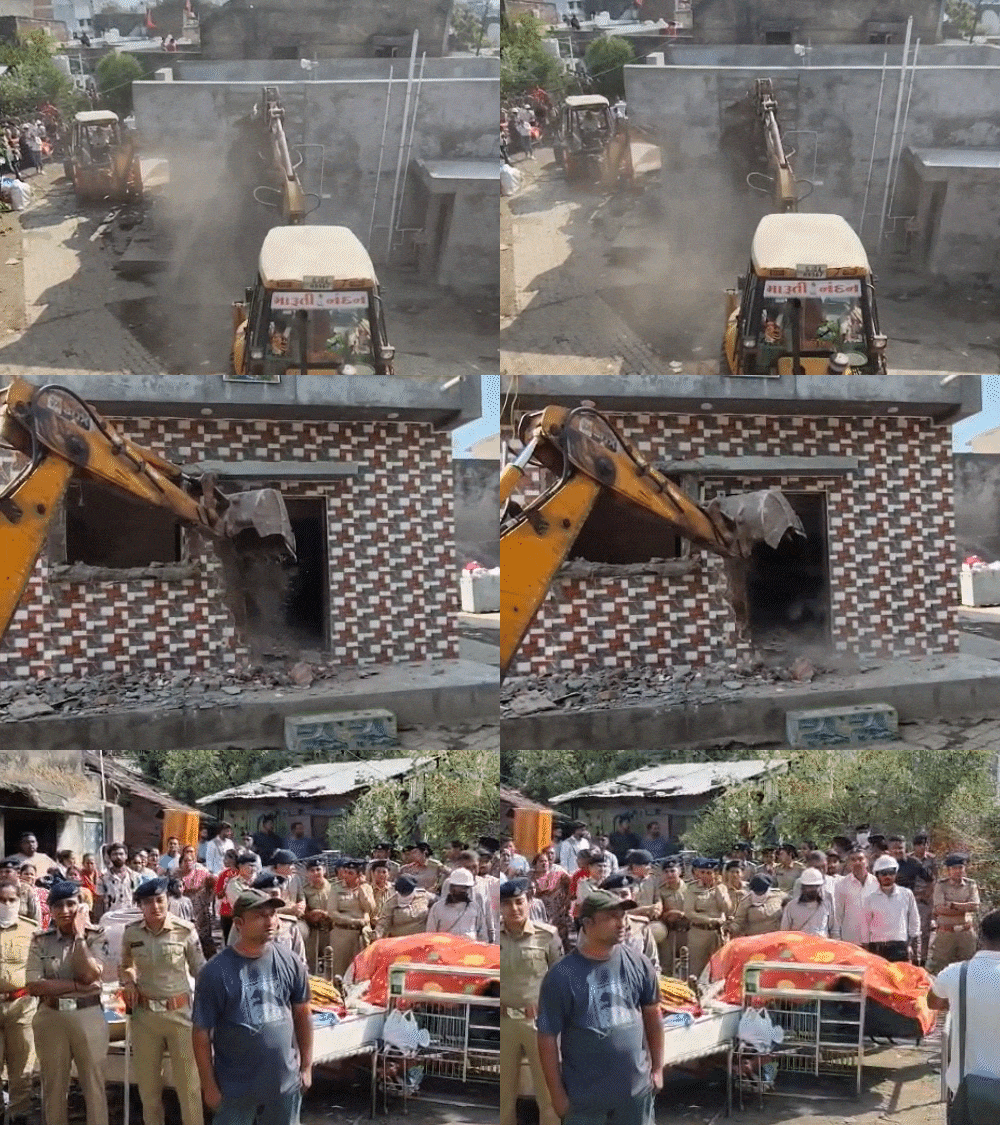
Authorities in Bhavnagar have launched a major crackdown on illegal properties owned by known criminals. On March 23, 2026, the city police and local administration began a large-scale demolition drive targeting structures built by individuals involved in the illegal liquor trade and other serious crimes. This move is part of a broader effort to reduce criminal activities and reclaim government land used for illegal purposes. The action has sent a strong message to lawbreakers across the city.
Main Impact
The primary impact of this operation is the direct hit on the financial and operational bases of local gangs. By destroying illegal shops and houses, the authorities are removing the physical infrastructure that supports criminal behavior. This "bulldozer" style of justice aims to create a sense of fear among repeat offenders while reassuring the public that the law is being strictly enforced. The sudden nature of the drive has left many criminal elements in the city worried about their own illegal holdings.
Key Details
What Happened
The operation began early in the morning at around 8:00 AM in the Adodiya area of Bhavnagar. Led by Superintendent of Police (SP) Nitesh Pandey, a large team of over 200 police officers arrived with four JCB machines. The team included officers from the Local Crime Branch (LCB) and several local police stations. They were joined by staff from the Bhavnagar Municipal Corporation, the electricity department (PGVCL), and the fire department to ensure the operation was carried out safely and without interruption.
The authorities focused on five specific individuals who have long records of criminal activity. Four of these individuals are women known for their involvement in the illegal liquor business, while the fifth is a man involved in crimes against people. After finishing the work in the Adodiya area, the team moved to the Hawamasjid area near Prabhudas Talav to continue the demolition of illegal structures owned by another accused person.
Important Numbers and Facts
The scale of the demolition was significant. In the first few hours of the morning, the following structures were cleared:
- 2 residential houses belonging to major offenders.
- 14 illegal shops that were being used for commercial purposes.
- 7 small rooms or "ordis" built on encroached land.
- Over 200 police personnel were deployed to maintain order.
- 5 main accused individuals were targeted in this specific drive.
The individuals whose properties were targeted include Anjanaben Pankajbhai Rathod, Minaben Rakeshbhai Rathod, Pritiben Arjubhai, Hiralben Nimeshbhai Parmar, and Mohammad Zubair Zahidbhai Sheikh.
Background and Context
Bhavnagar has recently seen a rise in organized crime, particularly related to the sale of illegal alcohol and physical violence. In Gujarat, the sale and consumption of alcohol are strictly prohibited by law. Those who sell it illegally are often called bootleggers. These individuals frequently use illegal constructions on government land to hide their activities or store their goods. SP Nitesh Pandey has taken a firm stand against these activities, stating that criminal behavior will not be tolerated. This demolition drive is a tool used by the police to punish those who repeatedly break the law and ignore previous warnings.
Public or Industry Reaction
The reaction to the demolition has been mixed but intense. Among the criminal community, there is a visible sense of panic as they realize their properties are no longer safe from government action. On the ground, the scenes were emotional. Family members of the accused, including several women, were seen crying and protesting as the JCB machines tore down the walls of their homes and shops. However, many local residents have quietly welcomed the move, hoping that the removal of these criminal hubs will make their neighborhoods safer and quieter.
What This Means Going Forward
This operation is likely just the beginning of a larger campaign in Bhavnagar. The police have indicated that they are identifying more properties owned by people with long criminal records. Going forward, criminals may find it harder to operate if they know their homes and businesses can be destroyed. The local government is also looking to reclaim more land that has been illegally occupied for years. This strategy shows a shift in how local law enforcement handles repeat offenders, moving beyond just arrests to hitting their economic interests.
Final Take
The demolition drive in Bhavnagar serves as a clear warning that the city administration is ready to take extreme measures to maintain law and order. By targeting the illegal assets of bootleggers and violent offenders, the police are trying to break the cycle of crime at its root. While the physical destruction of buildings is a harsh step, the authorities believe it is a necessary one to ensure the safety and security of the general public. The city now waits to see who will be targeted next in this ongoing cleanup effort.
Frequently Asked Questions
Why were these specific houses and shops demolished?
The structures were built illegally on government land and belonged to individuals with long criminal records, specifically those involved in the illegal liquor trade and physical assaults.
Who led the demolition operation in Bhavnagar?
The operation was led by Bhavnagar SP Nitesh Pandey, with support from the Municipal Corporation, the electricity department, and over 200 police officers.
Will there be more demolitions in the future?
Yes, the police have indicated that they are continuing to identify illegal structures owned by known criminals as part of an ongoing effort to reduce crime in the city.



