
Summary
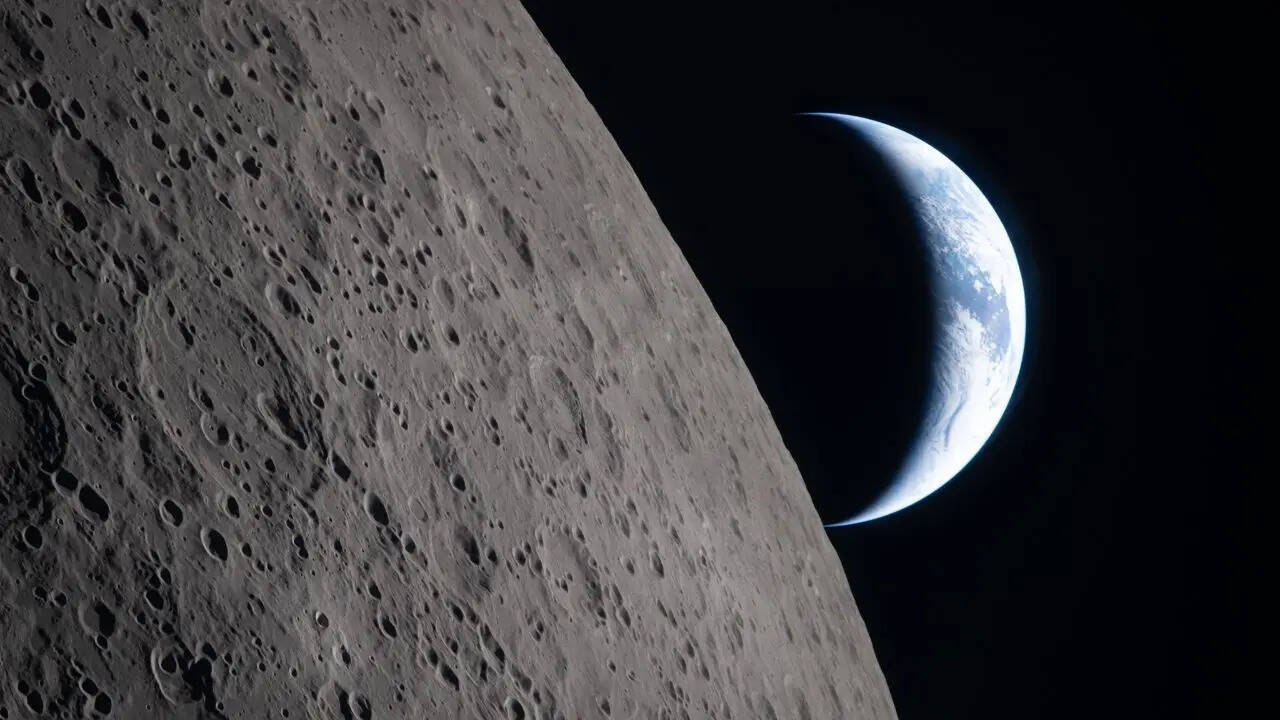
The crew of the Artemis II mission recently witnessed a rare and stunning sight while traveling around the far side of the Moon. As their spacecraft moved through deep space, the astronauts captured a solar eclipse from a perspective that no human has had in over fifty years. During this event, they also managed to photograph the planet Mars, which appeared clearly in the same frame. This moment marks a major achievement for NASA as they prepare to send humans back to the lunar surface.
Main Impact
This event is more than just a beautiful photo opportunity. It shows that the Orion spacecraft and its crew can successfully operate and document space phenomena while far away from Earth. Seeing a solar eclipse from the Moon provides scientists with a new way to look at how light and shadows work in our solar system. The inclusion of Mars in the photos also serves as a symbolic reminder of NASA’s long-term goal: using the Moon as a starting point to eventually reach the Red Planet.
Key Details
What Happened
While the Artemis II crew was performing a flyby of the Moon, the alignment of the Sun, Moon, and Earth created a solar eclipse. From their position on the far side of the Moon, the astronauts saw the shadow of the Moon falling on the Earth, or the Sun being blocked by the lunar edge, depending on their exact angle. Using high-powered digital cameras, the crew took several photos. In one of the most striking images, Mars is visible as a bright, steady point of light in the distance, far beyond the lunar horizon.
Important Numbers and Facts
The Artemis II mission carries four astronauts: Reid Wiseman, Victor Glover, Christina Koch, and Jeremy Hansen. They are traveling in the Orion capsule, which is designed to keep humans safe for long trips in deep space. The spacecraft reached a distance of thousands of miles beyond the far side of the Moon, making this the furthest any human has traveled into space since the 1970s. The mission lasts about ten days and serves as a final test before the next mission attempts a physical landing on the Moon.
Background and Context
The Artemis program is the modern successor to the Apollo missions. While the Apollo missions were about proving humans could reach the Moon, Artemis is about staying there. NASA wants to build a base where astronauts can live and work for long periods. To do this, they must first test the new Space Launch System (SLS) rocket and the Orion capsule. Artemis II is the first time these systems have been tested with a real crew on board. The "far side" of the Moon is the side that always faces away from Earth. It is often called the "dark side," but it actually gets plenty of sunlight. It is a difficult place to communicate from because the Moon blocks radio signals to Earth, requiring special satellites to pass messages back and home.
Public or Industry Reaction
Space agencies and scientists around the world have reacted with great excitement to these new images. Experts say that the clarity of the photos proves that modern camera technology can handle the harsh radiation and lighting conditions of deep space. On social media, the public has shared the images widely, with many people expressing wonder at seeing Mars and a solar eclipse in a single shot. This mission has renewed global interest in space exploration, reminding people of the excitement felt during the original space race.
What This Means Going Forward
The success of this flyby and the data gathered from these photos will help NASA plan the Artemis III mission. That future mission will aim to land the first woman and the next man on the lunar South Pole. The photos of Mars also keep the focus on the future. NASA plans to use the lessons learned on the Moon to send a crewed mission to Mars in the 2030s. For now, the Artemis II crew will continue their journey back to Earth, where they will splash down in the ocean and share their full findings with the scientific community.
Final Take
Capturing a solar eclipse and Mars from the far side of the Moon is a powerful sign of how much technology has improved. These images connect our past lunar missions with our future goals of reaching other planets. As the crew returns home, they leave behind a new set of records and a world that is once again looking up at the stars with curiosity and hope.
Frequently Asked Questions
Who are the astronauts on Artemis II?
The crew consists of Commander Reid Wiseman, Pilot Victor Glover, and Mission Specialists Christina Koch and Jeremy Hansen. Hansen is the first Canadian astronaut to travel to the Moon.
Why is it hard to take photos from the far side of the Moon?
The far side of the Moon is shielded from Earth's radio signals, making it hard to send data back instantly. Additionally, the lighting can be very harsh, requiring advanced cameras to capture clear images of both the bright Sun and distant planets like Mars.
Will the Artemis II crew land on the Moon?
No, this mission is a flyby. The crew will travel around the Moon and return to Earth to test the spacecraft's life-support systems. The actual landing will happen during the Artemis III mission.

