Summary
New archaeological evidence reveals that early humans in the Philippines created complex ocean networks as far back as 40,000 years ago. These ancient people were not just living in isolated groups on land; they were skilled sailors who traveled between islands. This discovery changes our understanding of how early humans moved across Southeast Asia and shows they had advanced seafaring skills much earlier than previously thought. By crossing deep waters, these early settlers connected different regions and shared resources across the sea.
Main Impact
The discovery of these ancient maritime networks has a major impact on the study of human history. It proves that early humans had the mental and physical tools to navigate the open ocean long before the rise of known civilizations. For a long time, many experts believed that early people only moved to new areas when land bridges were available during ice ages. However, this new evidence shows that they were capable of building rafts or boats to cross deep-water channels that never had land connections. This shifts the view of early humans from simple hunters to brave explorers and skilled engineers.
Key Details
What Happened
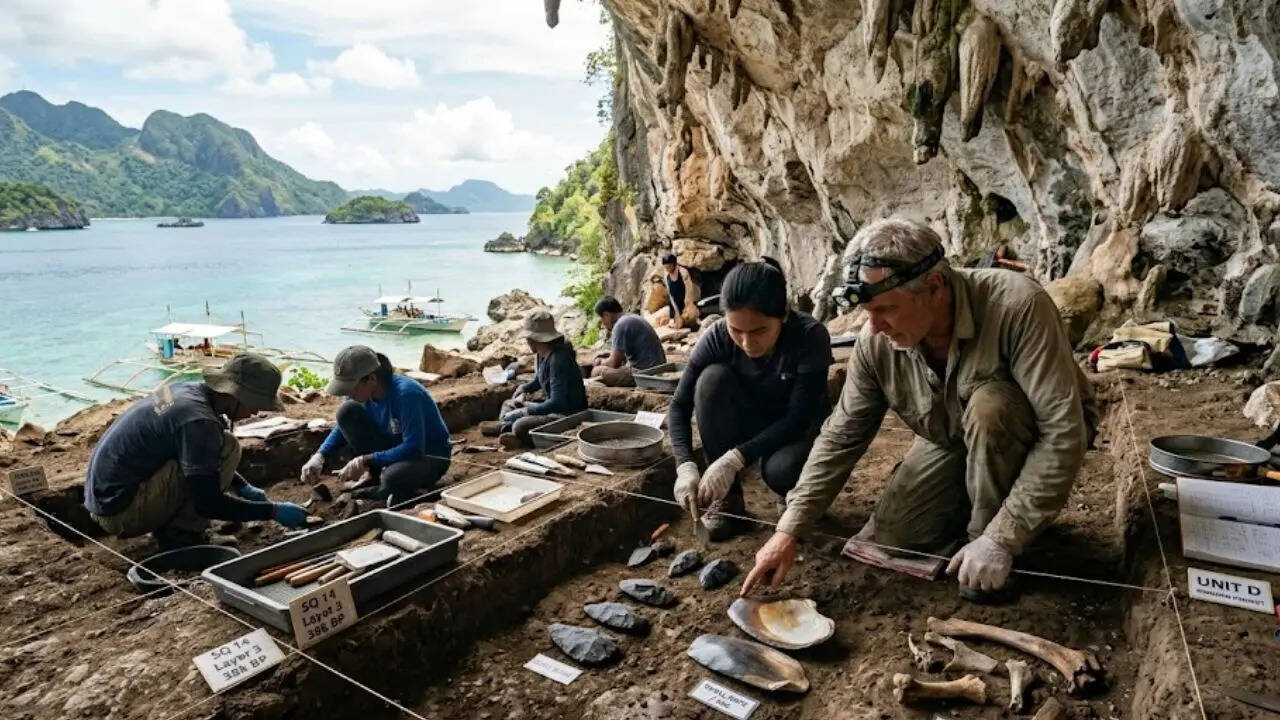
Researchers studying various sites across the Philippine archipelago found evidence of human activity that could only be explained by sea travel. They discovered stone tools and food remains in areas that were separated by deep water even 40,000 years ago. To reach these places, early humans had to plan trips, understand sea currents, and build watercraft. These were not accidental drifts but organized movements. The findings suggest that these people were part of a larger network where groups stayed in contact with each other across the waves.
Important Numbers and Facts
The evidence dates back to the Late Pleistocene period, roughly 40,000 years ago. During this time, sea levels were lower, but the Philippines remained a collection of islands separated by deep trenches. Some of the water crossings would have been dozens of miles wide. Archaeologists found specific types of stone tools, such as those made from obsidian or chert, far from their natural sources. This proves that materials were being moved from one island to another. The presence of shells and fish bones from deep-sea species also indicates that these people were comfortable working and traveling in deep water.
Background and Context
The Philippines is a unique place for studying human history because it is an archipelago. Unlike mainland Asia, moving through the Philippines always required some level of water crossing. In the past, historians thought that the first major sea travelers were the Austronesian people who arrived much later. This new evidence pushes the timeline of maritime activity back by tens of thousands of years. It shows that the very first inhabitants of these islands were already masters of the sea. Understanding this helps scientists map out how humans eventually reached places like Australia and the remote islands of the Pacific.
Public or Industry Reaction
The scientific community is reacting with great interest to these findings. Many archaeologists say this data fills a "missing link" in the story of human migration. While some experts were surprised by the age of the networks, others say it confirms their theories that early humans were much more capable than we gave them credit for. There is now a push to look for more underwater sites that might hold the remains of ancient boats or docks. Local communities in the Philippines are also taking pride in the discovery, as it highlights the long and rich history of seafaring culture in the region.
What This Means Going Forward
This discovery opens up new ways to study the past. Researchers will now look for more specific evidence of how these boats were built. Since wood and plant fibers rot quickly, finding an actual 40,000-year-old boat is unlikely, but scientists can look for the tools used to make them. There is also a plan to study the DNA of ancient remains to see how different island groups were related. This could show exactly how often people moved between islands and whether they were trading goods or just moving to find better hunting grounds. It also suggests that other island nations in Southeast Asia might have similar hidden histories waiting to be found.
Final Take
The image of early humans as people who only lived in caves and stayed on land is no longer accurate. The evidence from the Philippines shows a society that was mobile, connected, and unafraid of the ocean. These ancient sailors laid the groundwork for the global connections we see today. Their ability to cross the sea 40,000 years ago is a testament to human creativity and the drive to explore the unknown.
Frequently Asked Questions
How do we know they used boats if none were found?
Scientists know they used boats because the islands were separated by deep water that never had land bridges. The only way for humans and their tools to get from one island to another was by crossing the sea on some type of watercraft.
What kind of tools did these early humans use?
They used stone tools made from materials like obsidian and chert. They also used shells for cutting and likely used bamboo or wood to build rafts, though the wood has since decayed.
Why is the 40,000-year date important?
This date is important because it is much earlier than the previously known dates for advanced sea travel. It shows that humans were navigating the oceans shortly after they first arrived in the region, rather than waiting thousands of years to develop the skill.