
Summary
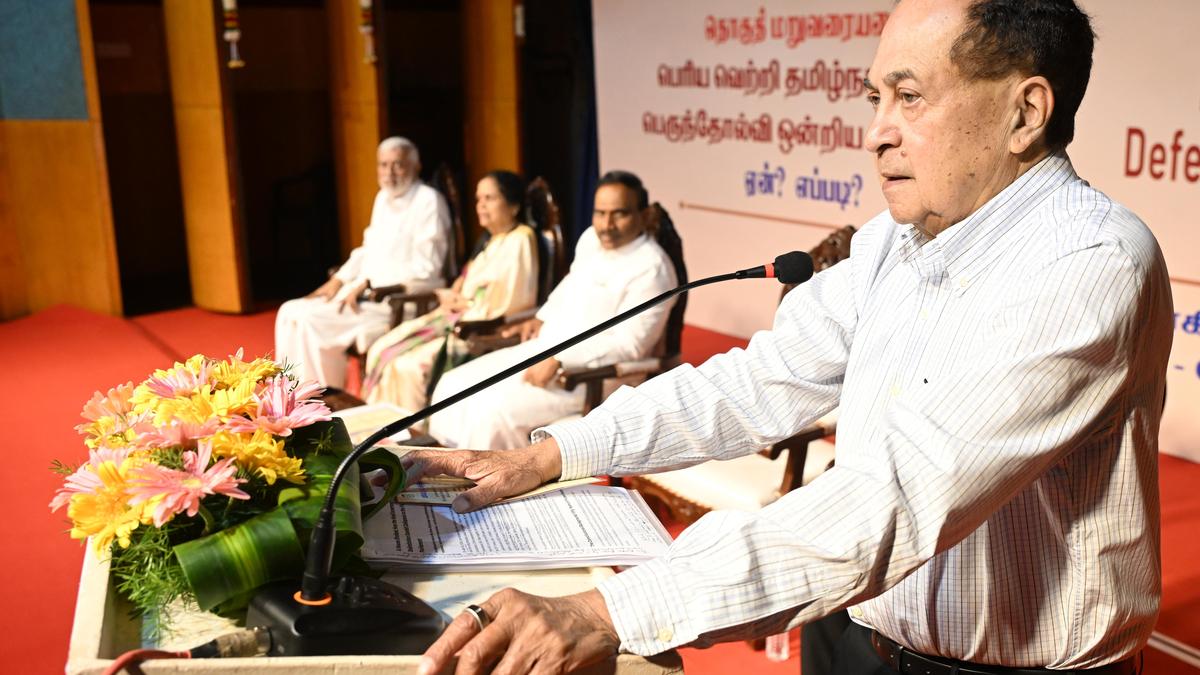
N. Ram, a highly respected journalist and former editor, has raised serious concerns about the central government's approach to the Women’s Reservation Bill. He argues that the government intentionally linked the bill with the delimitation process to create unnecessary confusion. According to Ram, there is no logical reason to connect these two separate issues. He also praised Tamil Nadu Chief Minister M.K. Stalin for identifying the potential dangers of this move and speaking out against it on national platforms.
Main Impact
The decision to tie women’s reservation to the delimitation process has a major impact on when the law will actually start. Instead of giving women reserved seats in the next election, the government has made the change dependent on two things: a new population census and the redrawing of voting districts. This means the law might not be put into practice for many years. This delay has caused frustration among those who wanted to see more women in power immediately. It also creates a political problem for states that have successfully managed their population growth.
Key Details
What Happened
In a recent statement, N. Ram explained that the Women’s Reservation Bill and the delimitation exercise are fundamentally different. Delimitation is a technical process that decides how many representatives each area gets based on its population. Women’s reservation is a social and political policy meant to ensure that women hold 33% of those seats. Ram believes that by mixing these two, the government has made a simple goal much more difficult to achieve. He suggested that this was a strategic move to delay the actual implementation of the law.
Important Numbers and Facts
The Women’s Reservation Bill, also known as the Nari Shakti Vandan Adhiniyam, proposes to reserve one-third of the seats in the Lok Sabha and state legislative assemblies for women. However, the bill includes a clause stating that the reservation will only happen after the first census taken after the bill is passed. Following that census, a delimitation exercise must be carried out. Since the 2021 census was delayed and has not yet been completed, experts suggest that women might not see these reserved seats until 2029 or even later. This timeline is what has caused so much debate among political leaders and journalists like N. Ram.
Background and Context
To understand why this is a big deal, we have to look at how voting areas are decided in India. Every few decades, the government is supposed to look at population data to make sure each member of parliament represents a similar number of people. This is called delimitation. However, this process was frozen years ago to protect states that were doing a good job with family planning. Southern states, including Tamil Nadu, have worked hard to improve healthcare and education, which led to slower population growth. Northern states have seen their populations grow much faster. If the government redraws the voting map based strictly on new population numbers, southern states will lose many of their seats in parliament, while northern states will gain more. This would give northern states much more power over national decisions.
Public or Industry Reaction
The reaction to this plan has been very strong, especially in South India. Chief Minister M.K. Stalin has been a leading voice in this opposition. He has argued that it is unfair to punish states for their success in social programs. N. Ram specifically pointed out that Stalin was quick to understand the "designs" of the central government. Ram lauded the Chief Minister for using various public meetings and forums to explain why this bill could be harmful to the interests of the state. Many other political parties in the south have joined this protest, fearing that their voice in the central government will be weakened if the delimitation happens as currently planned.
What This Means Going Forward
The path forward is filled with political challenges. If the government continues to link women's reservation with delimitation, it will likely face more legal and political battles. There is a growing demand from some groups to separate the two issues. They want the government to implement the 33% reservation for women right away, using the current voting districts. If the government refuses, the delay could become a major talking point in future elections. Additionally, the government will have to find a way to address the fears of southern states. If they do not, the redrawing of boundaries could lead to a serious disagreement between the northern and southern parts of the country.
Final Take
The debate over the Women’s Reservation Bill shows that even a popular idea can become complicated when it is tied to other political goals. While most people agree that women should have more representation in government, the current plan has created a long wait and new fears about fairness between states. Leaders like M.K. Stalin and observers like N. Ram are pushing for a more transparent process that does not punish states for their social progress. The real test will be whether the government listens to these concerns or moves forward with the current plan despite the opposition.
Frequently Asked Questions
What is the main criticism from N. Ram?
N. Ram believes the government combined the Women’s Reservation Bill with the delimitation process to cause confusion and delay the actual implementation of the law.
Why is the census important for this bill?
The bill states that the reservation of seats for women can only happen after a new census is conducted and the voting boundaries are redrawn based on that data.
Why are southern states worried about delimitation?
Southern states have lower population growth than northern states. They fear that redrawing boundaries based on population will result in them having fewer seats and less power in parliament.



