
Summary
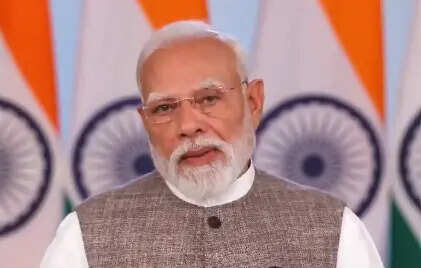
Prime Minister Narendra Modi has launched a strong verbal attack on major opposition parties regarding the Women’s Reservation Bill. He accused the Congress, Trinamool Congress (TMC), and DMK of trying to block the law for many years. The Prime Minister used the word "foeticide" to describe their past actions, suggesting they tried to kill the bill before it could become law. This statement highlights the growing political tension over who truly supports women's rights in India.
Main Impact
The Prime Minister's comments have sparked a fresh debate about the history of women's representation in Indian politics. By using such strong language, he is trying to show that his government is the only one that successfully passed the law. This move is likely to influence how women voters view the different political parties. It also puts the opposition on the defensive, forcing them to explain why they did not pass the bill when they were in power in previous decades.
Key Details
What Happened
During a recent public event, Prime Minister Modi spoke about the long struggle to pass the Women’s Reservation Bill. He specifically named the Congress, the Samajwadi Party (SP), the DMK, and the TMC as the main groups that stood in the way. He argued that these parties are now pretending to support women, but their past actions tell a different story. He claimed that for nearly thirty years, these groups used various excuses to stop the bill from being passed in Parliament.
Important Numbers and Facts
The Women’s Reservation Bill, officially known as the Nari Shakti Vandan Adhiniyam, was finally passed by Parliament in September 2023. The law sets aside 33 percent of seats in the Lok Sabha and state legislative assemblies for women. Before this success, the bill had been introduced and failed multiple times since 1996. The Prime Minister pointed out that while his government had the courage to make it a reality, the opposition had many chances to do the same but chose not to act.
Background and Context
The idea of giving women a fixed number of seats in the government is not new. It has been a topic of discussion in India for almost three decades. In the past, whenever the bill was brought to Parliament, it faced loud protests. Some political parties argued that the bill was not fair because it did not include a "quota within a quota" for women from backward classes. Because of these disagreements, the bill was often delayed or ignored. The Prime Minister is now using this history to argue that the opposition never truly wanted women to have more power in politics.
Public or Industry Reaction
The opposition parties have reacted strongly to the Prime Minister's "foeticide" comment. Leaders from the Congress and TMC have argued that they always supported the idea of women's reservation. They claim that their concerns were about making the law more inclusive for all women, including those from minority and backward communities. Some critics also point out that even though the bill has passed, it will not be put into practice immediately. They argue that the government is using the bill for political gain without actually giving women the seats right away.
What This Means Going Forward
The fight over the Women’s Reservation Bill is far from over. While the law is now official, it will only take effect after a new census and a process called delimitation, which redraws the boundaries of voting districts. This means it could be several years before women actually occupy 33 percent of the seats. In the meantime, political parties will continue to use this issue to win over voters. We can expect more heated debates as each side tries to prove it is the true champion of women's empowerment in India.
Final Take
The Prime Minister’s use of the word "foeticide" is a clear sign that the battle for the women's vote is getting more intense. By looking back at the failures of the past, the government is trying to build a narrative of success and progress. However, the real test will be how quickly the law is actually put into action. Until women are sitting in those reserved seats, the debate over who did what will remain a central part of Indian politics.
Frequently Asked Questions
What is the Women's Reservation Bill?
It is a law that reserves one-third of the seats in India's national and state legislatures for women to ensure they have a bigger voice in making laws.
Why did PM Modi use the word "foeticide"?
He used this strong word to argue that opposition parties tried to "kill" the bill and prevent it from becoming a law for many years before it was finally passed.
When will the 33 percent reservation start?
The reservation will begin after the government completes a new census and a delimitation exercise to redraw voting districts, which may take a few more years.



