
Summary
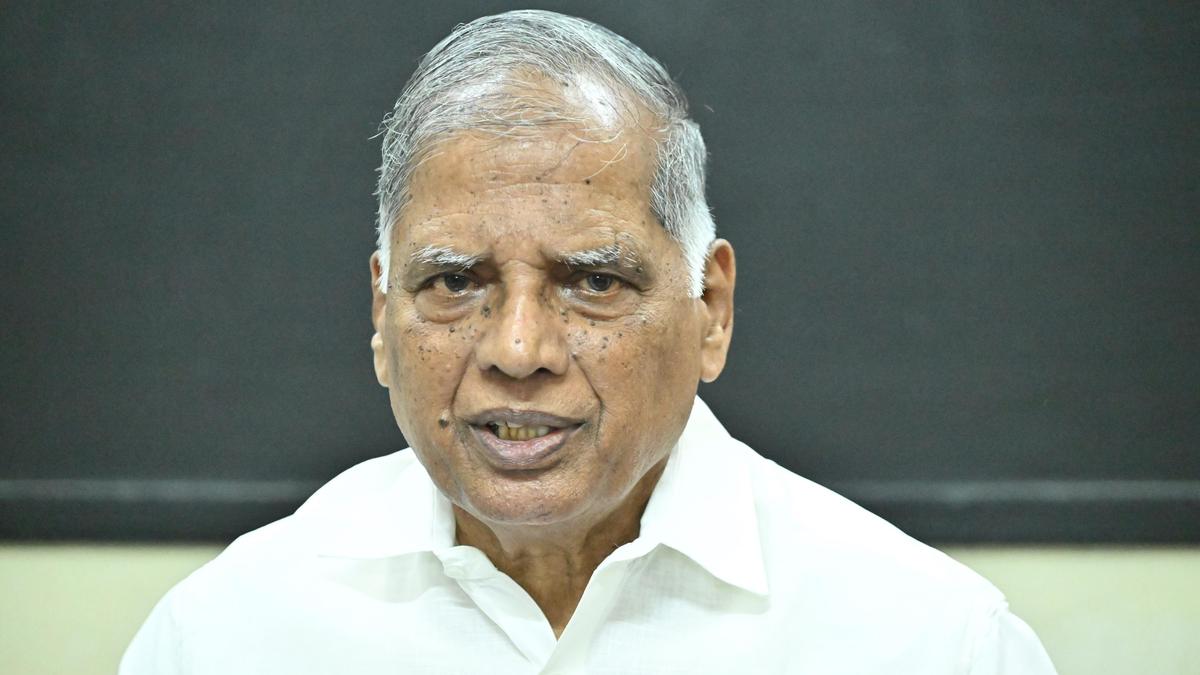
G. Ramakrishnan, a senior political leader, has raised serious concerns about the central government's approach to the Women's Reservation Bill. He argues that linking the implementation of the bill to the process of delimitation is unconstitutional. According to him, this move was a calculated political strategy designed to create a trap for opposition parties. By adding these conditions, the government ensures that the reservation for women will not happen immediately, while also gaining a political advantage in specific states.
Main Impact
The primary impact of this development is a significant delay in when women will actually see more seats in Parliament and state assemblies. By making the reservation dependent on a new census and the redrawing of voting districts, the government has pushed the actual start date many years into the future. This has sparked a heated debate about whether the bill was passed to truly empower women or to serve as a tool for upcoming election campaigns. It also creates a new point of conflict between the central government and states in the southern and eastern parts of India.
Key Details
What Happened
G. Ramakrishnan, a prominent leader from the CPI(M), publicly criticized the structure of the Women's Reservation Bill. He pointed out that the law includes a clause stating that the 33% reservation for women can only take effect after a new census is conducted and the delimitation process is finished. Delimitation is the process of redrawing the boundaries of voting areas to reflect changes in population. Ramakrishnan believes that these two conditions are unnecessary and serve only to stall the process.
Important Numbers and Facts
The Women's Reservation Bill, also known as the Nari Shakti Vandan Adhiniyam, proposes to set aside one-third of all seats in the Lok Sabha and state legislative assemblies for women. However, the last official census in India was supposed to happen in 2021 but was delayed. Without a completed census, the delimitation process cannot legally begin. Experts suggest that this could mean women might not see the benefits of this reservation until 2029 or even later. Ramakrishnan claims that the government knew this timeline would be unacceptable to many, leading to the current political standoff.
Background and Context
To understand this issue, it is important to know what delimitation means and why it is controversial. In India, the number of seats a state has in Parliament is based on its population. States that have successfully controlled their population growth, like Tamil Nadu and Kerala, fear that a new delimitation will reduce their political power. On the other hand, states with rapidly growing populations in the north would gain more seats. By linking women's reservation to this sensitive process, the government has combined a popular social reform with a very divisive political issue.
For decades, various governments have tried to pass a law for women's reservation. While there is general agreement that women need more representation, the details of how to do it have always been a point of contention. The current government successfully passed the bill, but the "hidden" conditions regarding the census and boundary changes have led to accusations of political gamesmanship.
Public or Industry Reaction
The reaction from opposition parties has been one of suspicion. Many leaders agree with Ramakrishnan's view that the government set a "political trap." The argument is that if the opposition votes against the bill because of the delimitation link, the ruling party will tell voters that the opposition is "anti-woman." Ramakrishnan specifically mentioned that this strategy is aimed at states like West Bengal and Tamil Nadu. In these regions, the ruling party at the center is trying to gain more ground, and using the women's reservation issue could be a powerful way to sway voters during local campaigns.
What This Means Going Forward
Looking ahead, the legal validity of linking these two issues may be challenged in court. If the courts find that the delay is unreasonable or unconstitutional, the government might be forced to implement the reservation sooner. However, if the current plan stays in place, the debate will likely become a major talking point in the next general election. Voters will have to decide if they see the bill as a genuine step forward or a delayed promise. Additionally, the tension between the central government and the southern states regarding seat counts will likely increase as the census date approaches.
Final Take
The core of the problem is a lack of trust between the government and the opposition. While the idea of giving women 33% of political seats is widely supported, the method of delivery has turned a social victory into a political battle. If the goal is truly to empower women, the process should be simple and fast. Adding complicated legal steps only serves to keep the status quo for longer than necessary. The focus must remain on making sure women get their fair share of political power without using the law as a shield for other political goals.
Frequently Asked Questions
Why is the Women's Reservation Bill delayed?
The bill is delayed because it is linked to two events: a new national census and the redrawing of electoral boundaries, known as delimitation. Both of these processes take several years to complete.
What is delimitation?
Delimitation is the act of fixing or redrawing the limits or boundaries of territorial constituencies in a country to represent changes in the population over time.
Why does G. Ramakrishnan call the bill unconstitutional?
He argues that there is no legal or constitutional requirement to wait for a census or delimitation to give women their reserved seats. He believes these conditions were added only to delay the law and create political trouble for the opposition.



