
Summary
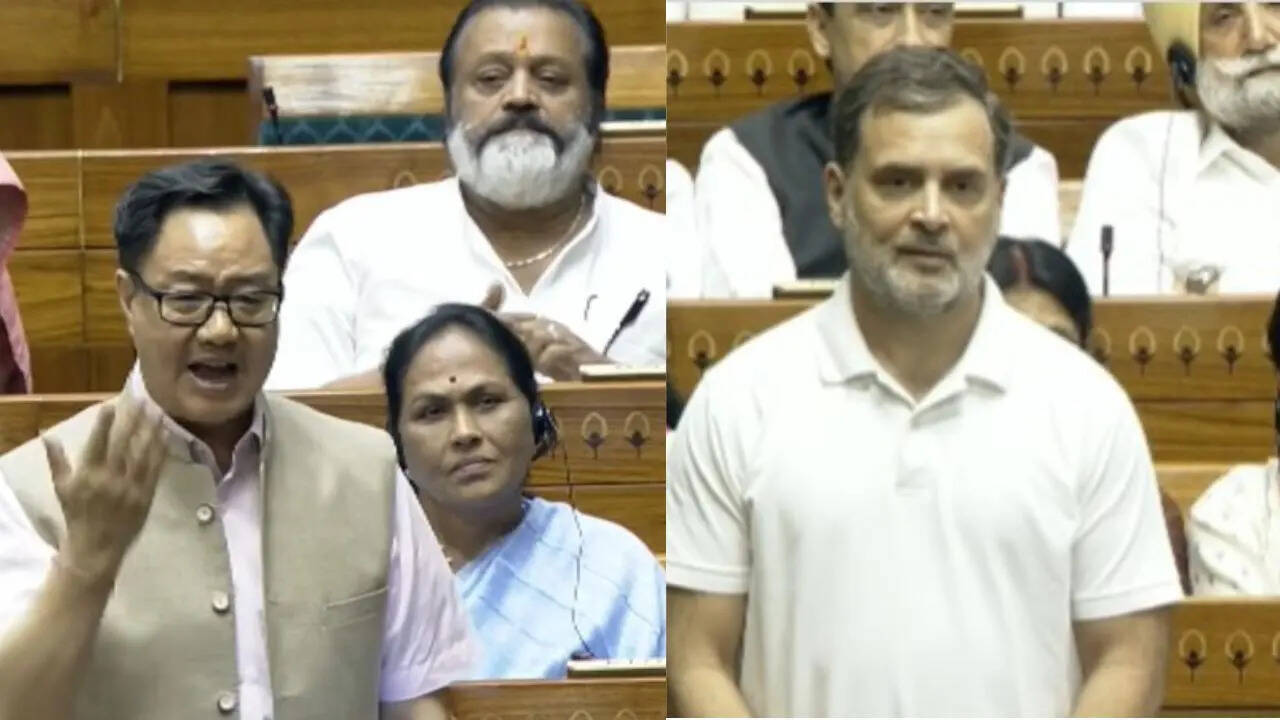
A major political disagreement has broken out in the Indian Parliament over the new women’s reservation law. Rahul Gandhi, a leader from the Congress party, and Kiren Rijiju, a minister from the ruling government, traded sharp words during a debate. The main point of tension is whether women from Other Backward Classes (OBC) should have a guaranteed share of the reserved seats. While the government wants to wait for a new census and boundary changes, the opposition demands immediate action and more inclusion for backward groups.
Main Impact
This debate has changed the focus of the women’s reservation discussion from gender equality to social representation. By bringing up the issue of OBC quotas, political leaders are now fighting over who truly represents the largest part of the Indian population. The delay in starting the reservation until after a census and a process called delimitation means that women will not see these changes in the very near future. This has created a divide between those who want the law implemented now and those who say the legal process must be followed strictly.
Key Details
What Happened
During the debate, Rahul Gandhi argued that the government is not giving enough power to the OBC community. He pointed out that the current women’s reservation bill does not have a specific sub-quota for OBC women. He claimed that without this, the law would not be fair to a large section of society. In response, Kiren Rijiju defended the government’s position. He asked why the Congress party did not pass this law during the many decades they were in power. He also brought up historical records, claiming that former Prime Minister Rajiv Gandhi had faced his own challenges and internal opposition regarding similar issues in the past.
Important Numbers and Facts
One of the most talked-about points in the debate was the number of high-ranking government officials from different backgrounds. Rahul Gandhi stated that out of 90 top secretaries in the central government, only three belong to the OBC category. He used this number to argue that OBC groups are being left out of important decision-making roles. The new law aims to reserve 33 percent of seats in the Lok Sabha and state assemblies for women. However, the government has stated that this will only happen after the next census is completed and the voting boundaries are redrawn. This process could take several years to finish.
Background and Context
The idea of reserving seats for women in India’s parliament has been around for nearly 30 years. Many different governments tried to pass it, but they often failed because of disagreements over caste-based quotas. Some parties feel that if there is no special quota for OBC or minority women, only women from wealthy or high-caste families will get elected. The current government finally passed the bill, but they added conditions. They say they need to count the population first (the census) and then decide how to divide the voting areas (delimitation) to make sure the seats are distributed fairly across the country.
Public or Industry Reaction
The reaction to this clash has been split. Supporters of the government say that the law is a historic step forward for women and that the census is a legal necessity to avoid future court cases. They believe the opposition is just trying to create hurdles. On the other hand, many social activists and opposition members argue that the census condition is just a way to delay the law. They feel that the government is "taking away the power" of the people by not including an OBC quota immediately. This has led to a wider national conversation about the need for a caste census to find out the exact population of different groups in India.
What This Means Going Forward
The next steps depend on when the government decides to start the national census. Until that happens, the women’s reservation law remains a promise for the future rather than a reality for today. The political fight over OBC representation is likely to grow stronger as the next elections approach. Both sides will use this issue to show they care more about backward communities. If the government decides to conduct a caste census, it could lead to even bigger changes in how seats and jobs are reserved in India. For now, the focus remains on when the first woman will take a seat under this new quota.
Final Take
The clash between Rahul Gandhi and Kiren Rijiju shows that the fight for equality in India is not just about gender, but also about caste and social standing. While the passing of the women’s reservation bill is a big achievement, the debate over who gets those seats is far from over. The real test will be how the government balances the legal requirements of the census with the public demand for fair representation for all groups.
Frequently Asked Questions
What is the main argument against the current women’s reservation bill?
The main argument is that it does not include a specific quota for women from Other Backward Classes (OBC). Critics feel this will prevent women from less privileged backgrounds from getting elected.
Why is the census important for this law?
The government says a census is needed to get updated population figures. These figures are used to redraw the boundaries of voting areas, which determines which seats will be reserved for women.
When will women actually get the reserved seats?
There is no exact date yet. It will only happen after the next census and the delimitation process are finished. Many experts believe this could take until 2029 or later.



