The most powerful AI companies in the world have seen the US government's new cybersecurity blueprint. The American public has not.
By Staff Writer | Technology Desk
What the White House shared — and with whom
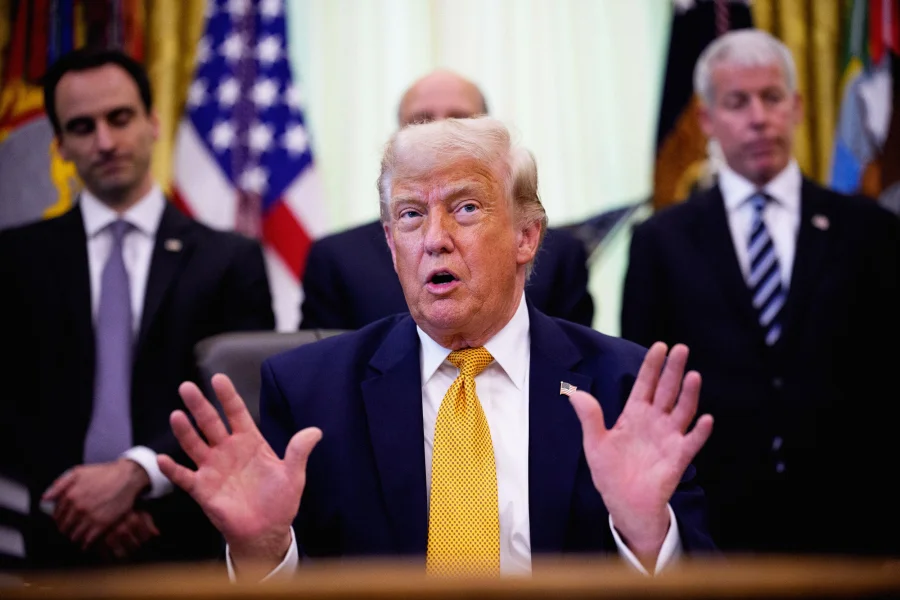
The Trump administration gave OpenAI, Anthropic, and other AI labs the details of its AI cybersecurity framework on Tuesday, according to the original report. What the plan actually says — whether it is voluntary guidance or binding requirements, and which threats it prioritizes — has not been revealed.
What is confirmed is narrow: select companies were briefed, and the public was not. No official statement has explained the decision to keep the plan confidential.
Why keeping the plan secret matters
AI systems are no longer confined to research labs. They are embedded in banking, healthcare, energy, and government services. A cybersecurity framework designed to protect those systems carries direct consequences for ordinary users.
When a policy like this stays hidden, independent researchers and watchdog groups cannot assess whether the protections are strong, weak, or even enforceable. Companies outside the briefing circle are also left guessing about expected standards.
The transparency puzzle at the heart of this decision
Governments routinely withhold sensitive cybersecurity details to avoid handing adversaries a roadmap. That instinct is understandable. But the order of operations here is unusual: private companies were briefed before the public was even told the framework existed.
If the document contains no sensitive technical data, the secrecy is hard to justify. If it does, the choice of which labs were invited — and which were excluded — becomes a question of its own.
Confirmed facts vs what remains unclear
Verified: The administration shared the framework's details with OpenAI, Anthropic, and other AI labs on Tuesday.
Unclear: The framework's contents, its legal status, the full list of companies briefed, and whether a public version will ever be released. No official rationale for the secrecy has been published. Any speculation about national security motivations should be treated as inference, not fact.
Security interests vs public accountability
Supporters of the administration's approach could argue that some cybersecurity planning must stay classified to remain effective. Critics would counter that policy affecting public safety and market competition cannot be meaningfully debated in the dark.
Both positions are reasonable — but neither has been articulated by administration officials so far. The silence leaves the public to fill the gap with assumption.
What could happen next
The framework may eventually be released, either in full or as a summary. Pressure from Congress, transparency advocates, or the briefed companies themselves could force disclosure. Alternatively, the administration could keep operational details private indefinitely while publishing only broad principles.
None of these outcomes is confirmed. The only certainty is that, for now, the people most affected by AI security policy are the last to see it.
Our Take
AI policy is increasingly being written at two speeds: fast for companies, slow for citizens. This framework may be a sound initiative, but secrecy makes independent evaluation impossible. In cybersecurity, the public is not a bystander — as users of AI systems, they carry the risk the framework is meant to manage. A plan that affects them should not be a secret from them.
Frequently Asked Questions
What is the White House AI cybersecurity framework?
It is a plan by the Trump administration covering cybersecurity for AI systems. Details were shared with OpenAI, Anthropic, and other AI labs on Tuesday, but the framework's contents have not been made public.
Which AI companies were briefed on the framework?
OpenAI, Anthropic, and other AI labs received the details, according to the original report. The full list of companies briefed has not been disclosed.
Why is the framework being kept secret from the public?
No official explanation has been given. It may relate to national security concerns, but that is speculation — the administration has not publicly stated its reasoning.
Is the AI cybersecurity framework legally binding?
It is unclear. The administration has not released the document, so whether it is mandatory regulation or voluntary guidance cannot be determined from available information.
[/ARTICLE_BODY] ## Step 9 — NEWS_SCHEMA [/NEWS_SCHEMA] { "@context": "https://schema.org", "@type": "NewsArticle", "headline": "OpenAI, Anthropic Briefed on White House AI Cyber Plan — Public Left in the Dark", "description": "Trump administration briefed OpenAI, Anthropic and other AI labs on its cybersecurity framework, but the public remains in the dark. Here's what we know.", "image": "https://[publication-domain]/images/white-house-ai-cyber-framework-secret.jpg", "datePublished": "2025-03-05T08:00:00Z", "dateModified": "2025-03-05T08:00:00Z", "author": { "@type": "Person", "name": "Staff Writer", "url": "https://[publication-domain]/authors/staff-writer", "sameAs": [] }, "publisher": { "@type": "Organization", "name": "[Publication Name]", "logo": { "@type": "ImageObject", "url": "https://[publication-domain]/images/logo.png" } }, "mainEntityOfPage": { "@type": "WebPage", "@id": "https://[publication-domain]/white-house-ai-cyber-framework-secret" }, "articleSection": "Technology", "keywords": "White House AI cybersecurity framework, Trump administration AI policy, OpenAI, Anthropic, AI cybersecurity transparency" } [/NEWS_SCHEMA] ## Step 10 — SOURCES [/SOURCES] No high-confidence external sources were available for verification. This article is based solely on the original report: "The White House Is Keeping Its AI Cybersecurity Framework Secret" — administration shared plan details with OpenAI, Anthropic, and other AI labs on Tuesday; public disclosure has not occurred. [/SOURCES]